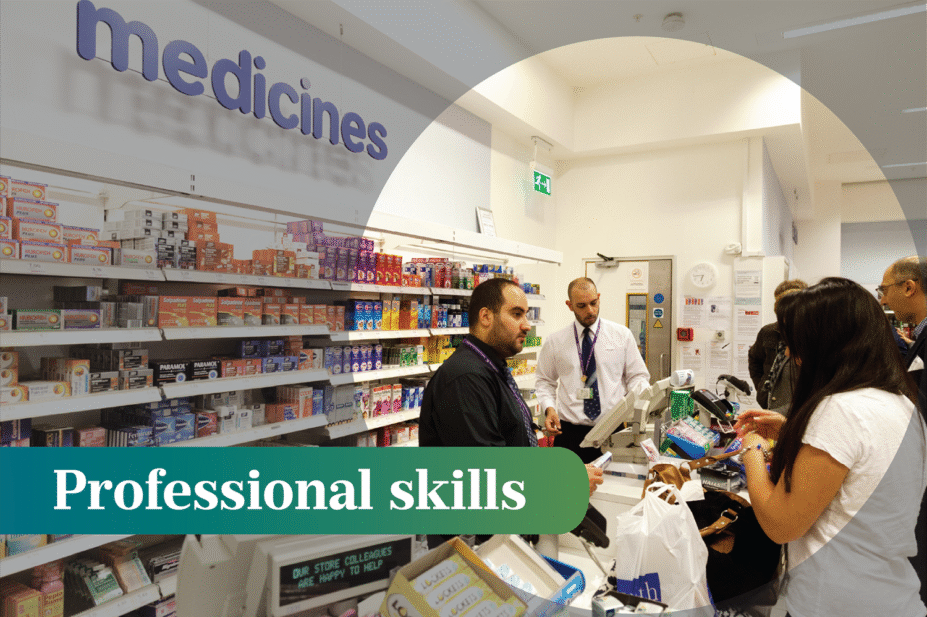
Kumar Sriskandan/Alamy Stock Photo
After reading this article, you should be able to:
- Define and describe the term ‘multitasking’;
- Differentiate between cognitive and emotional loads and their impacts on wellbeing;
- Reflect on personal strategies to enhance wellbeing through better management of multitasking demands.
Community pharmacy can seem an incredibly busy, verging on chaotic, place. Pharmacy staff may be answering phones, speaking with patients, receiving inventory, dispensing medications, teaching students, administering vaccines or completing any number of other tasks. The term ‘multitasking’ is frequently used to describe simultaneous engagement in different tasks that requires the splitting or fragmenting of attention and concentration1. For example, speaking on a phone while walking or preparing a meal while watching television. Some pharmacists and technicians relish the challenge of professional multitasking, claiming they ‘like to keep busy’ or ‘get bored easily’. Some feel compelled to outdo their colleagues in terms of who can multitask the most. For other pharmacists and technicians, such behaviour may prompt eye-rolling or a feeling of resignation — this is the way it has always been and will always be in community pharmacy.
Multitasking and resilience
The impact of habitual multitasking on mental health and wellbeing is now being questioned. Research published in 2021 from Ontario, Canada, examined the concept of resilience in community pharmacy in the context of the early days of the COVID-19 pandemic2. During this time, when the rest of the world was shutting down and learning to work from home, community pharmacy remained open — an essential service and the front-line of healthcare during a period of unprecedented fear and uncertainty. Researchers analysed which pharmacists and technicians demonstrated resilience in the face of this adverse circumstance and were able to remain psychologically strong, motivated and engaged. It was anticipated that these pharmacy staff members would have maintained resilience through consistent application of a mental-health-supportive technique, such as jogging, mindfulness, yoga or journalling. Surprisingly, this study generated a very different conclusion: far more important and impactful than individual resilience-building techniques were the managerial decisions that dictated basic operational functions, such as workflow, workplace design and time management.
Regardless of whether individuals engaged in techniques such as jogging, meditation or yoga, the characteristics of the workplace were a more important predictor of mental health and resilience than an individual’s own actions. Indeed, the study authors provocatively concluded that, as a pharmacist or technician, one is better off being an unresilient human being working in a resilience-building workplace than being a resilient human being working in an unhealthy workplace.
A specific factor that predicted an individual pharmacy staff member’s resilience was the ability to ‘uni-task’, rather than multitask. Pharmacy workplaces that were organised in a manner that allowed staff members to concentrate for a period of time on a single or several related tasks were places where staff demonstrated better resilience, mental health and wellbeing.
Considering the widespread prevalence of multitasking in community pharmacy, surprisingly few studies have examined this issue. A 2021 study looked at the impact of multitasking on the speed and accuracy with which pharmacy students identified prescription errors3. Study authors concluded that multitasking negatively affects both speed and accuracy, demonstrating the limits of attention that exist for most professionals. Of course, pharmacy staff are not the only healthcare professionals who multitask. The findings of a review, published in 2016, showed that multitasking is ubiquitous in healthcare and has detrimental effects on task performance, increases errors and ultimately poses risks to patients4. A 2025 scoping review examined distractions in community pharmacy and noted the impact of the interruption-driven nature of practice that may be detrimental to both staff and patients5.
Bandwidth
Studies such as these — and a significant body of cognitive psychology literature — point to the reality that very few people like or can succeed in an interruption-driven, multitasking environment in the long run6. Our understanding of human cognition and processing includes the concept of ‘bandwidth’, which is a fixed amount of attention that any person can invest at any given time. Importantly, bandwidth has both cognitive and emotional elements. For example, reading a complex instruction manual full of technical jargon requires attention and concentration of a cognitive quality. Reading this same manual while worried about a mortgage payment or anxious about a train strike introduces an entirely different kind of emotional bandwidth constraint atop the ‘thinking’ demands of the task itself.
Cognitive load
Cognitive load theory highlights the finite capacity of working memory and cognitive processing capacity7. When we exceed this capacity, we struggle to process environmental stimuli. We also begin to experience knock-on psychological and emotional adverse effects, which may prime us for stress, anxiety, depression and burnout over time.
There are three main types of cognitive load:
- Intrinsic load refers to inherent difficulty of the subject being studied or the material being learned. Some material is simply harder than others — for example, learning calculus is more difficult than learning how to add, even though both are a form of maths;
- Extrinsic load refers to the manner in which material is presented and made available to someone. If material is poorly organised, contains unnecessary extraneous details, or is presented in an unengaging manner, this creates unhelpful strain on working memory, reducing attention and increasing overall load;
- Germane load refers to the mental effort required by the individual to actually want to engage with the material in the first place. There is a strong emotional component to germane cognitive load. For example, if a student is afraid of an unpleasant teacher, the negative emotional association of the content with the teacher increases germane load, reducing that individual’s ability to manage the material. This is also sometimes referred to as ‘learnworthiness’, which is how much valuable cognitive load an individual is actually willing to invest, given all other competing environmental demands at the time8.
Reducing cognitive load
There are certain strategies that can help reduce cognitive load, enhance performance and help individuals maintain mental health equilibrium.
Reducing extraneous cognitive load and managing the negative consequences of germane load are effective ways of enhancing concentration, attention and satisfaction. The problem with the multitasking environment in pharmacy is that the extrinsic and germane loads crowd out the capacity to focus on the intrinsic substance of the profession. This crowding out can be compensated for over brief periods of time, perhaps days or weeks. However, when it is chronic and unrelenting — as is often the case in community pharmacy — people cannot help but adapt to the high levels of germane and extrinsic load by reducing attention and minimising concentration, ultimately experiencing anxiety, depression or burnout.
If the interruption-driven, multitasking environment of community pharmacy is part of this problem, it behooves the entire profession to consider options and alternatives, both in the name of safeguarding patients but also by supporting pharmacy professionals. Community pharmacy has evolved, as more and different roles and responsibilities have been layered on the profession, without older ones necessarily being removed. As new technologies have been introduced, they too have layered more interruptions and demands on staff. The fundamental design of pharmacies and workflow in the pharmacy has not evolved considerably in the past century, so these ‘new’ incursions simply are accreted upon the existing structure.
Workplace changes to reduce the burden of multitasking
Incremental changes to the current workplace design and workflow in pharmacy will not achieve the objective of managing cognitive load, reducing interruptions and supporting better outcomes for patients. Instead, a fundamental rethink and redesign of space and workflow is required — one that considers the expanding scope of the profession, new technologies, including AI, and the negative consequences of multitasking on patient safety and the mental health of pharmacy staff. Important principles to reduce the burden of multitasking include:
- Clarity around roles;
- Ensuring all pharmacy staff work to the maximum of their scope of practice;
- Using technology effectively to stream, queue and prioritise tasks;
- Adopting intentional scheduling practices designed to buffer the worst effects of workflow peaks.
Workflow changes
Around the world, pharmacies are experimenting with new workflow designs. A 2025 study examined the introduction of a pharmacy-technician-led drug distribution system in community pharmacy that gave the pharmacist room for expanded scope of practice activities9. Pharmacy technicians’ scope of practice has evolved to assume responsibility for the majority of drug dispensing, purchasing and inventory control, and record-keeping. These tasks consume considerable time and bandwidth. When being undertaken by pharmacists at the same time as they are providing patient care, these tasks can contribute to occupational stress and burnout.
A pharmacy workflow that is centred on pharmacy technicians taking primary responsibility for safe and efficient dispensing can reduce the time required by pharmacists to engage in technical functions by more than 50%9. In such workflows, pharmacists typically perform initial clinical screening and verification of new prescriptions or appropriateness of renewals, then ’sign off’ to a regulated pharmacy technician to complete all other aspects of the dispensing and record-keeping process. Where necessary, the pharmacist may return at the end of the process to provide patient education or monitoring/follow-up guidance. In some jurisdictions, pharmacy technicians independently administer vaccinations, which is another way to reduce pharmacists’ workload and allow them to concentrate on value-added clinical services.
In places where technician-run dispensing or vaccine administration is not permitted, it may be possible to use ‘delegation protocols’ that allow the pharmacist to delegate certain activities to technicians that they supervise. Through the use of delegation protocols, the separation of dispensing and care activities allows both technicians and pharmacists to uni-task. Further, where segmentation of tasks occurs, there is a lower risk of a dispensing error9 and, in all likelihood, greater job satisfaction for both technicians and pharmacists.
Appointment-based systems
Some practices have experimented with appointment-based systems for seeing pharmacists. Compared with the traditional ‘turn-up-and-talk’ model, appointment-based systems, modelled on medical clinics, permit more focused attention with fewer interruptions10 — albeit at the expense of a valuable kind of accessibility that many in the public value. Appointment-based systems are usually driven by online booking systems, which patients use to select a meeting time with a pharmacist to discuss clinical concerns and questions or to book services such as a medication review. Introduced during the COVID-19 pandemic as a way to schedule appointments for COVID-19 vaccinations, the same system can allow pharmacists to more efficiently organise their time and work. Convenient online scheduling tools, such as Calendly or Doodle, are commercially available — although many pharmacies already have access to schedulers but do not use them as effectively as they could. Online scheduling also allows pharmacists to communicate with patients through email or text message, where appropriate, which further buffers them from random workload peaks that lead to stress and burnout.
While there is a short learning curve required for pharmacists to learn to effectively and efficiently manage appointment scheduling technology, in the longer run these can help queue workload and support safer and better patient care by reducing the cognitive burden associated with unscheduled patients.
AI tools
In other practices, innovation has focused on the use of AI to assume greater responsibility for technical, administrative and drug-dispensing activities11, freeing up the time and attention of pharmacists and technicians to focus their concentration on patient care activities.
Examples of AI in clinical practice include the use of ‘ambient listening’ tools that transcribe patient–professional conversations and summarise them for documentation purposes. AI can also be used to support effective clinical decision-making, by reducing the time required to research complex drug information questions or identify alternative clinical options in challenging patient care situations. Care must be taken, however, to check the accuracy and comprehensiveness of AI-generated information. There are also questions about its ability to interpret human interpersonal communication (e.g. sarcasm, resignation, anger and fear). Where AI is used for clinical decision support, its tendency to ‘hallucinate’ responses or the level of scientific accuracy of its recommendations may be a concern.
There has also been some interest in the development of AI-driven chatbots that can provide clinical counselling services — for example, for smoking cessation counselling or counselling to support better adherence to medications. While such chatbots may have value to complement the work of pharmacists, further work is required to determine its safety and value, as well as the concerns that it poses a threat to professional healthcare roles.
Where AI is used for administrative functions, however, it may generate time and efficiency savings without posing threats to clinical roles. AI-predictive analytics tools can also be used to more effectively manage purchasing and inventory within community pharmacy. In an era of drug shortages, AI-enabled tools can be useful in sourcing alternatives or connecting patients to pharmacies that have supplies of scarce medications.
Despite the caveats mentioned, AI is evolving rapidly and being deployed widely, both within pharmacies and across society. Undoubtedly, AI can contribute significantly to reducing workload and cognitive burden associated with the multitasking environment of community pharmacy. Learning to leverage this potential in a responsible and ethical way that allows pharmacists to take advantage of its strengths and mitigate its weaknesses will be essential.
Conclusion
As we continue to understand the implications of multitasking on personal wellbeing and resilience — and challenge our misguided beliefs that somehow multitasking is a signal of professional vigour and strength — we will build a healthier workplace and a more sustainable profession.
Currently, there is significant experimentation in workplace redesign, driven by the recognition that the ‘old way’ of organising and managing a community pharmacy is unsustainable. It is also probably not as safe for patients as it should be. The jack-of-all-trades model of community pharmacy is not only inefficient, it may also be harming pharmacy staff and the patients they serve12. Awareness of the ways in which multitasking can be harmful — in both the short- and the long-term — is important. Understanding concepts, such as cognitive load theory, can help pharmacy staff and managers consider other workflow options that reduce the frequency and intensity of corrosive attention-splitting. As technologies advance, appointment-based systems and AI-driven dispensaries will become more prevalent. While these may introduce new forms of extrinsic and germane cognitive load, they also offer some possibility of enhancing workflow in a positive manner.
For pharmacy staff who feel unable to implement the approaches considered above, there are some options to consider. Recognising triggers of intrinsic, extrinsic and germane load and working to minimise the latter two could be helpful. Enhanced delegation to others may help to manage bandwidth. Finally, sharing literature such as this with managers and leaders could help raise greater awareness of this important topic across all levels of the profession.
- 1.Westbrook J, Raban MZ, Clive J, Walter SR. Interruptions and Multitasking in Clinical Work: A Summary of the Evidence. Cognitive Informatics in Biomedicine and Healthcare. Published online 2025:163-177. doi:10.1007/978-3-031-82971-0_9
- 2.Austin Z, Gregory P. Resilience in the time of pandemic: The experience of community pharmacists during COVID-19. Research in Social and Administrative Pharmacy. 2021;17(1):1867-1875. doi:10.1016/j.sapharm.2020.05.027
- 3.Enz S, Hall ACG, Williams KK. The Myth of Multitasking and What It Means for Future Pharmacists. American Journal of Pharmaceutical Education. 2021;85(10):8267. doi:10.5688/ajpe8267
- 4.Douglas HE, Raban MZ, Walter SR, Westbrook JI. Improving our understanding of multi-tasking in healthcare: Drawing together the cognitive psychology and healthcare literature. Applied Ergonomics. 2017;59:45-55. doi:10.1016/j.apergo.2016.08.021
- 5.Ayanaw M, Lim A, Khera H, Vu T, Goordeen D, Malone D. How do interruptions and distractions affect pharmacy practice? A scoping review of their impact and interventions in dispensing. Research in Social and Administrative Pharmacy. 2025;21(9):667-678. doi:10.1016/j.sapharm.2025.05.001
- 6.Karia A, Norman R, Robinson S, et al. Pharmacist’s time spent: Space for Pharmacy-based Interventions and Consultation TimE (SPICE)—an observational time and motion study. BMJ Open. 2022;12(3):e055597. doi:10.1136/bmjopen-2021-055597
- 7.Sweller J. Cognitive Load Theory. Elsevier Academic Press; 2011.
- 8.Austin Z. What is learnworthy? Lessons from group socialization theory for professional education and continuing professional development. Pharmacy Education . Published online 2002.
- 9.Galani TJ, Galani VJ. Unlocking the potential of pharmacy technicians: Addressing barriers to full scope utilization in Canadian health care. Can Pharm J. Published online November 9, 2025. doi:10.1177/17151635251381349
- 10.Tilli T, Mathers A, Lin Q, et al. The appointment-based model in community pharmacies: Patient demographics and reimbursable clinical services uptake in Ontario. Can Pharm J. 2024;157(3):143-152. doi:10.1177/17151635241241686
- 11.Sendekie AK, Limenh LW, Abate BB, et al. Artificial intelligence in community pharmacy practice: Pharmacists’ perceptions, willingness to utilize, and barriers to implementation. Exploratory Research in Clinical and Social Pharmacy. 2024;16:100542. doi:10.1016/j.rcsop.2024.100542
- 12.Skaugset LM, Farrell S, Carney M, et al. Can You Multitask? Evidence and Limitations of Task Switching and Multitasking in Emergency Medicine. Annals of Emergency Medicine. 2016;68(2):189-195. doi:10.1016/j.annemergmed.2015.10.003