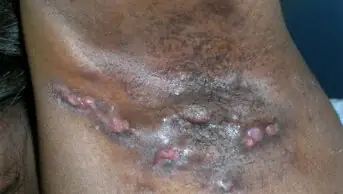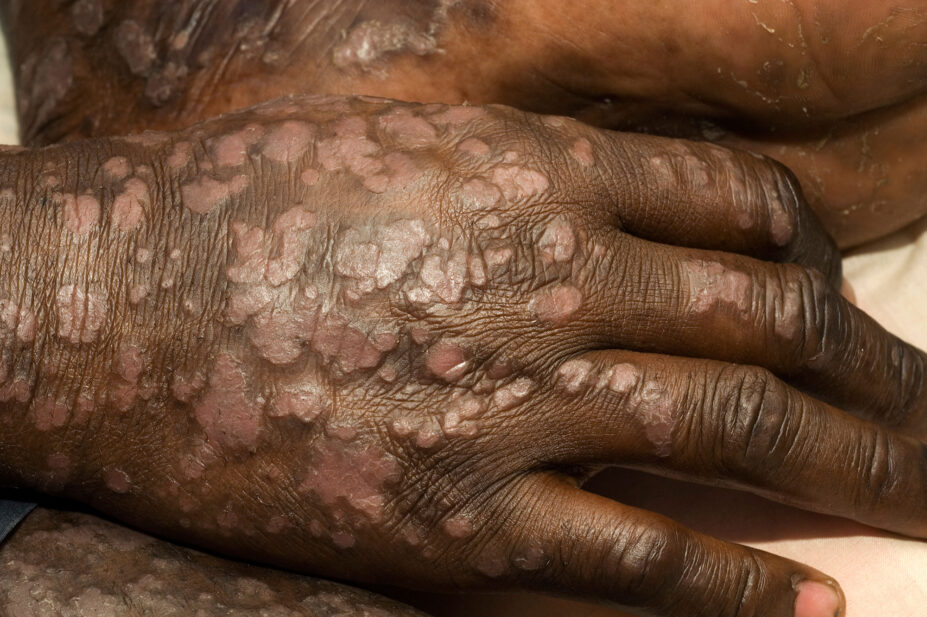
Medicshots / Alamy Stock Photo
After reading this article, you should be able to:
- Describe the pathophysiology, risk factors and clinical presentation of psoriasis, including disease subtypes and red-flag symptoms;
- Identify how psoriasis is diagnosed and managed across primary care and secondary care in the UK;
- Apply evidence-based pharmacological and non-pharmacological management in clinical practice;
- List ways pharmacists can support people living with psoriasis through counselling, monitoring and signposting.
Introduction
Psoriasis is a lifelong, immune-mediated inflammatory skin disease that is associated with comorbidities such as psoriatic arthropathy, mental health issues, cardiovascular disease and metabolic syndrome1. Psoriasis affects 1.3–2.8% of the UK population2. It can occur at any age, but there are two peak ages of onset: 20–30 years of age (early-onset psoriasis, also referred as type 1) and 50–60 years of age (late-onset psoriasis, also referred as type 2). Early-onset psoriasis is associated with a strong family history, whereas late-onset psoriasis is more sporadic, its genetic background is unclear and is often linked to environmental triggers3. It affects men and women equally, although localised pustular psoriasis is more common in women than in men2.
Physical symptoms include itching, pain and dryness — sometimes with painful cracks or bleeding. These symptoms can affect quality of life, emotional wellbeing and social functioning. The severity of psoriasis varies, but even limited disease affecting visible or sensitive areas, such as the face, genitals or scalp, can substantially affect wellbeing1,4.
Pharmacists working across primary and secondary care play an important role in the effective management of psoriasis. In the community setting, pharmacists are often the first healthcare professionals approached for advice on persistent skin symptoms or the selection of over-the-counter treatments. In general practice and the hospital setting, pharmacists can support the safe use of topical treatments, systemic and biologic therapies, including appropriate monitoring in line with clinical guidance.
This article provides a structured overview of psoriasis, outlining its clinical features, diagnosis and management, as well as the contribution of pharmacists in optimising care across the patient pathway.
Causes, risk factors and pathophysiology
The exact cause of psoriasis is unknown, but it involves a combination of genetic and external factors5. Psoriasis has a major genetic component, with heritability estimated to be 60–90%6. External factors that can exacerbate flare-ups include physical trauma, tobacco, excessive use of alcohol, obesity, infection, stress, weather and taking certain drugs, such as beta-blockers, lithium, non-steroidal anti-inflammatory drugs, angiotensin-converting enzyme inhibitors and antimalarials7. These factors activate keratinocytes in the epidermis, initiating the inflammatory cascade.
Activated keratinocytes release pro‑inflammatory cytokines, including tumour necrosis factor-alpha (TNF‑α), interleukin-1 (IL‑1) and IL‑36, which stimulate dendritic cells within the dermis. These dendritic cells play a central role in bridging innate and adaptive immunity by secreting key cytokines, particularly IL‑12 and IL‑237.
IL‑12 promotes differentiation of naïve T cells into T‑helper 1 (Th1) cells, while IL‑23 supports the expansion and survival of T‑helper 17 (Th17) cells. Along with Th22 cells, these T‑cell subsets produce effector cytokines, such as interferon‑γ (IFN‑γ), TNF‑α, IL‑17 and IL‑22, which act directly on keratinocytes7.
These cytokines drive keratinocyte hyperproliferation, abnormal differentiation and increased inflammatory mediator release, creating a self-amplifying inflammatory loop. In parallel, an imbalance between pro-inflammatory T cells and regulatory T cells impairs immune tolerance and contribute to the development of chronic disease7.
The sustained immune activation results in epidermal thickening, scale formation and inflammatory infiltration, which leads to the production of the characteristic erythematous, well‑demarcated plaques seen in psoriasis (see Figure 1)8.
Figure 1: Psoriasis pathogenesis and targeted therapies
Signs and symptoms
Psoriasis usually presents as symmetrically distributed, red, scaly plaques with well-defined edges. The scale is typically silvery white. The plaques usually persist without treatment9.
The symptoms of psoriasis can include itching, burning or soreness, while the plaques could occasionally crack and bleed. Psoriasis affecting the toenail and fingernail is often associated with discolouration and pitting9. These include clearly defined erythematous plaques covered with silvery scales, which are frequently located on the scalp, trunk and extensor surfaces of the limbs.
Red-flag symptoms to look out for include sudden worsening or widespread involvement — generally more than 10% of the body surface area — especially if associated with fever, malaise or systemic illness. These symptoms may indicate erythrodermic or pustular psoriasis and will require urgent specialist dermatology review. Joint pain, morning stiffness, swollen fingers or toes, or signs of infection, such as pain, oozing or crusting, should also raise concern for psoriatic arthritis or secondary infection, which prompts further assessment9,10 (see Figure 2). For a summary of each type of psoriasis, see Figure 39,11,12.
Figure 2: Psoriasis plaques with silvery scales
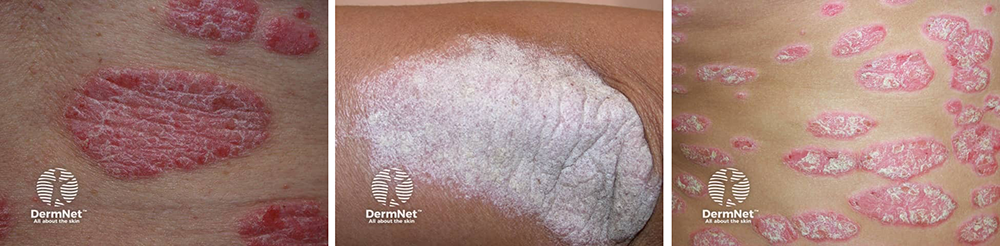
DermNet
Types of psoriasis
Figure 3: Gallery of psoriasis lesions
Diagnosis
Psoriasis is predominantly a clinical diagnosis based on patient history and the characteristic appearance and distribution of lesions. In most cases, routine laboratory investigations are not required to confirm the diagnosis. Psoriasis can be diagnosed in primary care; however, referral to dermatology is recommended if there is diagnostic uncertainty. Biopsy is only required when there is atypical presentation13.
Management
There is no cure for psoriasis, but effective treatment can significantly control symptoms and improve quality of life. Management is individualised according to disease severity, affected areas, patient preference, comorbidities and response to previous therapies11,13.
Tools are normally used to assess the severity of psoriasis and the impact of psoriasis. Common tools include the Psoriasis Area and Severity Index (PASI) and Dermatology Life Quality Index (DLQI). These measures help inform treatment decisions and monitor response13.
The management of psoriasis often involved topical therapy along with systemic therapies. In severe cases, biologic therapies and targeted small-molecule agents may be indicated11,13.
Topical therapy
For patients with mild psoriasis, first-line treatment consists of emollients, which restore skin barrier function, reduce dryness and scaling, as well as improve tolerability of other topical agents14. Emollients should be used regularly and continued even when lesions improve.
Topical anti‑inflammatory therapies include vitamin D analogues (e.g. calcipotriol) and topical corticosteroids, either used alone or in combination. Vitamin D analogues reduce keratinocyte proliferation, while corticosteroids suppress cutaneous inflammation. Vitamin D analogues may cause local irritation and should be used cautiously in patients with disorders of calcium metabolism. Combination products can enhance efficacy and improve adherence by simplifying treatment regimens. The potency and duration of topical corticosteroids should be carefully selected to minimise adverse effects, particularly when used on sensitive areas such as the face, flexures or genitals14.
Prolonged or inappropriate use of topical corticosteroids can lead to adverse effects, such as skin atrophy, telangiectasia and rebound flares, which can be minimised by limiting duration, using appropriate potency and stepping down treatment when control is achieved11.
Additional topical options used in selected cases include coal tar preparations, dithranol and topical calcineurin inhibitors, particularly for facial or intertriginous psoriasis14.
Phototherapy
For patients with moderate psoriasis who have not responded adequately to topical therapies, phototherapy may be considered14. Narrowband ultraviolet B is the most commonly used modality and can be effective in reducing disease severity14. Treatment requires specialist supervision owing to cumulative ultraviolet exposure. Adverse effects include erythema and an increased long-term risk of skin ageing and malignancy. Phototherapy is contraindicated in patients with a history of skin cancer or photosensitivity disorders, while monitoring includes regular assessment of treatment response, skin reaction and cumulative UV dose11.
Systemic therapies
Patients with moderate-to-severe psoriasis, or disease significantly affecting quality of life, may require systemic treatment. Conventional systemic agents include methotrexate, ciclosporin and acitretin14. These therapies act by suppressing immune‑mediated inflammation or normalising keratinocyte proliferation but are associated with potential toxicity, requiring regular laboratory monitoring and careful patient selection14.
Methotrexate is administered weekly, either orally or subcutaneously. Its use is associated with adverse effects including hepatotoxicity, myelosuppression and gastrointestinal disturbance. It is also contraindicated in pregnancy and in patients with significant liver disease15.
Ciclosporin is given orally and is effective for rapid disease control; however, it is associated with nephrotoxicity, hypertension and increased infection risk, as well as contraindicated in patients with uncontrolled hypertension or severe renal impairment16.
Acitretin is an oral retinoid, which helps to normalise keratinocyte differentiation. It is highly teratogenic and can cause mucocutaneous dryness, hyperlipidaemia and hepatotoxicity. Acitretin is also recommended that women avoid conceiving for three years after discontinuing the medication17.
Biologic and targeted therapies
In patients with severe or refractory disease, biologic therapies and targeted small‑molecule agents may be indicated14. These include monoclonal antibodies targeting tumour necrosis factor (TNF), interleukin-17 or interleukin-23 pathways, as well as targeted oral small molecules such as phosphodiesterase-4-inhibitors, such as apremilast. Biologic therapies are administered subcutaneously or intravenously, while small molecules are given orally. These therapies can increase the risk of infection, including reactivation of latent tuberculosis and are contraindicated in patients with active serious infections. They require caution in those with history of malignancy or certain comorbidities, such as inflammatory bowel disease and heart failure, depending on the therapy used18.
Self-care advice
Self-care measures are an essential component of psoriasis management. Patients should use emollients frequently; avoid known triggers, such as smoking, alcohol, stress and skin trauma; and adhere closely to prescribed treatment regimen19. Education on correct topical application techniques is particularly important to optimise outcomes. Taking a soothing bath in lukewarm water with added Epsom salts, oatmeal or oil can help relieve itching and remove scales; however, patients should limit bath time to 15–20 minutes, as long, hot baths can increase dryness and irritation19.
Monitoring and review
Ongoing monitoring and review is essential to assess treatment response, identify adverse effects and guide escalation or de-escalation of therapy. The frequency of review depends on disease severity and the type of treatment being used.
Topical therapy
Patients managed with topical therapy should be reviewed after four weeks to assess response and adherence, because incorrect or inconsistent application is a common cause of poor outcomes13. Once stable, follow-up can be reduced. Review should focus on changes in disease severity, including the extent of involvement and plaque characteristics, alongside identification of local adverse effects such as skin atrophy from corticosteroids. Treatment potency and duration should be adjusted accordingly13.
Phototherapy
For patients undergoing phototherapy, monitoring is carried out each treatment session for acute skin reactions, such as erythema and tracking cumulative ultraviolet exposure, to reduce long-term risks, including skin malignancy11. Treatment response is reviewed regularly to determine whether therapy should be continued or stopped.
Systemic therapy
Patients receiving systemic therapies require baseline investigations, including full blood count, liver and renal function, and other tests depending on the therapy. Monitoring is typically more frequent during initiation (e.g. every one to two weeks), then reduced to every two to three months once stable. Review should include both clinical response and laboratory results to detect toxicity, such as hepatotoxicity with methotrexate or nephrotoxicity with ciclosporin, alongside assessment of adverse effects and ongoing treatment need14,15.
Biologic and target therapy
For biologic and targeted therapies, baseline screening for infections, such as tuberculosis and viral hepatitis, is required prior to initiation. Patients are usually reviewed every three to six months in specialist care, while in some cases the monitoring can be reduced to once a year for stable patients taking biologics therapy. Monitoring is focused on treatment efficacy, infection risk and tolerability. Patients should be advised to report symptoms of infection promptly and periodic blood monitoring may be required depending on the specific agent18.
All therapies
At all stages, review should also consider quality of life and comorbidities, because psoriasis is associated with increased cardiovascular risk and psychological burden20. Assessment should therefore include impact on daily functioning, screening for anxiety or depression, and evaluation of cardiovascular risk factors, such as blood pressure, lipids, smoking status and weight.
Patient counselling and support
One of the most helpful things that pharmacists can do is educate patients on the disease and management options. Education should include common triggering factors, such as stress, infections, smoking, alcohol, drugs and weather changes. Identifying and addressing these triggers can help to reduce flare-ups and improve disease control.
Patients should be consistently encouraged to adhere with treatment to help improve quality of life. Psoriasis can have a psychological impact and can negatively affect self-esteem and lead to patient’s feeling isolated owing to feeling ashamed of their skin. Psoriasis symptoms can begin between the ages of 15 and 25 years, a time when teens and young adults are particularly vulnerable to body-image issues and in a social environment at school where their condition may be misinterpreted21.
Pharmacists can help tackle the stigma associated with the condition by explaining that it is not contagious. Providing reassurance and normalising the condition can support patients’ confidence and reduce the social discomfort linked to visible symptoms.
Patient support groups play a valuable role in providing emotional support, practical advice and a sense of community. Organisations such as The Psoriasis Association UK offer educational resources, helplines and opportunities for patients to connect with others living with psoriasis.
Best practice for pharmacists
- Ensure patients understand how and when to use topical treatments correctly. This includes demonstrating appropriate quantities (e.g. fingertip units), advising on treatment sequencing (emollients before active treatments). For example, they should wait 15–30 minutes after applying an emollient before applying the active treatment and reinforcing treatment duration to minimise underuse or overuse22;
- Promote adherence and set realistic expectations. Counsel patients on the delayed onset of benefit for many psoriasis treatments and the importance of regular use. Address concerns about long‑term therapy and support shared decision‑making to improve adherence;
- Monitor safety and appropriateness of therapy. In primary care and hospital settings, pharmacists should support monitoring requirements for systemic and biologic therapies and ensure timely follow‑up. In all settings, they should be alert to inappropriate prolonged use of potent topical corticosteroids;
- Identify uncontrolled disease and refer appropriately. Pharmacists should facilitate timely referral to specialist dermatology services, particularly for suspected moderate‑to‑severe disease or psoriatic arthritis;
- Provide holistic and person‑centred support. Acknowledge the psychological and social burden of psoriasis. Provide empathetic support, encourage discussion of mental wellbeing, and signpost patients to reputable resources and support groups. Holistic care is essential for long‑term disease management.
- 1.Raharja A, K Mahil S, N Barker J. Psoriasis: a brief overview. National Library of Medicine. 2021. https://pmc.ncbi.nlm.nih.gov/articles/PMC8140694/?utm_source=chatgpt.com
- 2.Psoriasis: prevalence. National Institute for Health and Care Excellence . 2023. https://cks.nice.org.uk/topics/psoriasis/background-information/prevalence/
- 3.Queiro R, Tejón P, Alonso S, Coto P. Age at disease onset: a key factor for understanding psoriatic disease. Rheumatology. 2013;53(7):1178-1185. doi:10.1093/rheumatology/ket363
- 4.Kimball A, Jacobson C, Weiss S, Vreeland M, Wu Y. The psychosocial burden of psoriasis. National Library of Medicine . 2005. https://pubmed.ncbi.nlm.nih.gov/16343027/
- 5.Rendon A, Schäkel K. Inflammation and psoriasis: a comprehensive review. International Journal of Molecular Studies. 2019. https://www.mdpi.com/1422-0067/20/6/1475
- 6.Harden J, Krueger J, Bowcock A. The immunogenetics of Psoriasis: A comprehensive review. National Library of Medicines. 2015. https://pubmed.ncbi.nlm.nih.gov/26215033/
- 7.Psoriasis: symptoms, causes, and risk factors. National Institute of Arthritis and Musculoskeletal and Skin Diseases . 2023. https://www.niams.nih.gov/health-topics/psoriasis
- 8.Man AM, Orăsan MS, Hoteiuc OA, Olănescu-Vaida-Voevod MC, Mocan T. Inflammation and Psoriasis: A Comprehensive Review. IJMS. 2023;24(22):16095. doi:10.3390/ijms242216095
- 9.Jones C. Psoriasis: symptoms, treatment, images and more. Auckland: DermNet New Zealand Trust. 2024. https://dermnetnz.org/topics/psoriasis
- 10.Le Roux E, From H. Diagnosis and management of mild to moderate psoriasis. Wiley. Published online 2020. https://wileymicrositebuilder.com/prescriber/wp-content/uploads/sites/23/2020/08/Psoriasis-AC-made.pdf
- 11.Types of psoriasis: pictures, symptoms and treatments. National Psoriasis Foundation. 2024. https://www.psoriasis.org/about-psoriasis/types
- 12.Brind’Amour K. Understanding the Different Types of Psoriasis. Healthline. 2025. https://www.healthline.com/health/photos-types-psoriasis#scalp-psoriasis
- 13.Recommendations | Psoriasis: assessment and management (CG153). National Institute for Health and Care Excellence . 2017. https://www.nice.org.uk/guidance/cg153/chapter/Recommendations
- 14.Boehncke W, Schön M. Diagnosis and management of psoriasis. BMJ. 2015. https://pmc.ncbi.nlm.nih.gov/articles/PMC5389757/
- 15.Methotrexate. BNF. https://bnf.nice.org.uk/drugs/methotrexate/
- 16.Ciclosporin. BNF. https://bnf.nice.org.uk/drugs/ciclosporin/
- 17.Acetretin. BNF. https://bnf.nice.org.uk/drugs/acitretin/
- 18.Smith CH, Yiu ZZN, Bale T, et al. British Association of Dermatologists guidelines for biologic therapy for psoriasis 2020: a rapid update. Br J Dermatol. 2020;183(4):628-637. doi:10.1111/bjd.19039
- 19.Khan R. Psoriasis Self-Care: Your Guide to Managing Symptoms Effectively. Revival Research Institute. 2024. https://revivalresearch.org/blogs/psoriasis-self-care/
- 20.Hu S, Lan CCE. Psoriasis and Cardiovascular Comorbidities: Focusing on Severe Vascular Events, Cardiovascular Risk Factors and Implications for Treatment. IJMS. 2017;18(10):2211. doi:10.3390/ijms18102211
- 21.Brandi SL, Skov L, Strandberg-Larsen K, et al. Psoriasis and mental health in adolescents: A cross-sectional study within the Danish National Birth Cohort. Journal of Affective Disorders. 2024;358:318-325. doi:10.1016/j.jad.2024.05.009
- 22.Emollients. National Institute for Health and Care Excellence . 2024. https://cks.nice.org.uk/topics/psoriasis/prescribing-information/emollients/