Aleksandra Suzi / Shutterstock.com
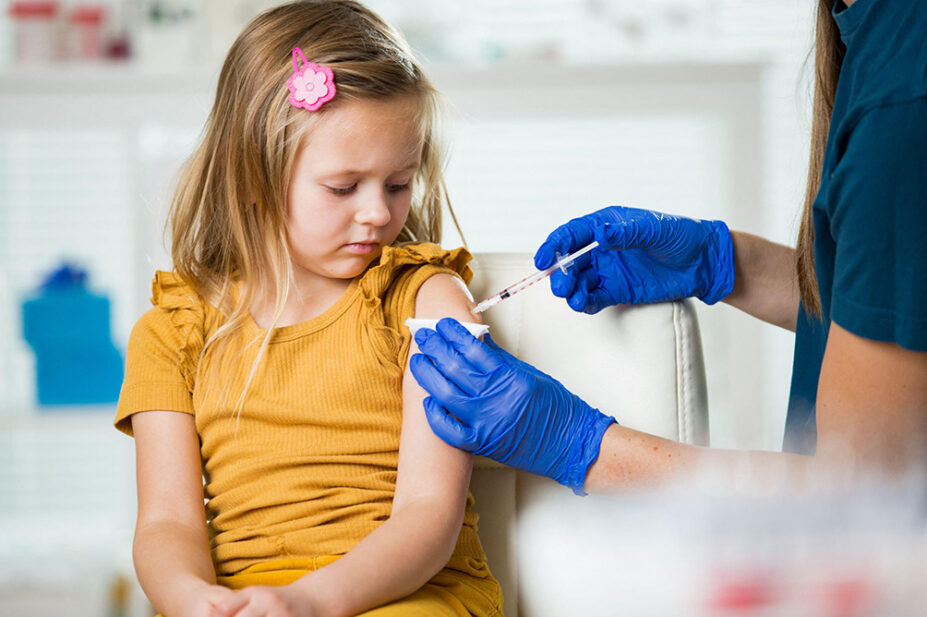
General practice in England will receive more financial incentives for delivering childhood vaccinations, the Department of Health and Social Care (DHSC) has said.
Currently, only those GP practices hitting high vaccination rate targets earn additional incentive payments. However, on 22 February 2026, a statement from the DHSC confirmed that the updated GP contract for 2026/2027 — due to be published later in February 2026 — would include “improvement incentives that recognise those practices making progress”.
“Practices in communities with lower vaccination rates — and who need the assistance most — are often missing out on earning these additional payments even when they are making massive strides and recording year-on-year improvements in vaccination rates,” the statement added.
In January 2026, measles outbreaks were reported in parts of London and the Midlands. According to the DHSC, the new incentives should help to reduce outbreaks like these.
Health secretary Wes Streeting said: “With our investment and modernisation in general practice, GPs will be backed to protect children and prevent the risk of further outbreaks like we’ve seen in Enfield.”
The contract will also require primary care networks (PCNs) to identify care home residents with overdue or outstanding routine vaccinations.
Ruth Rankine, director of the PCN and neighbourhood lead at the NHS Confederation and NHS Providers, commented: “Primary care leaders welcome this announcement and see it as a fair and supportive approach for general practice, particularly for those working in communities with high levels of unmet need.
“We are particularly supportive of recognising meaningful improvement rather than relying solely on absolute thresholds. This is a more realistic and constructive way to encourage progress, given the very real challenges many practices face, including workforce pressures and higher levels of vaccine hesitancy in some communities,” she added.
Malcolm Harrison, chief executive of the Company Chemists’ Association (CCA), said: “With vaccination uptake declining, it is vital that community pharmacies are commissioned to deliver a wider range of vaccines.
“Pharmacists have the skills and expertise to support the delivery of vaccinations. Pharmacies are also ideally placed in local communities and are highly accessible to patients. With more pharmacies in more deprived areas, pharmacies are well placed to drive uptake amongst underserved communities and build greater vaccine confidence.
“However, any such effort must be appropriately remunerated to ensure it is sustainable.
“By enabling pharmacies to play a full role alongside GP practices, there is the opportunity to reach more patients, increase uptake, and help protect communities from preventable illnesses.”
Earlier in February 2026, a leaked letter from the British Medical Association (BMA) to chief medical officer Chris Whitty suggested GPs felt providing flu jabs was “no longer a financially viable option”.
In response, Harrison said that “pharmacies are ready to administer more flu jabs if needed; however, the flu vaccination programme urgently needs additional funding”.
The measles, mumps, rubella and chickenpox (MMRV) vaccine replaced the measles, mumps, rubella (MMR) vaccine across Great Britain from January 2026.
The MMRV vaccine is not currently available on the NHS in community pharmacies. A trial of NHS community pharmacy delivery of the MMR vaccine in the North West of England ended on 31 March 2025, when the commissioned contracts expired.