Marina April / Shutterstock.com
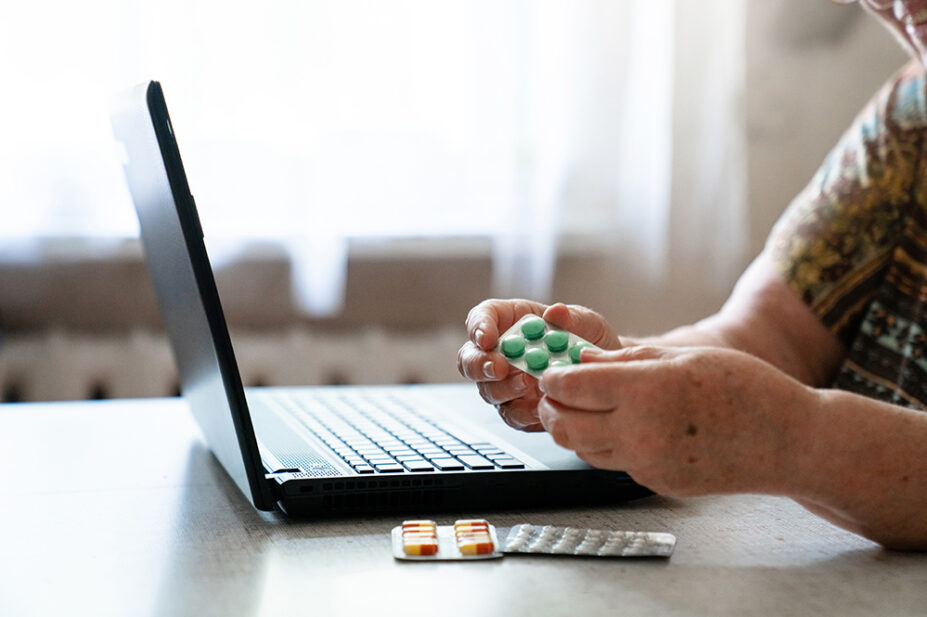
Fake online pharmacies are a “growing and significant threat to patient safety”, and system-wide action is needed to tackle them, a General Pharmaceutical Council (GPhC) report has said.
The report, ‘Combating fake online pharmacies and unregulated medicines‘, follows a roundtable organised by the pharmacy regulator and hosted by MP Sadik Al-Hassan, chair of the All-Party Parliamentary Group on Pharmacy.
There is, the report says, a “rapid proliferation of unregulated online sellers”, which is “exposing patients to counterfeit, ineffective and potentially dangerous medicines”.
However, the roundtable concluded that the “very complex” problem cannot be tackled by any single organisation. Attendees, the report said, noted that the technology companies behind search engines and social media platforms had shown “limited action and engagement to date”, and said that legislative change might be needed to require them to take effective action.
“Tackling this issue must be treated as a public safety priority, and the Big Tech companies will need to play their part to remove harmful and illegal content”, Al-Hassan said.
“Public awareness of the risks of buying medicines from unregulated sources must also be at the heart of any long-term solution.”
Among recommendations, the report suggests that search engines could demote or remove certain websites and prioritise GB-registered pharmacies in search results. It also highlighted that around 60% of pharmacies in the United States and Canada use the “.pharmacy” domain name to show that they are legitimate — but said that this does carry a cost to pharmacies who use it.
The report said action could be taken towards a UK version of the EU Common Logo Scheme to help people identify legitimate online pharmacies.
It also suggested that improving access to NHS medicines that are commonly bought online — for example, weight-loss medicines — could help, as it may lead to people being less tempted to buy them from unregulated sources.
In April 2026, seven men were sentenced after more than 130,000 doses of unauthorised medicines were seized by the MHRA. Suspicion was first raised in 2015 when UK Anti-Doping — an organisation that ensures sports bodies in the UK are compliant with the World Anti-Doping Code — identified websites suspected of selling performance-enhancing steroids and other illegal medicines.
In July 2026, the GPhC launched a social media campaign advising patients on how to spot a fake online pharmacy and how to use its online register to check that a pharmacy is registered.
Kathie Cashell, chief executive and registrar of the GPhC, said: “Patients and the public need practical, accessible information about how to stay safe when obtaining medicines online, how to identify legitimate providers and how to avoid the serious risks posed by unregulated sellers.
“The GPhC and other regulators are doing what we can to get that message out to the public, including through public information campaigns, but we cannot do this alone.
“In our view, Big Tech — including Google, Bing and Meta — should be doing much more to tackle this major patient safety threat. We are calling on them to work with us and other regulators to quickly remove online sites and social media content illegally selling prescription-only medicines, and to help people to identify legitimate online pharmacies.”
Tase Oputu, president of the Royal College of Pharmacy, said: “Fake online pharmacies are a serious threat to patient safety and this report rightly highlights the need for stronger action from technology companies. Public awareness is important but patients also need greater protection from illegal sellers operating online.
“We need urgent, coordinated action to prevent these sellers from reaching the public and ensure that those facilitating the sale of unsafe medicines are held to account to prevent further harm.
“Alongside this, we must understand the barriers that may lead people to seek medicines from unregulated sources. Any action to improve access must be underpinned by appropriate clinical assessment and patient safety.”
Malcolm Harrison, chief executive of the Company Chemists’ Association (CCA), said: “We welcome the focus of this report. Action is urgently needed to prevent illegal and unregulated sellers from reaching patients. This could include the application of stronger enforcement action against those operating outside the law and putting the public at risk.
“More also needs to be done to help people distinguish between legitimate pharmacies and unregulated sellers online. We would support measures that make registered pharmacies easier for patients to identify and prioritise, alongside greater public awareness of the importance of checking that an online pharmacy is genuine.
“However, as the various regulatory bodies work to combat this risk to the public, they must also be mindful of the impact of their decisions on legitimate actors in the market. Making the legal and safe provision of medicines online overly challenging could have the unintended consequence of driving more people to seek the medicines they want from unregulated and illegal suppliers.”
The roundtable was attended by representatives from groups including the Royal College of Pharmacy, the Medicines and Healthcare products Regulatory Agency, and the CCA, as well as the Department of Health and Social Care, Healthcare Improvement Scotland and the Welsh government.
Al-Hassan said that the All-Party Parliamentary Group on Pharmacy will “review the report and consider recommendations for government, regulators and the wider pharmacy sector”.