PA Images / Alamy Stock Photo
This month marked the approval of the first street drug-checking service in Scotland, the country with the highest number of drug deaths in Europe.
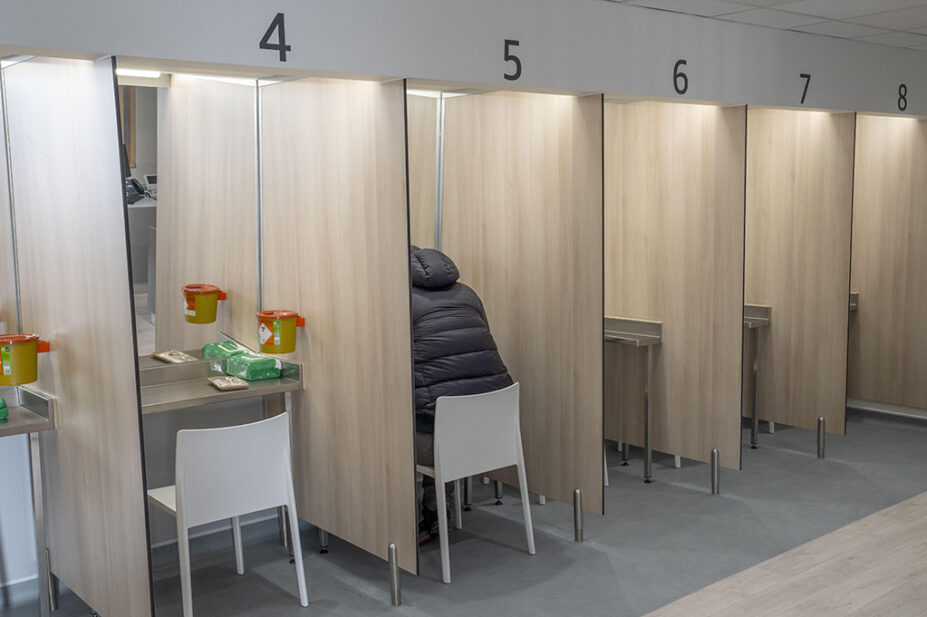
It will open on the site of ‘The Thistle’, the UK’s first and only safe drug consumption room, which opened in January 2025 and was used more than 2,500 times in its first four months.
Both developments are clearly positive for an approach towards illegal street drugs and their use, which prioritises treatment and prevention. However, these developments were also a long time in the making.
Attempts to open safer drug consumption rooms have been repeatedly rebuffed in the past, such as in 2020 when the UK government rejected calls from the House of Commons Scottish Affairs Committee to establish one such facility.
The Scottish government had recognised the need for urgent measures to deal with the problem of harm from street drugs. In 2019, it established a drugs death taskforce; however, UK law prevented safer consumption rooms from being opened.
Eventually, a statement by the Lord Advocate Dorothy Bain KC — Scotland’s chief legal officer —explained that would not be in the public interest to prosecute users for possession of illegal drugs while at the facility, which allowed the Glasgow site to open.
A very small number of drug-checking services have existed in England and Wales for some years; however, there were none in Scotland — where the problem of drugs harms is most acute.
Some progress is being made, but it’s a long and drawn-out process
In England, Bristol City Council commissioned the first regular drug-checking service in the UK, but it also proposed a pilot drug consumption room in 2019, which was rejected by the government. The Home Office insisted that it would not change the law.
The city’s ‘Drug and alcohol strategy service for 2021–2025’, published in 2021, vowed to revisit the idea; however, Bristol City Council now says it is not proposing the idea and has accepted that it would be considered illegal.
So, some progress is being made, but it’s a long and drawn-out process. Even after The Thistle’s opening, the UK government is still adamant that it will not back safe drug consumption rooms.
Speaking at the House of Commons Scottish Affairs Committee’s inquiry into the Glasgow facility, held in June 2025, Diana Johnson, then minister for policing and crime prevention, said: “I really want to be clear with you: we do not support drug consumption facilities. It is not our policy, and we will not be amending the Misuse of Drugs Act.”
Political posturing and a requirement to be seen to be tough on illegal drugs is clearly at odds with a treatment and prevention approach. It is also interesting to note that Johnson took a slightly different line when she was chair of the Independent Commons Home Affairs Committee, which recommended in 2023 that the government create a legislative pathway to enable the pilot of a safe consumption facility in Glasgow.
It feels as though there is some momentum for politically contentious drugs treatment services to be given the go-ahead.
There are still two outstanding applications for drug-checking services in Scotland, and the Scottish National Party said in its manifesto for the 2024 UK general election that it wanted to create a “framework” to allow for drug consumption facilities.
With elections to the Scottish parliament, as well as the Welsh Sennedd, tabled for 2026, it will be interesting to note the different parties’ positions on this issue. But whatever happens in the devolved countries, it seems they are likely to come up against the intransigence of politicians in Westminster.
Since Bristol’s attempt to open a drug consumption room in 2019, there have been no similar moves in England — perhaps displaying a resignation to the reaction they are likely to get.
There has been a change of UK government, so perhaps attempts to shift the way that illegal drugs, and their harms, are dealt with would receive a more sympathetic reception — it would be interesting to see. PJ
You may also be interested in

International Pharmaceutical Federation calls for bigger role for pharmacists in prevention of substance use disorders

UK study to look at semaglutide for alcohol addiction and obesity