



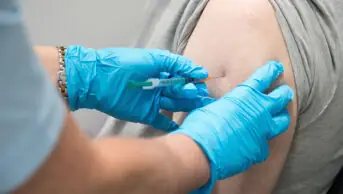
Dragana Gordic / Shutterstock.com
After reading this article, you should be able to:
- Identify patients whose clinical or social circumstances increase their risk of severe COVID-19;
- Distinguish clinical vulnerability from eligibility for seasonal vaccination, NHS lateral flow device tests and COVID-19 treatment;
- Provide evidence-based prevention, testing and self-management advice;
- Recognise when urgent assessment or medicines review is required and counsel patients using shared decision-making.
Introduction
COVID-19 has moved from pandemic status to an established respiratory infection, which is managed through vaccination, surveillance, testing and treatment. SARS-CoV-2 was identified in January 2020, while the outbreak was characterised as a pandemic on 11 March 20201,2. In May 2023, the World Health Organization announced that COVID-19 was no longer a public health emergency of international concern. This marked a change in the international response but not the disappearance of the virus3.
For most people, vaccination, infection-derived immunity and improved treatment have reduced the likelihood that infection will lead to critical illness. However, risk remains for certain patient groups. Older people, those with impaired immune responses and people living with multiple long-term conditions continue to experience a disproportionate burden of hospitalisation and death4,5.
UK policy has therefore shifted from population-wide controls and universal vaccination towards targeted seasonal vaccination for eligible patients, prompting diagnostic testing and early treatment for those most likely to benefit via the NHS lateral flow device (LFD) tests supply service6–10.
Pharmacists in primary and secondary care encounter these patients through dispensing, vaccination, medicines optimisation, discharge, outpatient services and treatment pathways. This article will cover how pharmacists can recognise changing risk, distinguish between different eligibility criteria, help patients prepare for infection, supply NHS LFD tests where commissioned, identify deterioration and support safe antiviral use.
Who is clinically vulnerable to COVID-19?
Clinical vulnerability is broader than eligibility for a particular intervention. Large UK cohort studies identified increasing age as the strongest population-level predictor of a serious outcome, with additional risk associated with male sex, obesity, diabetes, chronic cardiac, respiratory, kidney, liver and neurological disease, cancer, immune compromise and deprivation4,11–13. Frailty and multimorbidity compound risk, while some immunocompromised groups remain at higher risk despite vaccination5.
The Green Book lists clinical risk groups relevant to vaccination, including those with chronic respiratory, cardiac, vascular, renal, liver and neurological disease, diabetes and other endocrine disorders, immunosuppression, asplenia or splenic dysfunction, morbid obesity, severe mental illness, pregnancy and younger adults in long-stay residential care7. These groups are not interchangeable with the narrower criteria for a seasonal vaccination campaign or community COVID-19 treatment. Eligibility for the seasonal COVID-19 vaccination in 2026 can be seen in Box 1.
Box 1: Eligibility for the autumn 2026 COVID-19 vaccination programme in England
- Adults aged 75 years and over;
- Residents in care homes for older adults;
- Individuals aged 6 months and over who are immunosuppressed, as defined in the Green Book7,14,15.
Figure 116,17 shows adult patients who are at increased risk of progression to severe COVID-19 and therefore are eligible to access free LFD test kits from community pharmacies through the NHS LFD tests supply service. An equivalent list of eligibility relating to children and young people can be seen here.
Figure 1: Summary of the patient groups at highest risk of progression to severe COVID-19 who are eligible for NHS LFD tests and treatment assessment
Three questions can help distinguish vulnerability from eligibility:
- Is this person at increased clinical risk?
- Are they eligible for the current NHS vaccination campaign?
- Are they in the highest-risk group eligible for NHS LFD tests and treatment assessment?
For example, a 68-year-old with stable diabetes may be clinically vulnerable but may not meet a campaign restricted to older adults, care-home residents and immunosuppressed people. Conversely, a younger patient starting intensive immunosuppressive treatment may meet vaccination and treatment criteria for the first time7,14,15,17.
Risk is also shaped by exposure and access. Deprivation, insecure employment, overcrowding, language needs, digital exclusion and previous experiences of discrimination can affect both infection risk and access to prevention. Ethnicity should not be treated as a biological proxy, while assessment should consider the patient’s clinical and social circumstances. Persistent inequalities in vaccine uptake underscore the need for accessible provision to be paired with trusted communication and targeted outreach18–20.
Opportunities to identify patients at risk
Identification of patients at risk should be incorporated into routine care. Useful touchpoints include repeat dispensing, the new medicine service, Pharmacy First, vaccination, medicines reviews, outpatient clinics, discharge reconciliation and consultations for respiratory symptoms. The trigger may be unrelated to COVID-19, but the goal is to notice a change in risk and connect the patient with the appropriate prevention, testing or treatment pathway.
Focused questions should establish age, diagnoses, frailty, pregnancy status, immune status, recent specialist treatment and any material change since the patient’s risk was last reviewed. Medication records can provide prompts. Transplant regimens, antineoplastic medicines, biological therapies, systemic corticosteroids and other immunosuppressants may indicate increased risk7,8. A medicine is a signal rather than proof of eligibility because indication, dose, duration, combination treatment and timing matter. Information should be confirmed with the patient and, where authorised, an appropriate shared clinical record.
The next step should be to match the identified need with appropriate care provision. For example:
- A patient collecting methotrexate who does not know how to obtain LFD tests may need a preparedness conversation;
- A care-home resident with a missed booster may need referral to the local vaccination service;
- An immunosuppressed patient reporting a new cough and fever requires prompt testing and treatment assessment.
Pharmacy team protocols should include defined prompts for pharmacist review, details to be recorded and the local clinical escalation route.
Evidence shows that pharmacist interventions are associated with improved immunisation uptake; although, effects vary by setting and intervention21. Community pharmacies delivered a substantial share of COVID-19 vaccinations and reached some minority ethnic populations particularly well22,23.
Preventing infection and severe disease
Prevention of COVID-19 infection should be layered, proportionate and personalised. The aim is to reduce avoidable risk while maintaining social connection and access to healthcare.
Severe COVID-19 has disproportionately affected some racially minoritised populations, reflecting differences in exposure, underlying health, socioeconomic circumstances and access to care4,18,19. Pharmacy teams should understand the population they serve and adapt provision to identified needs. For example, where uptake data and local insight identify lower engagement in a particular language group, a pharmacy could offer translated invitations, bookable and walk-in appointments, quieter consultation times, and outreach through trusted faith or community organisations. These measures should be co-designed with the local population rather than based on assumptions20.
Vaccination remains the principal intervention for reducing severe disease, but eligibility is set for each campaign and should not be assumed from a previous invitation (see Box 1)7,14,15. Pharmacy teams should explain that vaccination primarily reduces the probability of severe outcomes. It cannot prevent every infection, and protection may wane as immunity and variants change. Immunosuppressed patients may require specialist advice on the timing of treatment or additional doses5,8,15.
Pharmacy teams can advise on practical measures to reduce exposure, which include:
- Improving ventilation by opening windows, doors or vents, where safe, or using ventilation systems that bring in fresh air;
- Practising respiratory hygiene, including covering coughs and sneezes and disposing of tissues safely;
- Washing hands regularly and using alcohol-based hand rub when appropriate;
- Considering a well-fitting face covering in crowded or poorly ventilated settings, particularly where the consequences of infection are high;
- Avoiding close contact with others while acutely unwell24,25.
Advice should be practical: a severely immunosuppressed patient might choose to go out at quieter times even for vaccination appointments, improve ventilation when visitors are present, or wear a face covering on busy public transport, rather than withdrawing from everyday life.
Patients who may qualify for treatment should know — before illness develops — where to obtain LFD tests, when to test and whom to contact after a positive result. They should keep an up-to-date list of medications and understand that early assessment matters. This preparation is particularly important in instances where language, health literacy, mobility or digital access could otherwise delay care26.
Lateral flow testing and access to treatment
In England, people aged 12 years and over who are at the highest risk of becoming seriously ill with COVID-19 can obtain free NHS LFD tests from participating community pharmacies. The service is walk-in, and a representative may collect on the patient’s behalf. Eligibility should be checked against the current service specification and National Institute for Health and Care Excellence (NICE) criteria, not inferred solely from age, a historic shielding letter or vaccination eligibility17,27–29.
Provision differs across Great Britain. In Scotland, most people do not need to test, but some people with specified health conditions can still access free tests — NHS Inform provides the current route30. In Wales, eligible people at highest risk can obtain free tests from participating community pharmacies31,32. Pharmacy teams should therefore check the guidance for the nation in which they practise and maintain an up-to-date local signposting route.
When to test
An eligible patient should take an LFD test as soon as COVID-19 symptoms develop, even if symptoms are mild. Testing solely because of possible exposure is not advised in the current England pathway26. If the first result is negative but symptoms continue, the patient should complete three tests over three days, one test each day. A void result should be repeated promptly, while a positive result means COVID-19 is likely26,33.
Figure 2: Lateral flow device results and next steps
What to do following a positive test
Routine reporting is not generally required in England, but a patient eligible for treatment should contact their GP surgery, NHS 111 or hospital specialist as soon as possible. The clinician may assess the patient directly or refer them to the local COVID-19 treatment service26,33. Patients should not wait for symptoms to worsen before seeking assessment.
A patient who is otherwise stable can rest, maintain fluid intake and use paracetamol or ibuprofen for fever or discomfort when clinically suitable, following the product instructions and avoiding duplicate ingredients. The pharmacist should take account of age, pregnancy, comorbidities, renal or hepatic impairment, interactions and contraindications24,34. Emergency escalation is required for severe or worsening breathlessness, inability to speak in sentences, central chest pain, cyanosis, collapse, new confusion, markedly reduced consciousness or another life-threatening presentation. Use a lower threshold for review in advanced age, pregnancy, frailty, severe immunosuppression or rapid deterioration34.
COVID-19 treatments
Most COVID-19 treatment-eligible patients are assessed and treated without hospital admission. Local NHS organisations arrange access, so pathways vary. If oral treatment is prescribed, it may be collected by a representative or delivered26.
NICE recommends nirmatrelvir plus ritonavir for eligible adults who do not require supplemental oxygen and are at increased risk of progression to severe COVID-1917,35. Treatment is time-sensitive because it is most effective when started soon after symptoms begin. Pharmacists can prevent delay by recognising eligibility, advising immediate testing, directing a positive patient to the correct same-day pathway and ensuring that an accurate medicines list is available26,36.
Ritonavir strongly inhibits CYP3A. Assessment must include prescribed, over-the-counter, herbal and recreational products, renal and hepatic function, and whether an interacting medicine can safely be withheld or adjusted. Product information, the British National Formulary, specialist interaction resources and local pathways should be used36,37.
Molnupiravir is an option for eligible adults with mild-to-moderate disease and a positive test when nirmatrelvir plus ritonavir is contraindicated or unsuitable38. Hospital management should follow current NICE guidance34.
A NICE consultation to review existing technology appraisals relating to the use of nirmatrelvir plus ritonavir and tocilizumab; remdesivir and tixagevimab plus cilgavimab; and molnupiravir for treating COVID-19 closed on 24 September 2026.
Patient counselling, information and support
People who are clinically vulnerable may experience healthcare fatigue from managing existing conditions alongside continuing concern about COVID-19. A patient may question another vaccine dose after a breakthrough infection, worry that a new variant makes vaccination ineffective or remain anxious after shielding. The pharmacist should first identify the specific concern and the patient’s decision-making context. Vaccine hesitancy is not a single attitude: confidence, perceived risk, convenience, social influences and previous healthcare experiences can all contribute39–41. For more information, see ‘How to address vaccine hesitancy’.
Responses should be accurate and personalised. Helpful phrases include:
- Breakthrough infection — ‘The vaccine cannot prevent every infection. Its main benefit for you is lowering the chance that COVID-19 becomes severe enough to require hospital care.’
- Variants — ‘It is reasonable to ask whether the vaccine still matches the virus. Effectiveness and circulating variants are monitored, which is why vaccine formulations and eligibility are reviewed.’
- Safety — ‘Can you tell me which side effect worries you most? We can compare how likely it is with the risk COVID-19 poses for you and look at the current UK Health Security Agency or Medicines and Healthcare products Regulatory Agency information together.’7,8
- Readiness to decide — ‘What would help you feel able to make a decision today: more information, time to think, or advice from your specialist?’
The results of a UK randomised trial, published in 2021, suggest that information about the personal benefits of vaccination can reduce hesitancy42. Communication should connect the recommendation to what matters to the patient, avoid judgement and agree the next action: vaccination, specialist advice, obtaining tests or time to consider. Information should be given in the patient’s preferred language and format, using an interpreter, translated or easy-read material, where required, and understanding should be checked using teach-back. Shared decision-making guidance supports presenting options, benefits, harms and uncertainty clearly43.
Anxiety about COVID-19 should be addressed without encouraging unnecessary isolation. Proportionate planning, such as knowing when to test and how to access treatment, can restore a sense of control. Where anxiety is persistent, disproportionate or prevents ordinary activity or access to healthcare, signpost or refer for appropriate mental health support43.
Practice example: addressing a treatment concern before infection
A 54-year-old patient who takes mycophenolate after kidney transplantation collects a repeat prescription. They say they have not collected LFD tests because, having heard that COVID-19 antiviral treatments interact with many medicines, they assume no COVID-19 treatment would be safe for them. The pharmacist acknowledges the concern and explains that an interaction does not automatically exclude treatment. The clinical team must assess the complete medicines list, renal and hepatic function, as well as whether any medicine can safely be paused or adjusted. The pharmacist confirms current vaccination and treatment eligibility, helps the patient obtain tests, explains the three-day testing sequence and advises immediate contact with the transplant team, GP surgery or NHS 111 after a positive result. The dispensing record is reconciled so that a current medicines list is available. The patient leaves with a clear plan rather than waiting until acutely unwell7,17,26–29,33–37,44.
Best practice
- Check current national and local criteria. Do not rely on a previous campaign invitation or shielding letter;
- Treat medication history as a prompt to clarify immune status, not automatic proof of eligibility;
- Use every relevant pharmacy contact to connect identification with prevention, testing or treatment;
- For eligible symptomatic patients, advise immediate testing and, after a negative result, daily testing for three days while symptoms persist;
- After a positive result, support prompt contact with the GP surgery, NHS 111 or specialist team;
- Review all prescribed, non-prescription, herbal and recreational products when antiviral treatment is considered;
- Use balanced, personalised communication and address practical barriers, as well as vaccine confidence;
- Escalate red flags urgently and use a lower threshold for review in severe immunosuppression, frailty, pregnancy or rapid deterioration.
Conclusion
Routine COVID-19 management now focuses on people at greatest risk of serious outcomes. Poor communication and inconsistent application of changing NHS criteria can confuse patients, position pharmacy teams as gatekeepers and undermine confidence. Pharmacy teams can support effective and equitable care by recognising changing vulnerability, applying current guidance consistently, promoting vaccination and proportionate prevention, facilitating prompt testing and enabling timely, safe access to treatment.
AI declaration
AI was used to support structural editing, language refinement and reference formatting. The authors reviewed and verified the clinical content, references and final text, and accept full responsibility for the work.
- 1.Pneumonia of unknown cause. World Health Organisation. 2020. https://www.who.int/emergencies/disease-outbreak-news/item/2020-DON229
- 2.WHO Director-General’s opening remarks at the media briefing on COVID-19. World Health Organisation. 2020. https://www.who.int/news-room/speeches/item/who-director-general-s-opening-remarks-at-the-media-briefing-on-covid-19—11-march-2020
- 3.Statement on the fifteenth meeting of the IHR Emergency Committee regarding the COVID-19 pandemic. World Health Organisation. 2023. https://www.who.int/news/item/05-05-2023-statement-on-the-fifteenth-meeting-of-the-international-health-regulations-(2005)-emergency-committee-regarding-the-coronavirus-disease-(covid-19)-pandemic
- 4.Epidemiology of COVID-19 in England: January 2020 to December 2024. UK Health Security Agency. https://www.gov.uk/government/publications/epidemiology-of-covid-19-in-england
- 5.Parker EPK, Hartney T, Nab L, et al. Factors associated with severe COVID-19 in immunocompromised subgroups in England from 2020 to 2024: an OpenSAFELY cohort study. eBioMedicine. 2026;129:106327. doi:10.1016/j.ebiom.2026.106327
- 6.JCVI statement on COVID-19 vaccination in autumn 2026 and spring 2027. Joint Committee on Vaccination and Immunisation. 2025. https://www.gov.uk/government/publications/covid-19-vaccination-in-autumn-2026-and-spring-2027-jcvi-advice-16-july-2025/jcvi-statement-on-covid-19-vaccination-in-autumn-2026-and-spring-2027
- 7.COVID-19: the Green Book, chapter 14a. UK Health Security Agency. 2026. https://www.gov.uk/government/publications/covid-19-the-green-book-chapter-14a
- 8.COVID-19 vaccination programme: information for healthcare practitioners. UK Health Security Agency. 2026. https://www.gov.uk/government/publications/covid-19-vaccination-programme-guidance-for-healthcare-practitioners/covid-19-vaccination-programme-information-for-healthcare-practitioners
- 9.Lang S, Loving S, McCarthy ND, Ramsay ME, Salisbury D, Pollard AJ. Two centuries of immunisation in the UK (part II). Arch Dis Child. 2019;105(3):216-222. doi:10.1136/archdischild-2019-317707
- 10.Chapter 9: pharmaceutical interventions: therapeutics and vaccines. In: Technical report on the COVID-19 pandemic in the UK. UK Health Security Agency. 2023. https://www.gov.uk/government/publications/technical-report-on-the-covid-19-pandemic-in-the-uk/chapter-9-pharmaceutical-interventions-therapeutics-and-vaccines
- 11.Williamson EJ, Walker AJ, Bhaskaran K, et al. Factors associated with COVID-19-related death using OpenSAFELY. Nature. 2020;584(7821):430-436. doi:10.1038/s41586-020-2521-4
- 12.Clift AK, Coupland CAC, Keogh RH, et al. Living risk prediction algorithm (QCOVID) for risk of hospital admission and mortality from coronavirus 19 in adults: national derivation and validation cohort study. BMJ. Published online October 20, 2020:m3731. doi:10.1136/bmj.m3731
- 13.Docherty AB, Harrison EM, Green CA, et al. Features of 20 133 UK patients in hospital with covid-19 using the ISARIC WHO Clinical Characterisation Protocol: prospective observational cohort study. BMJ. Published online May 22, 2020:m1985. doi:10.1136/bmj.m1985
- 14.Advice accepted on autumn 2026 COVID-19 vaccination programme. Department of Health and Social Care. 2026. https://www.gov.uk/government/news/advice-accepted-on-autumn-2026-covid-19-vaccination-programme
- 15.COVID-19 vaccine. NHS. https://www.nhs.uk/vaccinations/covid-19-vaccine/
- 16.Find a pharmacy that offers free COVID-19 rapid lateral flow tests. NHS. https://www.nhs.uk/nhs-services/pharmacies/find-a-pharmacy-that-offers-free-covid-19-rapid-lateral-flow-tests/
- 17.TA878, section 5: risk factors for progression to severe COVID-19. National Institute for Health and Care Excellence. https://www.nice.org.uk/guidance/ta878/chapter/5-Supporting-information-on-risk-factors-for-progression-to-severe-COVID-19
- 18.Coronavirus and vaccination rates by socio-demographic characteristic and occupation, England: 8 December 2020 to 31 December 2021. Office for National Statistics. 2022. https://www.ons.gov.uk/peoplepopulationandcommunity/healthandsocialcare/healthinequalities/bulletins/coronavirusandvaccinationratesinpeopleaged18yearsandoverbysociodemographiccharacteristicandoccupationengland/8december2020to31december2021
- 19.Watkinson RE, Williams R, Gillibrand S, Sanders C, Sutton M. Ethnic inequalities in COVID-19 vaccine uptake and comparison to seasonal influenza vaccine uptake in Greater Manchester, UK: A cohort study. Kretzschmar MEE, ed. PLoS Med. 2022;19(3):e1003932. doi:10.1371/journal.pmed.1003932
- 20.NHS vaccination strategy. NHS England. 2023. https://www.england.nhs.uk/long-read/nhs-vaccination-strategy/
- 21.Rahim MHA, Dom SHM, Hamzah MSR, Azman SH, Zaharuddin Z, Fahrni ML. Impact of pharmacist interventions on immunisation uptake: a systematic review and meta-analysis. Journal of Pharmaceutical Policy and Practice. 2023;17(1). doi:10.1080/20523211.2023.2285955
- 22.Community pharmacies administered more than half of all COVID-19 vaccines to people from ethnic minorities, data show. Pharmaceutical Journal. Published online 2024. doi:10.1211/pj.2024.1.339268
- 23.Autumn/Winter 2024 seasonal vaccination. NHS England. 2024. https://www.england.nhs.uk/long-read/autumn-winter-2024-seasonal-vaccination/
- 24.People with symptoms of a respiratory infection including COVID-19. UK Health Security Agency. https://www.gov.uk/guidance/people-with-symptoms-of-a-respiratory-infection-including-covid-19
- 25.Roadmap to improve and ensure good indoor ventilation in the context of COVID-19. World Health Organization. 2021. https://www.who.int/publications/i/item/9789240021280
- 26.Treatments for COVID-19. NHS. https://www.nhs.uk/conditions/covid-19/treatments-for-covid-19/
- 27.NHS Lateral Flow Device Tests Supply Service: Advanced Service. NHS England. https://www.england.nhs.uk/primary-care/pharmacy/pharmacy-services/nhs-ltd-tests-supply-service/
- 28.Find a pharmacy that offers free COVID-19 rapid lateral flow tests. NHS. https://www.nhs.uk/nhs-services/pharmacies/find-a-pharmacy-that-offers-free-covid-19-rapid-lateral-flow-tests/
- 29.Lateral flow device tests supply service. Community Pharmacy England. https://cpe.org.uk/national-pharmacy-services/advanced-services/lateral-flow-device-tests-supply-service/
- 30.Coronavirus (COVID-19) and other respiratory infections in Scotland. Scottish government. https://www.gov.scot/coronavirus-covid-19/
- 31.Get tested for coronavirus (COVID-19). Welsh government . 2025. https://www.gov.wales/get-tested-coronavirus-covid-19
- 32.COVID-19 treatments. Welsh government . https://www.gov.wales/covid-19-treatments
- 33.COVID-19 rapid lateral flow test. NHS. https://www.nhs.uk/tests-and-treatments/covid-19-rapid-lateral-flow-test/
- 34.COVID-19 rapid guideline: managing COVID-19 (NG191). National Institute for Health and Care Excellence. 2025. https://www.nice.org.uk/guidance/ng191
- 35.Nirmatrelvir plus ritonavir and tocilizumab for treating COVID-19 (TA878). National Institute for Health and Care Excellence. 2026. https://www.nice.org.uk/guidance/ta878
- 36.Paxlovid 150 mg/100 mg film-coated tablets: Summary of Product Characteristics. Pfizer. https://www.medicines.org.uk/emc/product/13145/smpc
- 37.COVID-19 drug interactions. University of Liverpool. https://www.covid19-druginteractions.org/
- 38.Molnupiravir for treating COVID-19 (TA1056). National Institute for Health and Care Excellence. 2026. https://www.nice.org.uk/guidance/ta1056
- 39.Behavioural and social drivers of vaccination: tools and practical guidance. World Health Organization. 2022. https://www.who.int/publications/i/item/9789240049680
- 40.Roberts C h., Brindle H, Rogers NT, Eggo RM, Enria L, Lees S. Vaccine Confidence and Hesitancy at the Start of COVID-19 Vaccine Deployment in the UK: An Embedded Mixed-Methods Study. Front Public Health. 2021;9. doi:10.3389/fpubh.2021.745630
- 41.Woodhead C, Onwumere J, Rhead R, et al. Race, ethnicity and COVID-19 vaccination: a qualitative study of UK healthcare staff. Ethnicity & Health. 2021;27(7):1555-1574. doi:10.1080/13557858.2021.1936464
- 42.Freeman D, Loe BS, Yu LM, et al. Effects of different types of written vaccination information on COVID-19 vaccine hesitancy in the UK (OCEANS-III): a single-blind, parallel-group, randomised controlled trial. The Lancet Public Health. 2021;6(6):e416-e427. doi:10.1016/s2468-2667(21)00096-7
- 43.Shared decision making. National Institute for Health and Care Excellence. 2021. https://www.nice.org.uk/guidance/ng197
- 44.Dinnes J, Sharma P, Berhane S, et al. Rapid, point-of-care antigen tests for diagnosis of SARS-CoV-2 infection. Cochrane Database of Systematic Reviews. 2022;2022(7). doi:10.1002/14651858.cd013705.pub3
1 comment
You must be logged in to post a comment.
You might also be interested in…

Healthcare professionals will receive ‘clear and scalable’ psychological support in a future pandemic, government says
Almost 90% of pharmacies report abuse from ineligible COVID-19 vaccination patients, survey reveals

This was a really informative read on COVID-19 precautions. It’s crucial to stay updated on how the situation is evolving and what daily steps we can take. I’ve also been following a helpful article that breaks down some additional insights on this topic here: https://dev-aryan-kumar.pantheonsite.io/covid-19-awareness-prevention-and-moving-forward/ Thanks for sharing this well-structured post