BSIP SA/Alamy Stock Photo
After reading this article, you should be able to:
- Know the complications and mortality risk associated with type 1 diabetes mellitus (T1DM) and disordered eating — or ‘T1DE’;
- Identify signs and symptoms of T1DE;
- Understand the communication skills required by healthcare professionals when managing patients with T1DE;
- Understand the importance of appropriate training and supervision for management of T1DE, and know when to refer.
‘T1DE’ refers to a range of disordered eating presentations in people with type 1 diabetes mellitus (T1DM) who use insulin restriction and a range of other behaviours to control their weight.
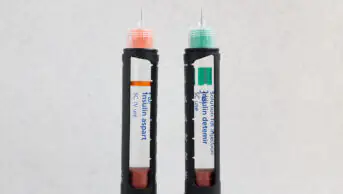
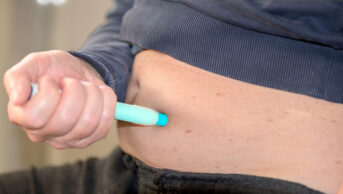
T1DM is an autoimmune condition characterised by the complete cessation of insulin production in the body, resulting in a lifelong requirement to self-monitor blood glucose levels (by finger-prick blood glucose test or continuous glucose monitor)1. It requires people with diabetes to predict and control blood glucose levels through insulin adjustment with multiple daily injections or the operation of an insulin pump1.
Around 400,000 people in the UK are estimated to have T1DM, which accounts for around 8% of diabetes cases; there is a peak incidence in childhood2,3.
Diabulimia is a term often used in the media to describe when a person with T1DM has an eating disorder, but the name implies a link with bulimia nervosa, which is not necessarily the case. In medical literature, the term ‘T1DE’ is commonly used because it better acknowledges that disordered eating behaviours can manifest in several ways, such as dietary restriction, binge eating or insulin restriction4.
Eating disorders have one of the highest mortality and suicidality rates of any mental illness and they are nearly twice as common in T1DM than in the general population5–7. Uniquely, people with T1DM can restrict or omit insulin to reduce or avoid gaining weight, which is one of the main features of disordered eating in T1DM. Estimates of prevalence vary, but one study (n=234) reported that 30% of participants restricted insulin8,9.
NHS England has trialled a joined-up treatment pathway between diabetes and eating disorders services in each region in England. This integrated approach has been shown to be cost effective and improve clinical outcomes10,11. A sample of patients under the King’s College Hospital T1DE service (n=78) experienced a reduction in HbA1c, reduced hospital admissions for diabetic ketoacidosis (DKA), and a reduction in severe hypoglycaemic episodes over a 12-month period11.
There is a lack of equity of access to T1DE pilot services nationally. The majority of people with T1DE in the UK continue to be managed separately in diabetes and eating disorders services, without the cross supervision that is necessary for safe management of high risk T1DE. A 2024 parliamentary inquiry highlighted the risks to people with T1DE and recommended funding for specialist T1DE services, as well as a consensus on diagnostic criteria and a clinically approved pathway for prevention and treatment12.
Early identification and intervention for eating disorders is strongly advocated in national guidance and can lead to more positive treatment outcomes12,13. As a result, it is recommended that pharmacists in contact with people with T1DM are alert to potential signs and symptoms of T1DE (see below).
This article will provide an overview of the risks associated with T1DE and describe how the condition can be identified and managed, including communication considerations for healthcare professionals.
Causes and risk factors
When people with T1DM become insulin deficient prior to their diabetes diagnosis or from insulin omission, the subsequent hyperglycaemia, polyuria and osmotic diuresis results in a catabolic and dehydrated state, resulting in rapid weight loss. In these cases, people are rapidly re-insulinised, which can cause rapid weight gain and oedema, establishing the negative belief that insulin causes weight gain and promoting a recurring cycle of insulin omission7,11,14.
Intensive diabetes management for T1DM, which features carbohydrate counting and insulin dose adjustment, has a robust evidence base for improving HbA1c14. However, it carries an increased risk of weight gain that can be difficult to lose long term15,16. Some of the main features of diabetes management, such as checking nutrition labels, measuring portion sizes, encouraging exercise and weighing people, can mirror the eating disorder mindset16.
Risks and mortality in T1DE
People with T1DE have a three-fold mortality risk compared with those with T1DM who do not experience disordered eating8. Insulin restriction results in increased levels of blood glucose and ketone levels, which exposes the individual to significant acute risk of DKA, resulting in more frequent hospital admissions and longer stays8,17.
More information about DKA can be found in ‘Diabetic ketoacidosis in adults: identification, diagnosis and management’. Insulin restriction will also make a person more susceptible to accelerated long-term complications of diabetes, such as nephropathy, foot problems and retinopathy18.
Many of the physical and psychological risks associated with low weight and starvation in T1DE mirror those in individuals with eating disorders without T1DM19.
For example, cognitive effects may include impaired concentration, memory and decision-making, as well as increased cognitive rigidity and anxiety. People with eating disorders may also have co-existing mental health difficulties, such as low mood or anxiety. Physiological effects may include dehydration, low blood pressure, an increased risk of refeeding complications and early reductions in bone mineral density19.
Living with T1DM comes with a significant ‘diabetes burden’ stemming from the innumerable self-management activities and psychological impact. It significantly increases the prevalence of mental health conditions, such as anxiety and depression, which can exacerbate disordered eating behaviours20,21.
Identification and diagnosis
Proposed diagnostic criteria
There is currently no formal consensus on T1DE diagnostic criteria as classified in either the World Health Organization’s International Classification of Diseases 11th revision (ICD-11) or the American Psychiatric Association’s Diagnostic and Statistical Manual of Mental Disorders 5th edition (DSM-5)2,3. This poses a challenge for accurate identification and diagnosis of T1DE and its varying presentations.
Where there is cause to suspect T1DE, healthcare professionals may choose to use proposed diagnostic criteria for T1DE published by the Royal College of Psychiatrists to help differentiate it from other potential diagnoses; however, a formal diagnosis can only be made through a clinical assessment by a psychiatrist or eating disorder multidisciplinary team (see Box 119).
Box 1: Royal College of Psychiatrists proposed diagnostic criteria for T1DE
- People with type 1 diabetes mellitus who present with all three criteria: intense fear of gaining weight, body image concerns, or a fear of insulin promoting weight gain;
- Recurrent inappropriate direct or indirect* restriction of insulin (and/or other compensatory behaviour**) to prevent weight gain;
- A degree of insulin restriction, eating or compensatory behaviours that cause at least one of the following: harm to health; clinically significant diabetes distress; impairment on daily functioning.
*Indirect restriction of insulin refers to reduced insulin need/use owing to significant carbohydrate restriction.
**Dietary restriction, self-induced vomiting, laxative use, excessive exercise, overuse of thyroid hormones, overuse of diabetes medication believed to avoid weight gain or promote weight loss.
Red flags and barriers to detection
Detection of T1DE can be challenging. Eating disorders are unlikely to be self-reported, and people with T1DE may disguise their difficulties owing to feelings of shame and fear of judgement from HCPs, family and friends, which may be rooted in past adverse experiences with diabetes-related healthcare delivery13,22. T1DE can be mistaken for other drivers of insulin restriction, such as a dislike of needles, fear of hypoglycaemia, or behaviours related to diabetes burnout or depression. However, T1DE is underpinned by intense weight and shape concerns, which sets it apart from these other causes of insulin restriction19.
There are many ways to manipulate how much active insulin is on board. For example, deliberate deterioration of insulin through heat exposure, reducing absorption into the body by injecting into areas of lipoatrophy, or incorrectly siting a pump cannula. Some may falsify blood glucose readings or carbohydrate intake to mislead bolus advisors/pumps into recommending smaller insulin doses than required22. Insulin over-injection has also been observed, either as a response to binge eating or out of fear that high blood glucose may lead to long-term complications of diabetes22. A range of additional strategies may be employed to raise blood glucose, such as overconsumption of carbohydrate or sugary foods, including hypoglycaemia treatments. In a person without enough circulating insulin, exercise will also raise blood glucose levels and increase ketone production22.
Early identification and intervention for eating disorders is strongly advocated in national guidance and can lead to more positive treatment outcomes; therefore, it is recommended that pharmacists in contact with people with T1DM are alert to potential signs and symptoms of T1DE, which will vary from person to person12,13 (see Box 219).
When pharmacists identify someone with red flags for T1DE, they should liaise with the diabetes team to discuss the concerns, even if a T1DE diagnosis is uncertain.
Box 2: Red flags for T1DE
Biochemical
- Increase in HbA1c above 86mmol/mol or erratic blood glucose levels (e.g. high glycaemic variability, postprandial hyperglycaemia following bolus omission);
- Multiple emergency department or ward admissions with hyperglycaemia, diabetic ketoacidosis (DKA);
- Recurrent ketonemia (>3mmol/L) – may have compensated metabolic acidosis;
- Recurrent severe hypoglycaemia (2 or more episodes over 24 months).
Beliefs, behaviours and functioning
- Over-exercising;
- Impaired awareness of hypoglycaemia;
- Extreme dietary restriction or binge eating;
- Weight loss history (weight loss in line with Medical Emergencies in Eating Disorders guidance criteria) or fear of weight gain;
- Body image concerns;
- History of eating disorder diagnosis;
- Diabetes distress;
- Fear of hypoglycaemia;
- Mental health comorbidity (e.g. depression, generalised anxiety disorder).
Relationships
- Secrecy about diabetes management, failure to request regular prescriptions, disengagement from diabetes services;
- Poor school/work performance/attendance;
- Conflict at home around meals and eating/diabetes management.
Healthcare professionals need to be vigilant when assessing the reasons for variable glycaemic control and weight changes; however, the majority of people with T1DE are of a normal weight, with a BMI of 18.5–25kg/m² in adults, or above 85% mBMI in children and young people19. The complications and mortality risks from insulin omission can occur at any weight, it is important for pharmacists to be aware that BMI should not be used to exclude a diagnosis of an eating disorder in T1DM19. This information should be communicated to eating disorders services at the point of referral, as these services traditionally use low BMI in referral criteria.
Similarly, not everyone with T1DE will present with a high HbA1c2. Some individuals with disordered eating restrict carbohydrate or total energy intake in their diet with matched insulin doses, resulting in a lower HbA1c. This is referred to as indirect restriction of insulin19. These behaviours can result in a higher risk of weight loss, low BMI and symptoms of malnutrition. When HbA1c is in-range, healthcare professionals may not suspect T1DE and may even praise the in-range HbA1c, affirming the person’s disordered eating behaviours.
Hypoglycaemia
Some individuals with T1DE may take more insulin than needed; for example, owing to a drive to control glucose, as a rescue dose in response to hyperglycaemia to avoid DKA, or in response to a binge. Pharmacists should be aware that individuals with T1DE can experience the full range of nocturnal, recurrent and severe hypoglycaemia, and they can have hypoglycaemia unawareness, which is exacerbated when they skip or delay hypoglycaemia treatments.
Low carbohydrate/low calorie diets can result in depleted liver glycogen stores and therefore glucagon injections should not be recommended as there is a risk they will not be effective in resolving hypoglycaemia19.
Screening for T1DE
Most routine screening tools for eating disorders are not valid in T1DM because self-management requires an intense focus on food to manage blood glucose levels; therefore, these tools have the potential to overestimate eating difficulties in T1DM23.
Pharmacists reviewing adults with possible T1DE could consider utilising a validated screening tool, such as the Diabetes Eating Problem Survey-Revised (DEPS-R) or the mSCOFF questionnaire adapted for T1D populations24,25. It may be useful to identify which items the individual highlights as a problem to help guide conversations and to use in onward referrals.
Although screening tools can form a useful part of the clinical picture, particularly when used by a dedicated T1DE service, they can be a challenge to incorporate into busy clinics and clinicians may not feel they have the skills to approach this area of conversation26. They cannot be used in isolation to diagnose an eating disorder and should be interpreted with the full psychosocial and physical health picture by a consultant psychiatrist and/or with an eating disorders multidisciplinary team.
Communication skills
When interacting with people with T1DM, it is crucial to remain aware of potential for disordered eating. Each conversation with a healthcare professional can count; the process of engaging someone with T1DE can start during a routine appointment and may provide the first opportunity for them to be listened to. While healthcare professionals may not feel confident or skilled in this area to initiate a discussion, eating disorders are often kept secret owing to guilt and shame and can be easily missed or misinterpreted as diabetes burnout, fear of hypoglycaemia or other difficulties13,26,27.
More information can be seen in Box 3.
Box 3: Considerations for communication
Creating a safe communication environment
- Ensure consultations take place in a private, safe setting;
- Always obtain consent before taking measurements;
- Use non-judgemental, supportive language when discussing weight, glucose levels, or self-management behaviours;
- Be mindful with communication to reduce anxiety, build confidence and support self-care;
- Avoid stigmatising phrasing and use collaborative alternatives — e.g. instead of “why is your control poor?” ask “how is diabetes fitting into your life right now?” (see ‘Language matters’ for more information28).
Whole-person, context-driven care
- Consider the person’s whole life context, not just numbers or outcomes;
- Listen carefully for cues related to diabetes distress, disordered eating, or mental health challenges;
- Use motivational interviewing to include open questions, affirmations, reflections and summaries and mirroring their language (e.g. repeat “fine” rather than upgrading to “great”);
- Build trust through reliability and consistent communication and appointments.
Discussing insulin use
- Recognise that insulin omission may be linked to fears of weight gain;
- Avoid confrontational or blame-focused conversations about missed doses;
- Use understanding, curiosity and gentle inquiry to reduce shame and increase engagement;
- Focus on small, achievable steps rather than perfect self-management, which can feed perfectionism and self-criticism.
Identifying and responding to eating disorders
- Do not avoid raising concerns about eating disorders for fear of making things worse;
- Use appropriate screening tools when indicated;
- Make timely referrals to specialised support services;
- Maintain continuity of care to support engagement;
- Therapeutic relationships take time; consistency and reliability are crucial28,29.
Management
There is not a standardised pathway for the management of T1DE and several factors have historically resulted in the exclusion of people with T1DE from the support and expert treatment that they require. Current national guidance recommends a joint diabetes and eating disorders approach to treatment19, but there is a lack of equitable funding (see Box 4).
Box 4: What to do when there is no T1DE funding
Prioritise communication across services
Ensure regular communication between diabetes and eating-disorder specialists to support consistent messaging and safer care.
Pharmacists can prompt this by contacting the diabetes team when concerns arise and encouraging shared care discussions.
Know when to escalate and who to involve
The type of disordered-eating behaviour and risk level should guide which professionals are involved.
Pharmacists can flag concerns to the diabetes team (or GP if the person has disengaged), and query whether additional psychological or psychiatric input is needed (e.g. CMHT, CAMHS, eating disorders).
Advocate for the development of local referral and treatment pathways
These should consider: joint appointments; multidisciplinary team or case-discussion meetings; shared treatment plans; robust clinical and peer supervision; and cross-disciplinary training.
DKA admissions
For recurrent or suspected T1DE-related DKA, pharmacists on wards can ask whether liaison psychiatry referral is indicated. It is important that liaison psychiatry is informed when insulin omission is likely driven by mental-health concerns, not poor “adherence”.
Referral criteria for eating disorder services can traditionally be shaped by anorexia nervosa criteria, such as a low BMI, which may not be a feature of T1DE, and may exclude this group from eating disorder services.
A specialist T1DE outpatient multidisciplinary team varies depending on the availability and expertise of healthcare professional, but evidence from the pilots suggest it should involve a combination of diabetes and eating disorder/mental health professional who each have the knowledge, skills and experience to manage T1DE10,11. This shared care model should involve collaboration with the people who have diabetes and their families.
Therapeutic interventions
There is an emerging but limited evidence base regarding the psychological therapies that are effective in treating eating disorders in T1DM30. NICE guidance highlights the opportunity to investigate the efficacy of modified eating disorders therapy for people with a long-term condition13.
In the NHS England T1DE pilots, psychological interventions have drawn upon the evidence base and recommendations for eating disorders, in combination with the psychological difficulties associated with living with diabetes, including diabetes distress and fear of hypoglycaemia 4,19. This includes, but is not limited to, enhanced cognitive behavioural therapy (CBT-E) for eating disorders, trauma therapy, compassion-focused therapy, psychodynamic therapy and family-based therapy (in children’s services)13,31.
CBT-E is designed to treat anorexia nervosa, which is usually focused on weight restoration, has been successful when adapted to account for diabetes-specific influence on psychopathology and the physical risks from managing insulin restriction. This requires the psychological practitioner to have knowledge and experience from both specialties4,19.
Some traditional eating disorder models — such as the ‘Maudsley anorexia nervosa treatment for adults’ (MANTRA)13 — may offer limited, outdated dietary advice for individuals with T1DE, and is likely to be delivered by a healthcare professional without diabetes-specific knowledge or input from physical health specialists. Practical, psychological interventions should ideally be delivered by a psychological professional jointly or concurrently with a diabetes specialist to bring aspects of both conditions into the therapy and facilitate learning between the specialists. They should also complement the other interventions offered, such as dietetic management4,19.
A patient’s family has a crucial role in prevention and supporting recovery of T1DE in children. Evidence from the ‘PRIORITY’ trial has highlighted that family-based interventions, particularly those involving psycho-education for parents, can be instrumental in preventing disordered eating in young people with T1DM32. This approach equips parents to recognise early signs of disordered eating, challenge food-related anxieties and foster more flexible, value-based approaches to eating32.
In addition to formal psychological therapies offered, there should be an overarching psychological approach to all interactions between members of the healthcare team and patient, focusing on:
- Building engagement;
- To hold empathy and validate the emotions of the patient;
- Developing realistic expectations and working at the individual’s pace;
- Noticing progress and celebrating success.
Peer support is also thought to have an important place in the recovery journey of someone with T1DE (see ‘Useful resources’)33.
Insulin management
When reintroducing or titrating insulin to safe levels in people who restrict or omit insulin, guiding principles should prioritise patient safety and the prevention of DKA.33 Rather than aiming for rapid normalisation of glucose levels — which can be unrealistic and may increase the risk of hypoglycaemia, treatment-induced neuropathy or worsening retinopathy — a stepped, harm-reduction approach is recommended. This gradual pace can support greater psychological tolerance to changes in insulin and glucose, ultimately moving towards recommended targets. Everyone with T1DM will have glucose levels outside the target range at times and this approach can help to reduce shame and perfectionistic thinking. However, healthcare professionals may find it difficult to tolerate the anxiety associated with a person with T1DE having high glucose or ketone levels, which further underscores the importance of shared decision-making and effective clinical supervision34.
Community pharmacists could be well placed to pick up on failure to request regular prescriptions for insulin when compared to prescribed doses, which should then be documented and communicated to the GP or the relevant diabetes consultant.
In the inpatient setting, specialist hospital pharmacists can support their ward/specialist teams with managing patients with T1DE by:
- Providing advice around safe insulin storage;
- In conjunction with the diabetes team, ensuring guidance around self-management of insulin is available for inpatients to support a patient with T1DE as they recover and move more to self-managed care.
Technology in T1DE
People living with T1DE should have equal access to diabetes technology, and discussions should be had regarding the individual pros and cons, with their wishes taken into consideration. Its use in T1DE requires careful consideration. The two main technologies are continuous glucose monitoring (CGM) and insulin pumps/hybrid closed loop systems (HCL).
Benefits and challenges of diabetes technology are summarised in the Figure below35.
For healthcare professionals supporting patients with T1DE, technology decisions require careful individualisation and ongoing monitoring. Sharing of CGM data should be requested rather than assumed. Data patterns may provide important indicators of psychological distress and eating disorder behaviours. While setting realistic expectations outside standard parameters is essential, it is important to maintain hope for recovery.
HCL systems might be more appropriate during recovery phases, with clear protocols established for both implementation and discontinuation. Throughout treatment, maintaining a balance between utilising technology’s benefits while managing its psychological impact remains crucial for optimal patient care.
Nutritional considerations in T1DE
Dietetic assessment may highlight compensatory strategies in addition to insulin restriction, for example:
- Restriction of total energy or selective restriction of carbohydrate intake;
- Unrestricted eating of carbohydrate in a deliberate attempt to keep blood glucose and ketones raised to achieve weight loss;
- Over-exercise patterns and purging behaviours (including self-induced vomiting, laxative misuse, diuretic use and excessive exercise);
- Technology manipulation (such as underreporting carbohydrates in pump settings).
Once any risks associated with refeeding have been managed, dietary counselling should be aimed to work with the person with diabetes to gradually move towards a normalised pattern of balanced eating in line with mainstream recommendations for T1DM. This requires a stepped approach, with acceptance that perfect glycaemic control is not an early treatment goal.
Various dietary patterns can be appropriate (Mediterranean, plant-based, low GI) if implemented non-restrictively, while restrictive approaches, such as low carbohydrate or ketogenic diets, pose particular risks for this vulnerable group. It is ideal to include a wide variety of foods, including moderate amounts of sugar-containing foods, to avoid reinforcing restrictive eating patterns.
Experience from NHS pilot sites has found that it may benefit some people with T1DE to temporarily leave aside carbohydrate counting and take up a more generalised dietary approach alongside fixed doses of insulin. This can help reduce the focus on numbers and detailed food monitoring that might maintain disordered eating patterns.
Weight gain associated with improved glucose control and reinsulinisation should be anticipated and addressed sensitively as part of treatment planning. This is commonly experienced at diagnosis, following DKA admissions, and in those new to hybrid closed loop systems.
Small, achievable steps in dietary change are preferred over rapid intensive management to support sustainable recovery.
While dietitians with dual expertise in diabetes and eating disorders play a crucial role, all healthcare professionals should understand these nutritional principles to provide consistent support.
Awareness, education and staff development
E-learning
A joint adult and paediatric CPD accredited e-learning programme has been developed for Digibete and from 2026 is available to all healthcare professionals involved in the care of patients with diabetes and disordered eating. This has been developed in conjunction with people with lived experience of T1DE. The aim should be to increase awareness, knowledge and skills in the identification and management of this cohort of patients.
Patient counselling, support and best practice
- Management of T1DE requires a multidisciplinary approach, compromising diabetes and mental health teams;
- It is vital that all healthcare professionals who have consultations with patients who have diabetes use sensitive language, particularly when communicating messages around weight and glucose management;
- Patients with diabetes may not feel they are in a ‘safe space’ with healthcare professionals to disclose any problems they are having; therefore, a priority is to build a relationship with the patient and try to understand what might make them feel more comfortable or less comfortable talking to them. Prompt follow up and continuity of care can help with this;
- Healthcare professionals should recognise and celebrate small successes;
- Encourage peer support opportunities, which are thought to have an important place in the recovery journey of someone with T1DE4.
Useful resources
- DigiBete, a T1DE e-learning platform for healthcare professionals;
- Bertie Diabetes, e-learning for diabetes with psychology and T1DE modules;
- ‘Medical emergencies in eating disorders: guidance on recognitions and management’, Royal College of Psychiatrists;
- National Children and Young People’s Diabetes Network delivery plan 2020/2025, which includes four T1DE task and finish groups, as well as online resources;
- British Eating Disorders Society, which offers a multidisciplinary team networking forum and webinars for eating disorders, including T1DE;
- ‘Eating disorders training for health and care staff’, eLearning for Healthcare;
- ‘Medical monitoring in eating disorders’, eLearning for Healthcare;
- Feeding or eating disorders hub, MindEd/Health Education England;
- FREED (First Episode Rapid Early Intervention for Eating Disorders).
- 1.Type 1 diabetes. Diabetes UK. Accessed January 2026. https://www.diabetes.org.uk/about-diabetes/type-1-diabetes
- 2.Correction to Lancet Diabetes Endocrinol 2022; 10: 741–60. The Lancet Diabetes & Endocrinology. 2022;10(11):e11. doi:10.1016/s2213-8587(22)00280-7
- 3.Us, diabetes and a lot of facts and stats. Diabetes UK. 2019. Accessed January 2026. https://keep-healthy.com/wp-content/uploads/2020/06/diabetes-facts-stats.pdf
- 4.Downs J, Hopfenbeck M, Lewis H, Parker I, Schnackenberg N, eds. The Practical Handbook of Eating Difficulties: A Comprehensive Guide from Personal and Professional Perspectives. Pavilion Publishing and Media; 2021. Accessed January 2026. https://pavpub.com/the-practical-handbook-of-eating-difficulties?srsltid=AfmBOope9u_7o0Rkfe6kbdmAWoN_HRLQaCR5QQ3RLTsBBYzFUxv4LxCZ
- 5.Arcelus J, Mitchell AJ, Wales J, Nielsen S. Mortality Rates in Patients With Anorexia Nervosa and Other Eating Disorders. Arch Gen Psychiatry. 2011;68(7):724. doi:10.1001/archgenpsychiatry.2011.74
- 6.Pompili M, Girardi P, Tatarelli G, Ruberto A, Tatarelli R. Suicide and attempted suicide in eating disorders, obesity and weight–image concern. Eating Behaviors. 2006;7(4):384-394. doi:10.1016/j.eatbeh.2005.12.004
- 7.Jones J, Lawson M, Daneman D, Olmsted M, Rodin G. Eating disorders in adolescent females with and without type 1 diabetes: cross sectional study. BMJ. 2000;320(7249):1563-1566. https://www.ncbi.nlm.nih.gov/pubmed/10845962
- 8.Goebel-Fabbri AE, Fikkan J, Franko DL, Pearson K, Anderson BJ, Weinger K. Insulin Restriction and Associated Morbidity and Mortality in Women with Type 1 Diabetes. Diabetes Care. 2008;31(3):415-419. doi:10.2337/dc07-2026
- 9.Bächle C, Stahl‐Pehe A, Rosenbauer J. Disordered eating and insulin restriction in youths receiving intensified insulin treatment: Results from a nationwide population‐based study. Intl J Eating Disorders. 2015;49(2):191-196. doi:10.1002/eat.22463
- 10.Final Evaluation Report: Type 1 Diabetes-Related Disordered Eating Pilot Programmes. Insight Health Economics/NHS England; 2021.
- 11.Ismail K, Turner D, Brown J, et al. An integrated diabetes and mental health intervention for people with type 1 diabetes and severe disordered eating: a prospective proof-of-concept cohort study. The Lancet Diabetes & Endocrinology. 2024;12(7):442-444. doi:10.1016/s2213-8587(24)00123-2
- 12.Gerrard K. New Parliamentary inquiry into type 1 diabetes and eating disorders launched. Breakthrough T1D. June 2022. Accessed January 2026. https://breakthrought1d.org.uk/news/new-parliamentary-inquiry-into-type-1-diabetes-and-eating-disorders-launched/
- 13.Eating Disorders: recognition and treatment — full guideline. National Institute for Health and Care Excellence. May 2017. Accessed January 2026. https://www.nice.org.uk/guidance/ng69/evidence/full-guideline-pdf-161214767896
- 14.Diabetes (type 1 and type 2) in children and young people: diagnosis and management — NICE guideline. National Institute for Health and Care Excellence. July 2015. Accessed January 2026. https://www.nice.org.uk/guidance/ng18
- 15.Pinhas-Hamiel O. Eating disorders in adolescents with type 1 diabetes: Challenges in diagnosis and treatment. WJD. 2015;6(3):517. doi:10.4239/wjd.v6.i3.517
- 16.Goebel-Fabbri AE, Fikkan J, Connell A, Vangsness L, Anderson BJ. Identification and Treatment of Eating Disorders in Women with Type 1 Diabetes Mellitus. Treatments in Endocrinology. 2002;1(3):155-162. doi:10.2165/00024677-200201030-00003
- 17.Gibbings NK, Kurdyak PA, Colton PA, Shah BR. Diabetic Ketoacidosis and Mortality in People With Type 1 Diabetes and Eating Disorders. Diabetes Care. 2021;44(8):1783-1787. doi:10.2337/dc21-0517
- 18.Colton PA, Olmsted MP, Daneman D, et al. Eating Disorders in Girls and Women With Type 1 Diabetes: A Longitudinal Study of Prevalence, Onset, Remission, and Recurrence. Diabetes Care. 2015;38(7):1212-1217. doi:10.2337/dc14-2646
- 19.Guidance on Recognising and Managing Medical Emergencies in Eating Disorders. Royal College of Psychiatrists. . May 2022. Accessed January 2026. https://www.rcpsych.ac.uk/docs/default-source/improving-care/better-mh-policy/college-reports/college-report-cr233—annexe-3.pdf?sfvrsn=c45bd860_14
- 20.Ducat L, Philipson LH, Anderson BJ. The Mental Health Comorbidities of Diabetes. JAMA. 2014;312(7):691. doi:10.1001/jama.2014.8040
- 21.Benton M, Cleal B, Prina M, et al. Prevalence of mental disorders in people living with type 1 diabetes: A systematic literature review and meta-analysis. General Hospital Psychiatry. 2023;80:1-16. doi:10.1016/j.genhosppsych.2022.11.004
- 22.Harrison A, Zaremba N, Brown J, et al. A cognitive behavioural model of the bidirectional relationship between disordered eating and diabetes self care in people with type 1 diabetes mellitus. Diabet Med. 2021;38(7). doi:10.1111/dme.14578
- 23.Powers MA, Richter S, Ackard D, Critchley S, Meier M, Criego A. Determining the Influence of Type 1 Diabetes on Two Common Eating Disorder Questionnaires. Diabetes Educ. 2013;39(3):387-396. doi:10.1177/0145721713482737
- 24.Markowitz JT, Butler DA, Volkening LK, Antisdel JE, Anderson BJ, Laffel LMB. Brief Screening Tool for Disordered Eating in Diabetes. Diabetes Care. 2009;33(3):495-500. doi:10.2337/dc09-1890
- 25.Zuijdwijk CS, Pardy SA, Dowden JJ, Dominic AM, Bridger T, Newhook LA. The mSCOFF for Screening Disordered Eating in Pediatric Type 1 Diabetes. Diabetes Care. 2014;37(2):e26-e27. doi:10.2337/dc13-1637
- 26.Zaremba N, Watson A, Kan C, et al. Multidisciplinary healthcare teams’ challenges and strategies in supporting people with type 1 diabetes to recover from disordered eating. Diabet Med. 2019;37(12):1992-2000. doi:10.1111/dme.14207
- 27.Brewster S, Partridge H, Cross C, Price H. Healthcare professional awareness of eating disorders in people with type 1 diabetes: a staff survey. Br J Diabetes. 2020;20(2):122-129. doi:10.15277/bjd.2020.268
- 28.Language Matters: Language and Diabetes. NHS England. April 2023. Accessed January 2026. https://www.england.nhs.uk/wp-content/uploads/2018/06/language-matters-language-and-diabetes-v2.pdf?utm_source=chatgpt.com
- 29.Digibete . Digibete . Accessed January 2026. https://www.digibete.org/
- 30.Banting R, Randle-Phillips C. A systematic review of psychological interventions for comorbid type 1 diabetes mellitus and eating disorders. Diabetes Manag. 2018;8(1):1-18. http://www.openaccessjournals.com/abstract/a-systematic-review-of-psychological-interventions-for-comorbid-type-1-diabetes-mellitus-and-eating-disorders-12336.html
- 31.Types of therapy . Psychology Today. Accessed January 2026. https://www.psychologytoday.com/gb/types-of-therapy
- 32.Jones CJ, Read R, O’Donnell N, et al. PRIORITY Trial: Results from a feasibility randomised controlled trial of a psychoeducational intervention for parents to prevent disordered eating in children and young people with type 1 diabetes. Diabet Med. 2023;41(4). doi:10.1111/dme.15263
- 33.Macdonald P, Kan C, Stadler M, et al. Eating disorders in people with Type 1 diabetes: experiential perspectives of both clients and healthcare professionals. Diabet Med. 2017;35(2):223-231. doi:10.1111/dme.13555
- 34.A guide to risk assessment for type 1 diabetes and disordered eating . Diabetes UK. February 2021. Accessed January 2026. https://www.diabetes.org.uk/sites/default/files/2021-08/A%20Guide%20to%20Risk%20Assessment%20for%20Type%201%20Diabetes%20and%20Disordered%20Eating%20DMs.pdf
- 35.Priesterroth L, Grammes J, Clauter M, Kubiak T. Diabetes technologies in people with type 1 diabetes mellitus and disordered eating: A systematic review on continuous subcutaneous insulin infusion, continuous glucose monitoring and automated insulin delivery. Diabet Med. 2021;38(7). doi:10.1111/dme.14581