Yuri Arcurs/ Alamy Stock Photo
A case-finding to medicines optimisation approach for pharmacy diagnosis and treatment of hypertension demonstrates that long-term conditions can be managed in community pharmacies safely and effectively, delegates at the Royal College of Pharmacy’s ‘Pharmacy: delivering a healthier Wales’ conference heard.
Speaking at the conference, held in Cardiff on 25 September 2026, Adam Mackridge, strategic lead for community pharmacy at Betsi Cadwaladr University Health Board, and Llyr Hughes, community pharmacist at Fferyllwyr Llyn Cyf, reported on a pilot in which community pharmacies identified and diagnosed people with hypertension, initiated and optimised treatment, and then referred the patient back to the GP for ongoing care “with no further intervention needed”.
Mackridge and Hughes said this pilot differed from previous hypertension screening in pharmacies — which had generated additional work for GPs — because patients identified in pharmacy would then have been referred to general practice for further investigation, diagnosis, initiation and optimisation of treatment.
The pilot, which ran from March 2025 to November 2025, involved four sites, each working with a general practice. Over the course of the pilot, 550 people were screened; 51 people were newly diagnosed with hypertension; and 2 previously unknown cases of atrial fibrillation were also identified.
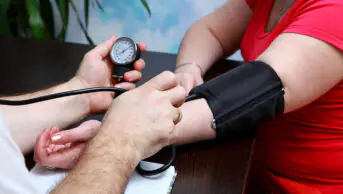
Pharmacy technicians were trained to offer blood pressure checks to people aged over 40 years, who visited the pharmacy. These checks took place in a consultation room, where patients were also screened for any “red flags”, such as chest pains, history of dizziness or history of palpitations.
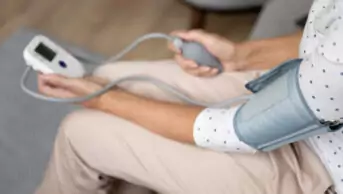
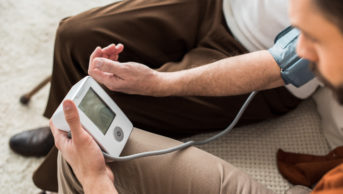
Those with elevated blood pressure were offered a home monitor for a week, with the pharmacy technician then checking average blood pressure from that week.
People with consistently high blood pressure were then referred to a pharmacist independent prescriber who had additional training in hypertension management.
“We then assessed if we needed to request bloods [from the GP] for those patients”, Hughes said, adding that “we were requesting ECGs [electrocardiograms], and those ECGs were then interpreted by ourselves”.
“One of the big themes of this was that we did not want to burden the GP with any additional work: this was all a community pharmacy-based service,” he continued.
Where appropriate, the pharmacist would initiate therapy according to National Institute for Health and Care Excellence guidance, with patients continuing to monitor their blood pressure at home.
Hughes highlighted that “if their blood pressure, as monitored, was fine on that single therapy, they were then handed back to their GP”, with details written up in the GPs notes.
Mackridge described the work as “a prudent healthcare model, making effective use of the resources we’ve got, and it has the opportunity to reduce health inequalities through increasing access and choice”.
“Community pharmacies can reach new patients that other parts of the system aren’t currently reaching,” he added.
Mackridge and Hughes noted that they needed access to the GP patient record to be able to manage patients effectively. During the pilot, they used EMIS community, which “technically has the functionality to enable pharmacists to order and see results”.
However, barriers remained, such as needing to set up multiple portals and accounts, meaning it wasn’t possible to set that functionality up during the course of the pilot, they said.
Mackridge and Hughes expressed that good working relationships with local GP practices enabled a workaround solution to this.
However, they emphasised that “we need better integration”, adding that “pathology, blood test ordering, etc. were really challenging to manage, and if we could overcome that then we would definitely be able to scale this much more effectively”.
An evaluation of the ‘Independent prescribing in community pharmacy pathfinder programme’, conducted by the University of Manchester in 2025, also identified a lack of pathology and IT infrastructure as major challenges to the rollout of community pharmacist prescribing in England.