hirun laowisit / Alamy Stocks images
After reading this article, you should be able to:
- Describe epidemiology of acne vulgaris including risk factors;
- Describe the pathophysiology of acne vulgaris including the role of sebum production, follicular keratinisation, Cutibacterium acne colonisation and inflammation;
- Identify the clinical signs and symptoms of acne vulgaris including red flags for urgent referrals to GP/dermatologist;
- Evaluate the pharmacological and non-pharmacological management options of acne vulgaris in relation to the severity of symptoms.
Introduction
Acne vulgaris is a chronic inflammatory skin disease that affects the pilosebaceous unit (PSF), which comprises a hair follicle and associated sebaceous gland. It is the second most prevalent skin disease worldwide1–3. Acne affects individuals of all races, ethnicities, ages and sexes, but it is most common in adolescents and young adults3. The disease is closely linked to puberty, as hormonal changes increase sebum production, leading to acne lesions that may result in scarring and post-inflammatory hyperpigmentation (PIH)4.
In the UK, around 95% of adolescents experience acne, with 20–35% developing moderate-to-severe disease5. Although prevalence declines with age, around 40% of adults aged 30–39 years continue to have acne symptoms6. Women are more likely to develop acne, typically of mild-to-moderate severity, whereas men are disproportionately affected by severe forms4,7. The results of a study, published in 2025, suggest that the global burden of acne is increasing, with the highest prevalence in Western Europe3. This trend has been suggested to be associated with dairy consumption, high-glycaemic-index diets and increased urban pollution3.
Acne has a significant negative impact on mental health, emotional wellbeing, and both personal and professional life8. Its high prevalence among adolescents and young adults further increases the risk of these adverse outcomes, as it often coincides with a critical, self-conscious developmental stage9. Conversely, effective treatment can improve mental health through enhanced skin appearance and self-image10.
In the UK, acne accounts for around 3.5 million primary care consultations annually11. Patients frequently seek advice and collect prescriptions from community pharmacies, placing pharmacists in an important role for patient education and referral in severe cases. Community pharmacists can provide advice on mild-to-moderate acne and issue certain topical preparations, such as benzoyl peroxide, under Pharmacy First services. Some prescription-only medicine, such as Epiduo (Galderma), a retinoid containing preparation, can be provided under Pharmacy First Plus scheme in Scotland. Hospital pharmacist independent prescribers also manage acne clinics in hospital settings, conducting comprehensive assessments and prescribing oral retinoid, isotretinoin12,13.
This article will cover the risk factors and pathophysiology of acne, the recognition and diagnosis of the condition and considerations for management.
Risk factors
A 2020 systematic review of 35 epidemiological studies identified strong associations between acne vulgaris and age, genetics and body mass index (BMI)7. Associations with other factors, including diet, sex, substance misuse and cosmetic use, are less consistent and require further investigation7 (See Figure 16,7,14–27).
Figure 1: Risk factors associated with acne
Pathophysiology
The pathogenesis of acne vulgaris is multifactorial and driven by the interaction of four important processes:
- Increased androgen-mediated sebum production with altered composition within the pilosebaceous unit;
- Abnormal follicular hyperkeratinisation leading to keratin plug formation (i.e. cornification);
- Microbial colonisation of hair follicles by pro-inflammatory strains of Cutibacterium acnes (formerly Propionibacterium acnes);
- The release of pro-inflammatory mediators28,29.
These processes are further influenced by genetic, hormonal and environmental factors29.
Sebaceous glands within the pilosebaceous unit contain undifferentiated, differentiating and mature sebocytes. Androgens stimulate sebocyte proliferation, differentiation and sebum production, while additional modulators, such as peroxisome proliferator-activated receptor (PPAR) ligands, liver X receptor ligands, retinoids, and vitamin D induce sebocytes proliferation and sebum production28,29. Excessive (i.e. hyperseborrhoea) or altered (i.e. dysseborrhoea) sebum production is central to C. acnes proliferation, inflammation and comedogenesis29.
Sebum is composed mainly of triglycerides, diglycerides and free fatty acids (57.5%), wax esters (26%), squalene (12%) and cholesterol (1.5%)28. The composition of sebum changes in acne skin (i.e. reduced free fatty acids and increased sqalene) and monounsaturated fatty acids, squalene and triglycerides are thought to be particularly comedogenic28,30–32. Sebum also contributes to inflammation by inducing pro-inflammatory cytokines, such as interleukin-1 (IL-1)28.
The normal skin microbiome includes C. acnes (i.e. anti-inflammatory phylotypes II and III), coagulase-negative Staphylococcus and fungal species that maintain skin homeostasis21,29). In contrast, acne skin microbiome includes pro-inflammatory C. acnes phylotype IA, which dysregulates innate and adaptive immunity by promoting the accumulation of Th17 cells, which release pro-inflammatory interferon-γ (IFN-γ) and IL-1721,33. These responses are triggered by extracellular enzymes and reactive oxygen species produced by C. acnes, as well as activation of Toll-like receptors (TLR-2 and TLR-4) on sebocytes and keratinocytes21,29. Monocytes are also activated, promoting neutrophil recruitment29. Importantly, inflammation is thought to precede abnormal keratinocyte proliferation, leading to follicular obstruction and comedone formation34.
Signs and symptoms
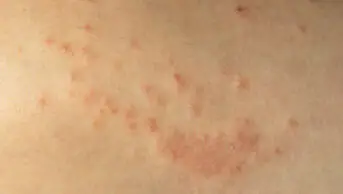
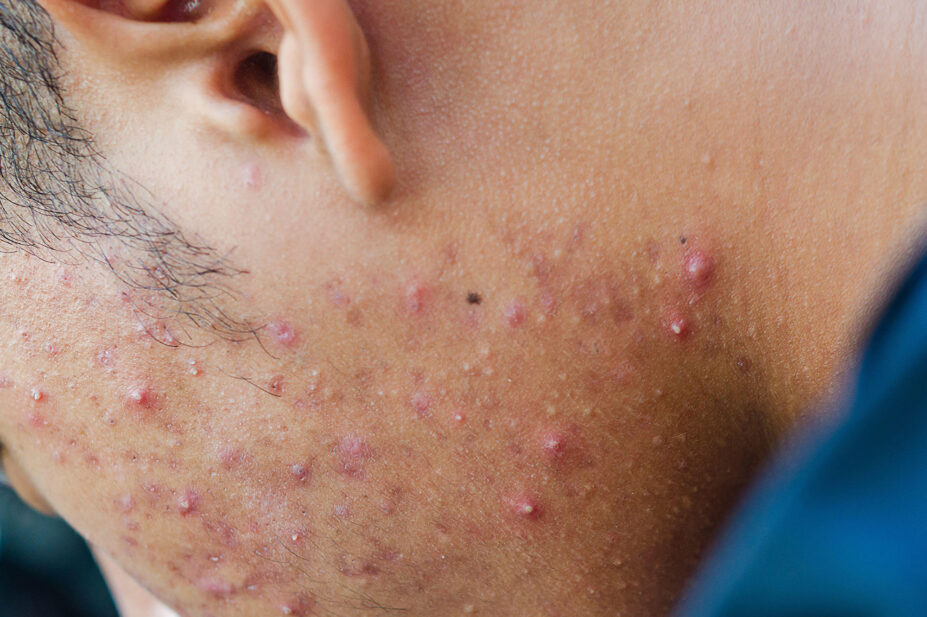
Acne vulgaris is characterised by polymorphic skin lesions. Lesions most commonly affect the face, neck, chest and back, which may be accompanied by seborrhoea or pain21,29,35. Comedones, papules and pustules are known as superficial lesions, whereas nodules and cysts are deeper. The different types of lesions can be seen in Figure 221,26.
Figure 2: Types of inflammatory and non-inflammatory acne lesions
Secondary lesions include:
- Excoriations — lesions resulting from picking or scratching;
- Macules — flat lesions <1 cm, which may be erythematous or pigmented (i.e. PIH), with darker skin tones being more susceptible to PIH;
- Scars — hypertrophic (raised) (e.g. keloid) or atrophic (depressed) (e.g. ice pick, carbox or rolling scars).
Acne lesions present similarly in darker skin tones; however, they are more likely to be associated with PIH and keloid scaring. See ‘Recognising common skin conditions in people of colour’ for more information.
Grading scale
Categorisation of acne into mild, moderate and severe is based on overall clinical picture including type, number and distribution of lesions, as well as presence of scarring, family history and previous response to treatments35–37. Several grading systems exist, including lesion counts, global severity scales and multimodal digital imaging, each with advantages and limitations36.
For the purpose of informing community or hospital pharmacists:
- Mild-to-moderate acne can be defined as acne having one or more of the following: any number of non-inflammatory lesions, up to 34 inflammatory lesions and up to 2 nodules;
- Severe acne is an acne where either or both are present: 35 or more inflammatory lesions (with or without non-inflammatory acne lesions) or 3 or more nodules37.
Diagnosis
Acne vulgaris is typically diagnosed from skin examination findings (i.e. the presence of polymorphic acne lesions). It rarely requires additional investigations except for situations where skin infection is considered35,38. Endocrine disorder (e.g. hyperandrogenism) should also be investigated if suspected — for example, in sudden severe and/or treatment resistant acne or onset after the age of 25 years, as well as signs virilisation in females (i.e. hirsutism, oligo or amenorrhea or androgenic alopecia)35,38,39.
Community pharmacists can identify more severe cases and refer patients for GP management. Referral to a GP or dermatologist is recommended for patients with moderate-to-severe acne, characterised by several inflammatory lesions, nodules, cysts, PIH or scarring, as well as for those experiencing significant psychological distress25.
Urgent referral is required for severe nodulocystic acne, including acne conglobata and acne fulminans. Acne conglobata is a rare, severe form, presenting with grouped inflammatory and non-inflammatory lesions on the trunk and limbs, often with interconnected abscesses and sinus tracts that may become secondarily infected, causing pain and malodour40. Acne fulminans is an extreme variant associated with systemic symptoms, such as malaise, fluctuating fever, arthralgia, anorexia and weight loss, as well as constitutes a medical emergency requiring same-day dermatology assessment41.
Management
Acne, depending on its severity, can be managed with topical therapies, systemic antibiotics, hormonal agents and the oral retinoid, isotretinoin25,38,42. Topical therapies may be used as monotherapy (except for topical antibiotics), but multimodal combinations with different mechanisms of action are recommended to optimise efficacy and reduce the risk of antibiotic resistance25,38. They can also be combined with systemic antibiotics or other systemic treatments for moderate-to-severe acne. Oral isotretinoin is a specialist-only medication owing to the potential severity of side effects, including psychiatric side effects, sexual dysfunction, liver toxicity and teratogenicity25.
Topical therapies
Benzoyl peroxide
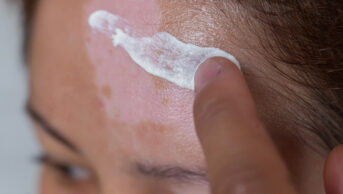
An over-the-counter antimicrobial agent that releases free oxygen radicals, benzoyl peroxide, is an anti-inflammatory with comedolytic properties38. It is often considered first-line treatment for mild acne and is effective for both non-inflammatory and inflammatory lesions after 4–12 weeks of treatment42. Adding benzoyl peroxide to topical or systemic antibiotics improves efficacy and reduces antibiotic resistance38.
Topical antibiotics
Examples of topical antibiotics include clindamycin and erythromycin, which are recommended for inflammatory lesions in mild acne that do not respond to benzoyl peroxide42. Clindamycin and erythromycin possess antimicrobial and anti-inflammatory properties38. Their efficacy often decreases over time, and they are associated with antibiotic resistance38. Topical antibiotics should not be used as monotherapy. They are usually well tolerated, though rare cases of Clostridium difficile-associated colitis have been reported with topical clindamycin use43.
Topical retinoids (vitamin A derivatives)
Examples of topical retinoids include adapalene, tretinoin and trifarotene. They have anti-inflammatory and comedolytic properties. Topical retinoids are recommended for mild acne that is not responding to benzoyl peroxide. These agents differ in their selectivity for retinoic acid receptors. Topical retinoids should not be used in pregnancy or in patients of childbearing potential not using effective contraception42.
An overview of available topical therapies can be seen in Table 138,42,44.
Table 1: An overview of topical therapies
Systemic therapies
Oral antibiotics
Oral antibiotics are used for moderate-to-severe acne, often in combination with topical treatments. Options include tetracyclines, erythromycin, azithromycin or, rarely, trimethoprim. Tetracyclines inhibit bacterial protein synthesis and reduce inflammation by downregulating neutrophil chemotaxis, matrix metalloproteinases and pro-inflammatory cytokines45. Contraindications to tetracyclines include pregnancy, lactation, children aged under eight years (owing to risk of permanent dental staining and enamel hypoplasia) and concurrent isotretinoin use (owing to the risk of intracranial hypertension)46. Evidence is insufficient to recommend routine use of azithromycin or trimethoprim. Oral antibiotics should be combined with benzoyl peroxide and other topical therapies (not containing antibiotics) and treatment duration limited to three to four months to reduce antibiotic resistance38.
Hormonal agents
Combined oral contraceptives (COCs) or spironolactone may be used in females with moderate-to-severe acne, particularly in hormonal acne located on the jawline, chin and chest. COCs reduce free testosterone via luteinising hormone suppression while spironolactone blocks androgen receptors and inhibits 5-alpha reductase. Both reduce sebum production and C. acnes-driven inflammation. A three-to-six-month course is usually sufficient to evaluate treatment efficacy. Risks of COC include thromboembolism, myocardial infarction, stroke, breast/cervical cancer and melasma. Contraindications to COC include smoking, migraine with aura, hypertension, thrombophilia, breast cancer history, liver disease, pregnancy and breastfeeding. Spironolactone is teratogenic and requires effective contraception. It is also contraindicated in renal impairment, hyperkalaemia and Addison’s disease.
Isotretinoin
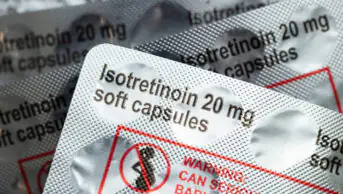
Isotretinoin is used to treat several forms of acne under dermatology specialist supervision. It is considered a high-risk medication owing to potential psychiatric effects, sexual dysfunction, teratogenicity and liver toxicity; however, these adverse effects are rare, and most patients complete a course with long-term acne remission. Typical cumulative doses range from 120–150mg/kg, which is administered over 4–12 months. Female patients with child-bearing potential must enrol in a pregnancy prevention programme, initiate effective contraception and undergo regular pregnancy tests. Patients should minimise alcohol intake, undergo regular mental health assessments and have regular blood tests throughout treatment. For additional information on isotretinoin use, read ‘Isotretinoin use: best practice’47. An overview of systemic therapies can be found in Table 225,38,42,45–47.
Table 2: An overview of systemic therapies
Figure 3: Schematic representation of pharmacological treatment algorithm for management of acne vulgaris
Patients counselling and support
Counselling and support for patients with acne is essential as the disease can only be managed if patient is well-informed about acne and its treatment. Acne also carries significant psychological burden, resulting in increased risk of depression, anxiety, low self-esteem and social isolation. Pharmacists can offer empathetic support or refer the patient to a GP or other services if concerned with patient’s mental health (see Table 37–9,25,26,29,48).
Table 3: Patient counselling points relating to the psychological impact and safety netting for acne
Pharmacists are ideally placed to provide education on appropriate use of acne medication to improve adherence, recognition and management of side effects or simply to manage expectations with regard to treatment efficacy. The following steps can help patients to get the most out of their treatment:
- Discuss available treatment options, including their potential risks and adverse effects;
- Emphasise the importance of adhering to prescribed topical or oral treatments and allowing sufficient time (six to eight weeks) to observe clinical improvement;
- Explain that relapses may occur during and after treatment;
- Topical therapies may cause local skin irritation and may need to be introduced gradually or require treatment breaks while on treatment;
- Topical retinoids are best applied at night, and patients should wear sunscreen during the day. Similarly, patients taking oral tetracyclines or oral retinoid should also wear sunscreen;
- Explain to patients with severe acne and acne with scarring or PIH or patients experiencing significant psychological distress owing to acne that specialist treatment with oral isotretinoin is available in dermatology clinics, and they should discuss potential referral with their GP;
Pharmacists can advise on the following skincare and lifestyle considerations:
- Wash affected areas with a mild non–alkaline cleanser (e.g. containing Syndet) and lukewarm water no more than twice daily, as well as after excessive sweating. Avoid vigorous scrubbing or exfoliation;
- Advise against squeezing or picking lesions, as this may worsen inflammation and increase the risk of scarring or PIH;
- Inform patients that some treatments may cause skin dryness and recommend the use of non-comedogenic, lightweight moisturisers. The addition of moisturiser with topical antioxidant may be helpful;
- Advise regular use of a non-comedogenic, broad-spectrum sunscreen (SPF 30 or higher), as sun exposure may exacerbate acne and contribute to pigmentation changes;
- Emphasise the importance of thoroughly removing makeup before sleep;
- Encourage a balanced, healthy diet and maintenance of a healthy body mass index and explain that current evidence does not strongly support diet as a major cause of acne;
- Alcohol and stress may potentially be causative/aggravating factors5,25,48.
Best practice
- Assess severity of acne and refer to GP promptly if acne is severe and/or there is risk of scarring or PIH because patient may require treatment with systemic antibiotic or referral to a dermatology clinic for specialist management;
- Acne fulminans is medical emergency and patient should be referred urgently to dermatology on call, which may need to be done via GP or A&E if patient presents to community pharmacy;
- Benzoyl peroxide monotherapy should only be used if there are contraindications to combination products (e.g. pregnancy risk) or if patient does not wish to use topical retinoid or topical antibiotic;
- To avoid skin irritation, introduce topical preparations gradually (e.g. every other day) or for short duration of time (e.g. for one hour and then to wash off);
- Do not use monotherapy topical or oral antibiotic or a combination of oral and topical antibiotic as this will increase the risk of antibiotic resistance;
- Do not continue topical or oral antibiotic for longer than three to six months as this will increase the risk of antibiotic resistance, antibiotic treatment typically should not be longer than six months;
- Consider the need for maintenance treatment with combination of topical retinoid with benzoyl peroxide or, if not suitable, benzoyl peroxide or adapalene monotherapy or azelaic acid;
- Include parents and carers in discussions about treatment options if a young person would like their involvement or when support is required (e.g. owing to learning disability)5,25,48.
- 1.Ferrari AJ, Santomauro DF, Aali A, et al. Global incidence, prevalence, years lived with disability (YLDs), disability-adjusted life-years (DALYs), and healthy life expectancy (HALE) for 371 diseases and injuries in 204 countries and territories and 811 subnational locations, 1990–2021: a systematic analysis for the Global Burden of Disease Study 2021. The Lancet. 2024;403(10440):2133-2161. doi:10.1016/s0140-6736(24)00757-8
- 2.Oakley A. Acne . DermNet NZ. 2014. https://dermnetnz.org/topics/acne
- 3.Zhu Z, Zhong X, Luo Z, et al. Global, regional and national burdens of acne vulgaris in adolescents and young adults aged 10–24 years from 1990 to 2021: a trend analysis. British Journal of Dermatology. 2024;192(2):228-237. doi:10.1093/bjd/ljae352
- 4.Acne vulgaris. BMJ Best Practice . https://bestpractice.bmj.com/topics/en-gb/101/epidemiology.
- 5.Acne vulgaris: How common is it? . National Institute for Health and Care Excellence . 2026. https://cks.nice.org.uk/topics/acne-vulgaris/background-information/prevalence/
- 6.Witkam WCAM, Dal Belo SE, Pourhamidi S, et al. The epidemiology of acne vulgaris in a multiethnic adolescent population from Rotterdam, the Netherlands: A cross-sectional study. Journal of the American Academy of Dermatology. 2024;90(3):552-560. doi:10.1016/j.jaad.2023.10.062
- 7.Heng AHS, Chew FT. Systematic review of the epidemiology of acne vulgaris. Sci Rep. 2020;10(1). doi:10.1038/s41598-020-62715-3
- 8.Barbieri JS, Fulton R, Neergaard R, Nelson MN, Barg FK, Margolis DJ. Patient Perspectives on the Lived Experience of Acne and Its Treatment Among Adult Women With Acne. JAMA Dermatol. 2021;157(9):1040. doi:10.1001/jamadermatol.2021.2185
- 9.Hughes O, Bewley A. Is it really ever ‘just acne’? Considering the psychodermatology of acne. British Journal of Dermatology. 2023;189(Supplement_1):i11-i16. doi:10.1093/bjd/ljad251
- 10.Tan NKW, Tang A, MacAlevey NCYL, Tan BKJ, Oon HH. Risk of Suicide and Psychiatric Disorders Among Isotretinoin Users. JAMA Dermatol. 2024;160(1):54. doi:10.1001/jamadermatol.2023.4579
- 11.Dawson AL, Dellavalle RP. Acne vulgaris. BMJ. 2013;346(may08 1):f2634-f2634. doi:10.1136/bmj.f2634
- 12.Pharmacy First Common Illnesses Scheme Formulary and Guidance. Lambeth Clinical Commissioning Group. 2018. https://cpe.org.uk/wp-content/uploads/2016/08/44425-Service-Formulary-Guidance-2016-18.pdf
- 13.Pharmacy First Plus (Common Clinical Conditions. Community Pharmacy NHS Greater Glasgow & Clyde. 2026. https://www.communitypharmacy.scot.nhs.uk/nhs-ggc/pages/national-nhs-pharmacy-first-scotland/pharmacy-first-plus-common-clinical-conditions-ccc/
- 14.Bhate K, Williams HC. Epidemiology of acne vulgaris. British Journal of Dermatology. 2013;168(3):474-485. doi:10.1111/bjd.12149
- 15.Lynn D, Umari T, Dellavalle R, Dunnick C. The epidemiology of acne vulgaris in late adolescence. AHMT. Published online January 2016:13. doi:10.2147/ahmt.s55832
- 16.Karciauskiene J, Valiukeviciene S, Gollnick H, Stang A. The prevalence and risk factors of adolescent acne among schoolchildren in Lithuania: a cross‐sectional study. Acad Dermatol Venereol. 2013;28(6):733-740. doi:10.1111/jdv.12160
- 17.Mitchell BL, Saklatvala JR, Dand N, et al. Genome-wide association meta-analysis identifies 29 new acne susceptibility loci. Nat Commun. 2022;13(1). doi:10.1038/s41467-022-28252-5
- 18.WALTON S, WYATT EH, CUNLIFFE WJ. Genetic control of sebum excretion and acne—a twin study. Br J Dermatol. 1988;118(3):393-396. doi:10.1111/j.1365-2133.1988.tb02433.x
- 19.Telkkälä A, Sinikumpu S, Huilaja L. Etiology of Adult Female Acne–Systematic Review. Health Science Reports. 2025;8(5). doi:10.1002/hsr2.70697
- 20.Juhl CR, Bergholdt HKM, Miller IM, Jemec GBE, Kanters JK, Ellervik C. Dairy Intake and Acne Vulgaris: A Systematic Review and Meta-Analysis of 78,529 Children, Adolescents, and Young Adults. Nutrients. 2018;10(8):1049. doi:10.3390/nu10081049
- 21.Sutaria A, Masood S, Saleh H, Schlessinger J. Acne Vulgaris. StatPearls; 2025.
- 22.Ben‐Amitai D, Laron Z. Effect of insulin‐like growth factor‐1 deficiency or administration on the occurrence of acne. Acad Dermatol Venereol. 2010;25(8):950-954. doi:10.1111/j.1468-3083.2010.03896.x
- 23.Cordain L, Eades MR, Eades MD. Hyperinsulinemic diseases of civilization: more than just Syndrome X. Comparative Biochemistry and Physiology Part A: Molecular & Integrative Physiology. 2003;136(1):95-112. doi:10.1016/s1095-6433(03)00011-4
- 24.Di Landro A, Cazzaniga S, Parazzini F, et al. Family history, body mass index, selected dietary factors, menstrual history, and risk of moderate to severe acne in adolescents and young adults. Journal of the American Academy of Dermatology. 2012;67(6):1129-1135. doi:10.1016/j.jaad.2012.02.018
- 25.Acne vulgaris. National Institute for Health and Care Excellence. 2026. https://www.nice.org.uk/guidance/ng198/chapter/Recommendations
- 26.Kazandjieva J, Tsankov N. Drug-induced acne. Clinics in Dermatology. 2017;35(2):156-162. doi:10.1016/j.clindermatol.2016.10.007
- 27.Chuan S, Chang R. Polycystic ovary syndrome and acne. Skin Therapy Lett. 2010;15(10):1-4. https://www.ncbi.nlm.nih.gov/pubmed/21076799
- 28.Del Rosso JQ, Kircik L. The primary role of sebum in the pathophysiology of acne vulgaris and its therapeutic relevance in acne management. Journal of Dermatological Treatment. 2023;35(1). doi:10.1080/09546634.2023.2296855
- 29.Kim HJ, Kim YH. Exploring Acne Treatments: From Pathophysiological Mechanisms to Emerging Therapies. IJMS. 2024;25(10):5302. doi:10.3390/ijms25105302
- 30.Kligman AM. Comedogenicity of Human Sebum. Arch Dermatol. 1970;102(3):267. doi:10.1001/archderm.1970.04000090029005
- 31.Mohiuddin A. A Comprehensive Review of Acne Vulgaris. CRDOA. 2019;6(2):1-34. doi:10.15226/2378-1726/6/2/00186
- 32.Pappas A, Johnsen S, Liu JC, Eisinger M. Sebum analysis of individuals with and without acne. Dermato-Endocrinology. 2009;1(3):157-161. doi:10.4161/derm.1.3.8473
- 33.Kistowska M, Meier B, Proust T, et al. Propionibacterium acnes Promotes Th17 and Th17/Th1 Responses in Acne Patients. Journal of Investigative Dermatology. 2015;135(1):110-118. doi:10.1038/jid.2014.290
- 34.Jeremy AHT, Holland DB, Roberts SG, Thomson KF, Cunliffe WJ. Inflammatory Events Are Involved in Acne Lesion Initiation. Journal of Investigative Dermatology. 2003;121(1):20-27. doi:10.1046/j.1523-1747.2003.12321.x
- 35.Oakley A. Acne vulgaris. DermNet NZ. 2021. https://dermnetnz.org/topics/acne-vulgaris
- 36.Bae IH, Kwak JH, Na CH, Kim MS, Shin BS, Choi H. A Comprehensive Review of the Acne Grading Scale in 2023. Ann Dermatol. 2024;36(2):65. doi:10.5021/ad.23.094
- 37.Acne – Right Decisions . NHS Scotland . 2021. https://www.rightdecisions.scot.nhs.uk/dermatology-pathways/acne/
- 38.Reynolds RV, Yeung H, Cheng CE, et al. Guidelines of care for the management of acne vulgaris. Journal of the American Academy of Dermatology. 2024;90(5):1006.e1-1006.e30. doi:10.1016/j.jaad.2023.12.017
- 39.Ianoşi S, Ianoşi G, Neagoe D, et al. Age-dependent endocrine disorders involved in the pathogenesis of refractory acne in women. Molecular Medicine Reports. 2016;14(6):5501-5506. doi:10.3892/mmr.2016.5924
- 40.Oakley A. Nodulocystic acne. DermNet NZ. 2021. https://dermnetnz.org/topics/nodulocystic-acne
- 41.Oakley A. Acne fulminans. DermNet NZ. 2014. https://dermnetnz.org/topics/acne-fulminans
- 42.Purdy S, de B. Acne vulgaris. BMJ Clin Evid. 2011;2011. https://www.ncbi.nlm.nih.gov/pubmed/21477388
- 43.Parry MF. Pseudomembranous Colitis Caused by Topical Clindamycin Phosphate. Arch Dermatol. 1986;122(5):583. doi:10.1001/archderm.1986.01660170113031
- 44.Cunliffe W, Danby F, Dunlap F, Gold M, Gratton D, Greenspan A. Randomised, controlled trial of the efficacy and safety of adapalene gel 0.1% and tretinoin cream 0.05% in patients with acne vulgaris. Eur J Dermatol. 2002;12(4):350-354. https://www.ncbi.nlm.nih.gov/pubmed/12095880
- 45.Perret LJ, Tait CP. Non‐antibiotic properties of tetracyclines and their clinical application in dermatology. Aust J Dermatology. 2013;55(2):111-118. doi:10.1111/ajd.12075
- 46.Lymecycline 408 mg Capsules, hard – Summary of Product Characteristics. Electronic Medicines Compendium. 2025. https://www.medicines.org.uk/emc/product/101121/smpc
- 47.Isotretinoin use: best practice. Pharmaceutical Journal. Published online 2026. doi:10.1211/pj.2026.1.406294
- 48.Acne. BAD. 2024. https://www.bad.org.uk/pils/acne