Yelizaveta Tomashevska / Alamy Stock Photo
By the end of this article, you should be able to:
- Explain how acute illness affects blood glucose control and increases the risk of complications in people with type 2 diabetes mellitus;
- Identify which medicines should be temporarily withheld during acute illness and advise when they can be safely restarted in accordance with current sick day guidance;
- Provide evidence-based self-care advice during acute illness, including blood glucose monitoring, hydration and nutrition;
- Recognise red-flag symptoms and clinical situations that require referral for urgent medical assessment or specialist diabetes advice.
Introduction
People with diabetes are not necessarily more likely to become unwell than those without diabetes. However, if diabetes is not managed appropriately during illness, this can worsen and lead to serious complications, including diabetic ketoacidosis (DKA), hyperosmolar hyperglycaemic state (HHS) and acute kidney injury, which may require emergency hospital admission. The person may also be at increased risk of hypoglycaemia. Providing the right advice early is essential to support safe management during periods of acute illness1.
Sick day rules cover acute illnesses that can cause dehydration and/or increased blood glucose levels in people with diabetes (e.g. the common cold, influenza, diarrhoea and/or vomiting, urinary tract infection, chest infection, pneumonia, abscess or injuries such as a fracture)2.
When managing a person with diabetes during acute illness, the main aims are to control blood glucose levels, ensure adequate calorie intake and hydration with fluid replacement, and recognise when further medical attention is required1.
As pharmacists in both primary and secondary care become increasingly involved in the management of type 2 diabetes mellitus (T2DM), they need to understand the principles of diabetes management during acute illness and be able to provide accurate, evidence-based advice to people with diabetes.
Pharmacists are often the first healthcare professionals that people with diabetes consult when they become acutely unwell. They play an important role in supporting self-management during illness by advising which medications should be temporarily withheld, recommending appropriate over-the-counter treatments, and providing guidance on maintaining hydration and monitoring blood glucose levels. They should also be able to recognise when referral for further medical assessment or urgent care is required.
How does illness affect blood glucose levels?
Blood glucose levels may rise during a period of illness, even if the person is not eating or drinking normally, owing to a number of factors3:
- Counter-regulatory hormones — during illness, hormones, including cortisol, adrenaline, growth hormone and glucagon, may be released in greater amounts. These hormones act to counter the effects of insulin and help make more glucose available to the body during periods of physiological stress. As a result, blood glucose levels can rise even when carbohydrate intake is reduced;
- Increased hepatic glucose production — glucagon and other stress pathways stimulate glycogenolysis and gluconeogenesis. This increases the amount of glucose released into the bloodstream, meaning that blood glucose can remain elevated or increase despite reduced food intake;
- Dehydration and osmotic diuresis — hyperglycaemia causes polyuria, leading to fluid loss. This can lead to increased urination and dehydration. Dehydration can further concentrate the blood glucose and may exacerbate insulin resistance, creating a cycle in which hyperglycaemia and dehydration reinforce one another.
Pharmacists should explain to patients with diabetes that illness can cause their blood glucose levels to rise or fluctuate, even when they are eating less than usual. Patients should be encouraged to be particularly vigilant about their blood glucose monitoring, fluid intake and dietary intake while they are unwell, as well as to follow sick-day guidance.
Pharmacists should also reinforce the importance of recognising when additional advice or medical assessment is needed, particularly when blood glucose remains persistently elevated, the patient is unable to maintain adequate fluid intake, or they develop symptoms suggesting significant metabolic deterioration (see ‘When to seek medical advice’). For further information on what patients should monitor and how frequently they should check their blood glucose during illness, see ‘Blood glucose monitoring guidance’.
Management of medicines during periods of acute illness
Some medication, including those that are used in the management of diabetes, may need to be temporarily stopped during periods of acute illness4.
Metformin
Metformin should be temporarily stopped during illness because dehydration may increase the risk of lactic acidosis. It can be restarted once the patient is feeling well, usually 24–48 hours of eating and drinking normally. Metformin can also be restarted at the patient’s usual dose unless clinically indicated (i.e. decline in renal function)5.
SGLT2 inhibitors
There is a Medicines and Healthcare products Regulatory Agency6 warning, issued in 2016, of increased risk of euglycaemic (i.e. blood glucose levels are near normal) DKA in people taking sodium-glucose co-transporter-2 (SGLT2) inhibitors during periods of acute illness. Therefore, it is important to discuss sick day rules at point of initiation and reiterate this information periodically. SGLT2 inhibitors should be temporarily stopped during periods of acute illness or if the patient develops volume depletion, is not eating or drinking or has inter-current conditions that may lead to volume depletion (e.g. vomiting and diarrhoea)7.
Treatment can be restarted at the usual dose once the patient has been well, including eating and drinking normally, for at least 24 hours7.
Sulfonylureas
Continuation of sulfonylureas during illness is dependent on the patient’s blood glucose levels and should be stopped if levels drop below their target level5. Individuals on this class of medicine should be advised to monitor their blood glucose levels more often during periods of illness (see ‘Blood glucose monitoring’). If the patient is not eating or drinking normally, they may have lower blood glucose levels. In such cases, the sulfonylurea may need to be temporarily stopped until the patient is eating and drinking properly. Patients should be advised to seek medical advice before restarting. However, sulfonylureas should be continued if the patient is eating and drinking normally or if their blood glucose levels are raised5.
GLP-1RA
This drug class should be temporarily stopped during periods of illness if the patient is not eating and drinking normally. Dehydration can make it more likely that they will develop a serious side effect. If they develop acute abdominal pain, nausea and vomiting, they should be advised to stop the GLP-1 receptor agonists and seek urgent medical attention — pancreatitis has been reported as a side effect of this medication. Patients should seek medical advice before restarting8.
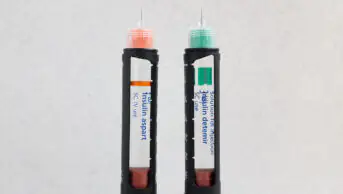
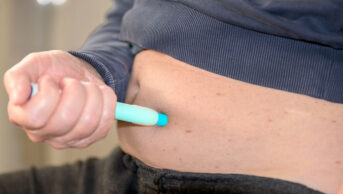
Insulin
Insulin should never be stopped9. However, the dose may need to be adjusted10. The process described in the Figure below should be repeated every 2–4 hours during the acute illness or when blood glucose levels remain >13mmol/L. In uncertainty, patients should be advised to seek advice from their diabetes team10.
Figure: management of insulin doses during periods of illness
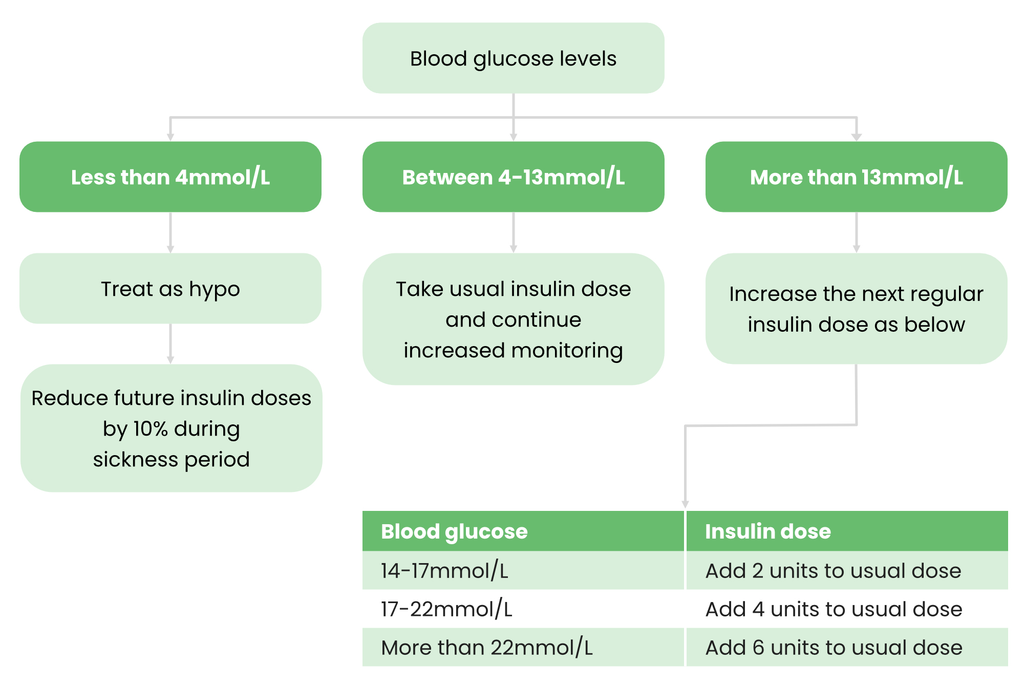
Patients should resume their usual insulin doses and monitoring frequency when:
- They have recovered from their illness;
- Their blood glucose levels have returned to usual levels;
- They are eating and drinking normally10.
There are other drug classes that need to be temporarily paused during periods of illness. These include11:
- ACE inhibitors — if taken during an acute illness that can lead to dehydration, there is an increased risk of developing AKI (acute kidney injury) owing to reduced renal efferent vasoconstriction;
- Angiotensin-II receptor blockers (ARBs) — if taken during an acute illness that can lead to dehydration, there is an increased risk of developing AKI;
- Diuretics — if taken during an acute illness that can lead to dehydration, there is an increased risk of developing AKI;
- Non-steroidal anti-inflammatory drugs — if taken during an acute illness that can lead to dehydration, there is an increased risk of developing AKI owing to reduced renal afferent vasodilation.
These can be restarted once the person if feeling better and able to eat and drink normally for 24–48 hours11.
Blood glucose monitoring
During acute illness, blood glucose levels should be checked at least four times daily using the person’s usual monitoring method: blood glucose meter (BGM) or continuous glucose monitoring device (CGM). For those who don’t have access to a BGM or CGM, they should be made aware of the symptoms of hyperglycaemia, including excessive thirst, polyuria and tiredness. People should be reminded to keep hydrated, but if these symptoms worsen or become more frequent or they become more unwell, then advice should be sought from a healthcare professional10.
For people with T2DM who use insulin and CGM, BGM strips should remain on their medication repeats in case of CGM failure and the need to return to their previous testing method.
Some patients may experience hypoglycaemia during illness4. For further information on the symptoms and management of hypoglycaemia, see ‘Acute complications of diabetes in adults: diagnosis and management’.
Ketone monitoring
Some people living with T2DM may have access to a ketone meter if they are at higher risk of developing DKA owing to poor compliance with insulin, having ketone prone diabetes, marked β-cell insufficiency or previous DKA. Blood ketone levels should be monitored according to the blood ketone levels (see Table 112).
Table 1: Monitoring frequency of blood ketones according to blood ketone levels
Self-care advice
The unwell individual should rest and avoid strenuous exercise4. Hydration during acute illness is important. They should aim to drink at least 100ml of water — or any or drink any other sugar free drinks if preferred — every hour4. If the individual is unable to eat normally, they should regularly eat small amounts of food that are readily absorbed10 (e.g. 100ml fruit juice, 200ml milk, one large scoop of vanilla ice cream, half a large tin of tomato soup, small pot of low-fat yoghurt or two Rich tea or malted milk biscuits)4.
Symptoms, such as a high temperature or a cough, should be managed with basic over-the-counter medicines, such as painkillers and cough syrups4. Individuals should seek advice from their community pharmacies8.
When to seek medical advice
Medical advice should be sought if the individual is/has2,4,10,13,14:
- Pregnant;
- Drowsy;
- Breathless;
- Acute abdominal pain;
- Profound diarrhoea;
- Not passed urine in 24 hours;
- Vomiting and unable to stay hydrated;
- Unable to keep fluids or food down for more than 6 hours;
- Unable to control blood ketone levels (if checking);
- Unable to control blood glucose levels (levels are persistently >18mmol/L).
Best practice for pharmacists
- Discuss sick day rules whenever initiating medicines that require temporary interruption (e.g. metformin or SGLT2 inhibitors);
- Reinforce sick day rules during medication reviews and annual diabetes reviews;
- Supply or signpost to written sick day guidance;
- Ensure people prescribed insulin and/or sulfonylurea have access to blood glucose test strips and understand how to monitor more frequently during illness;
- Advise when medicines can safely be restarted;
- Recognise red-flag symptoms requiring urgent medical assessment.
- 1.Down S. How to advise on sick day rules. Diabetes & Primary Care. 2020. https://diabetesonthenet.com/diabetes-primary-care/how-to-advise-on-sick-day-rules/ [
- 2.Primary Care Sick Day Guidance for the management of adult patients with diabetes mellitus. Birmingham, Sandwell, Solihull and environs Area Prescribing Committee . 2020. https://sandwellandwestbhamccgformulary.nhs.uk/docs/Encs2c_BSSEAPC%20DMMAG%20Primary%20Care%20Sick%20Day%20Information%20for%20Adult%20patients%20with%20diabetes%20v10.pdf
- 3.Diabetes when you’re unwell. Diabetes UK. https://www.diabetes.org.uk/living-with-diabetes/life-with-diabetes/illness
- 4.Type 2 diabetes: what to do when you are ill. Trend Diabetes. 2020. https://trenddiabetes.online/portfolio/type-2-diabetes-what-to-do-when-you-are-ill/
- 5.Sick Day Rules in patients with Type 2 Diabetes (T2DM) taking oral antidiabetic medication (Clinician’s guide). NHS South West London. https://swlimo.southwestlondon.icb.nhs.uk/wp-content/uploads/Sick-day-Rules-V1.0.pdf
- 6.SGLT2 inhibitors: Updated Advice on the Risk of Diabetic Ketoacidosis. Medicines and Healthcare products Regulatory Agency. 2016. https://www.gov.uk/drug-safety-update/sglt2-inhibitors-updated-advice-on-the-risk-of-diabetic-ketoacidosis
- 7.Pharmacy Department Sick Day Rules for people with type 2 diabetes taking a SGLT-2 Inhibitor. Dorset County Hospital NHS Foundation Trust. https://dchft.nhs.uk/leaflets/sick-day-rules-for-people-with-type-2-diabetes-taking-a-sglt-2-inhibitor/#
- 8.Sick Day Rules Guideline Medicines and Dehydration -Sick day Rules. NHS Nottinghamshire Area Prescribing Committee. https://www.nottsapc.nhs.uk/media/yvzbql2m/sick-day-rules.pdf
- 9.Sick day rules associated with insulin dependent diabetes. South Tees Hospitals NHS Foundation Trust. 2024. https://www.southtees.nhs.uk/resources/sick-day-rules-associated-with-insulin-dependent-diabetes/
- 10.Guidance for ‘sick day’ management in type 2 diabetes mellitus. Humber Area Prescribing Committee. 2024. https://www.northernlincolnshireapc.nhs.uk/wp-content/uploads/2024/06/Sick%20Day%20Guidance%20in%20T2DM%20final%20june%202024.pdf?_t=1718110376
- 11.Sick Day Rules. Effective Prescribing and Therapeutics. https://www.therapeutics.scot.nhs.uk/polypharmacy/sick-day-rules/
- 12.Guideline for the prescribing of ketone test strips. NHS Hertford and West Essex Integrated Care Board. https://www.hweclinicalguidance.nhs.uk/all-clinical-areas-documents/download?cid=1737&checksum=70ece1e1e0931919438fcfc6bd5f199c
- 13.Sick day rules: diabetes. EDEN. https://www.edendiabetes.com/news-blog/2019/9/26/eden-info-graphics-for-hcps
- 14.Sick day rules: how to manage Type 2 diabetes if you become unwell with coronavirus and what to do with your medication. NHS London Clinical Networks. 2020. https://www.england.nhs.uk/london/wp-content/uploads/sites/8/2020/04/3.-Covid-19-Type-2-Sick-Day-Rules-Crib-Sheet-06042020.pdf