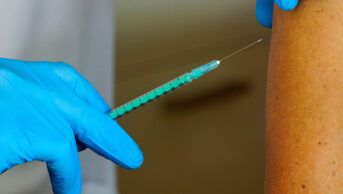
SeventyFour/Shutterstock.com
This week, The Pharmaceutical Journal has reported on structural changes that could help improve medicines safety, including new guidance around pharmacist fitness-to-practise concerns, calls from the Royal Pharmaceutical Society for mandatory 2D barcodes on medicines packs, and concerns about community pharmacy closures and service cuts amid ongoing funding pressures.
We’ve also covered innovative diagnostic testing for bacterial infections as part of a community pharmacy pilot in Wales, as well as the latest efforts from NHS England and the UK Health Security Agency (UKHSA) to tackle ongoing measles outbreaks.
Two articles published in The Pharmaceutical Journal this week reveal children as young as age 13 years are accessing over-the-counter medicines and being exposed to weight-loss drug advertising, with rates of both higher among girls.
Read on for more health news from this week.
GLP-1s for diabetes and psoriasis
New NHS guidance for type 2 diabetes mellitus has recommended offering sodium-glucose cotransporter 2 (SGLT-2) inhibitors to all newly diagnosed adults earlier in the treatment pathway, as well as expand the use of GLP-1 receptor agonists in patients with diabetes mellitus.
Manufacturer Eli Lilly has released phase III results from its study testing concomitant ixekizumab (Taltz; Eli Lilly) and tirzepatide (Zepbound; Eli Lilly) for adults with psoriasis as well as a BMI ≥30kg/m², or ≥27 to <30kg/m² with at least one weight-related comorbidity. Using the monoclonal antibody ixekizumab alongside tirzepatide, delivered better skin clearance than using the ixekizumab alone, the results showed.
“Psoriasis and obesity share underlying inflammatory pathways, yet they are too often treated in silos despite psoriasis treatment guidelines calling for obesity management,” said Mark Lebwohl, principal investigator on the TOGETHER-PsO trial (NCT06588283).
Further reading
Studies show promise for cancer treatments
The results of a single-arm, prospective phase Ib/II investigator-initiated study (NCT03970252), published in Nature Communications on 31 January 2026, revealed that adding immunotherapy to chemotherapy is safe and shows promise for some patients with borderline-resectable pancreatic cancer.
The findings of another study, published in Gastroenterology on 17 February 2026, suggests that plerixafor (Mozobil; Sanofi), a drug already used in stem cell transplantation, could also be used in the treatment of T-cell-excluding liver cancer fibrolamellar carcinoma.
In addition, the results of an observational study published in Circulation on 16 February 2026 showed that children whose mothers smoked during pregnancy were more likely to have higher blood pressure and a greater risk of hypertension.
Further reading
Sleep apnoea could be ‘risk indicator’ for flu and COVID-19
Children with sleep apnoea are twice as likely to contract the flu or COVID-19, regardless of their age or weight, the results a five-year experimental study published in the Journal of Clinical Sleep Medicine on 11 February 2026 has suggested. Even after children had surgery to remove tonsils or adenoids, this increased vulnerability persisted, owing to long-term changes in the immune system, researchers said, suggesting that sleep apnoea be used as a risk marker to guide vaccination strategy.
Between October and November 2025, community pharmacies in the UK gave more than 40,000 children flu vaccinations on the NHS, alongside 4.2 million adults. And this week, when a leaked letter suggested GPs may stop providing flu vaccinations, community pharmacies said they were ready to stand in to fill the gaps.
Further reading
Improved pharmacogenomics training needed
Analysis of a workshop for UK trainee pharmacists, published in the International Journal of Pharmacy Practice on 17 February 2026, showed that it effectively enhanced trainees’ knowledge but revealed ongoing gaps in their ability to apply this knowledge clinically, highlighting the need for improved training and resources.
Further reading
Other NICE guidance published this week
In final draft guidance published on 17 February 2026, the National Institute for Health and Care Excellence (NICE) has recommended pegzilarginase (Loargys; Immedica) to treat arginase 1 deficiency, an ultra-rare, inherited and progressive metabolic disorder.
On 18 February 2026, NICE also said belantamab mafodotin plus pomalidomide and dexamethasone can be used as an option to treat multiple myeloma in adults, if they have tried one line of treatment, including lenalidomide, and could not tolerate it.
Dupilumab, as an add-on to intranasal corticosteroids, can be used as an option to treat severe chronic rhinosinusitis with nasal polyps in adults if other interventions have not worked.
However, as per guidance published 18 February 2026, cerliponase alfa is not routinely recommended on the NHS for treating neuronal ceroid lipofuscinosis type 2, owing to a lack of long-term evidence and the cost of the medicine.
Further reading
- This article was amended on 25 February 2026 to clarify that Eli Lilly’s phase III trials was testing tirzepatide (Zepbound), not tirzepatide (Mounjaro)