Charlotte Gurr
In August 2026, the first pharmacists in the UK joined the register as independent prescribers from day one of practice. For many in the profession, the changes to initial education and training introduced in 2021 represent one of the most significant changes to pharmacy education in a generation.
Like many pharmacy educators, I have spent the past year thinking about what this means for our foundation trainee pharmacists (FTPs). While significant attention has understandably been paid to the requirement for supervised prescribing practice and the role of designated prescribing practitioners (DPPs), an equally important question remains: how do we ensure trainees feel confident enough to actually prescribe when they qualify?
Clinical knowledge alone is not enough. Newly qualified pharmacist prescribers (NQPP) will need to make decisions in busy clinical environments, manage competing priorities, communicate within multidisciplinary teams and recognise when they need help as an independent prescriber. These are skills that are difficult to teach and — in some cases — difficult to experience fully while working under close supervision in practice.
At Leeds Teaching Hospitals NHS Trust (LTHT), we wondered whether simulation could help bridge this gap.
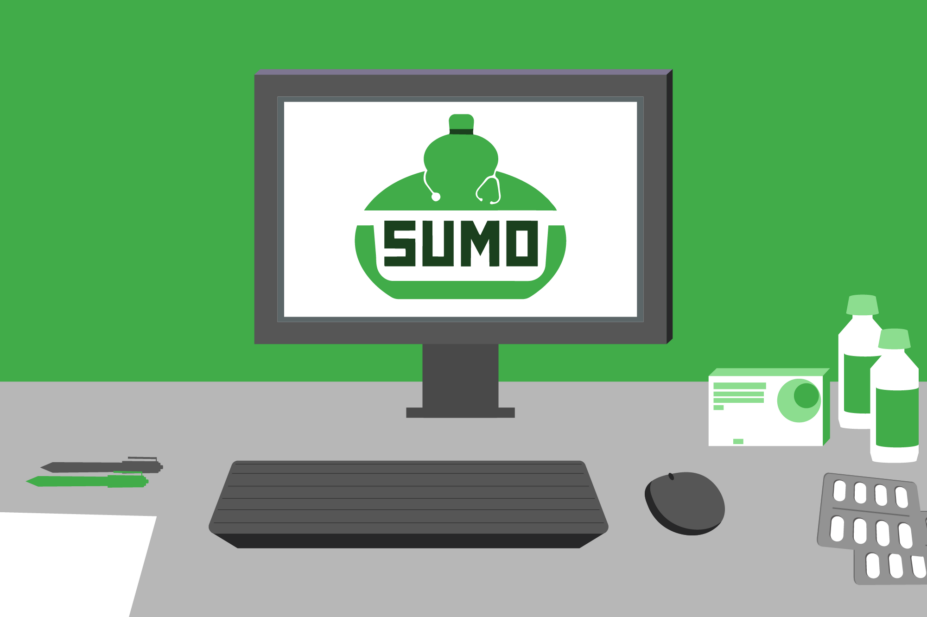
Our trust already runs ‘Simulated Undergraduate Medical On-call’ (SUMO), a ward-based simulation designed to prepare final-year medical students for their first months as resident doctors. The simulation recreates the reality of working in a busy hospital environment, complete with multiple patients, clinical interruptions, bleeps and competing priorities. This has proven to be successful on a small scale in the medical education space for doctors preparing for their first year in practice1.
This year — for the first time — we invited FTPs to participate, with one session each month from September 2025 until May 2026.
The simulated ward consists of 12 patients with a range of clinical presentations. Working alongside final-year medical students, the trainees encountered patients requiring prescribing decisions for conditions such as sepsis, atrial fibrillation, acute stroke, non-ST-elevation myocardial infarction, paracetamol overdose and palliative discharge planning.
One of the challenges in preparing FTPs for prescribing is that — quite rightly — most prescribing decisions during their 90 hours of supervised practice are made collaboratively with their DPP. This is an essential part of safe training, but it can sometimes make it difficult to understand how a trainee thinks when faced with a prescribing decision independently.
What surprised me most was how quickly trainees began to think and act like pharmacist prescribers and truly understand their support network
The simulation created an environment where trainees could take ownership of decisions while remaining supported. They were encouraged to work within their sphere of competence, seek advice when required and justify their clinical reasoning. They were expected to document their decision-making in clinical notes and delegate prescribing responsibility where needed. Importantly, where a trainee was acting either outside their scope, or if they should have handed prescribing decision over to medical teams or their senior pharmacist, feedback was provided by the senior pharmacist post simulation.
The role of the DPP within the simulation was particularly valuable. Acting as the senior pharmacist, DPPs could observe decision-making, communication, escalation and professional behaviours in a way that is not always possible in routine clinical practice. Conversations that might normally happen after an event could occur in real time.
What surprised me most was how quickly trainees began to think and act like pharmacist prescribers and truly understand their support network (e.g. medical team, senior pharmacist).
The simulation’s aim was to encourage trainees to consider their role within the wider multidisciplinary team as a NQPP. They had to decide when they could safely prescribe themselves, when a medical opinion was required and when discussions with a senior prescribing pharmacist were appropriate. These professional judgements are arguably as important as clinical knowledge.
Before and after the simulation, we asked 12 FTP participants to rate their confidence across a range of areas relevant to newly qualified pharmacist prescribing practice.
Confidence was self-assessed on a scale of one to five and increased across every domain.
This experience encouraged us to make use of local guidelines and the BNF [British National Formulary] to support our decision-making
A SUMO trainee
The largest improvements were seen in managing multiple calls independently — with an average increase of 1.25 score — and prescribing on a drug chart (+1.22). This perhaps reflects the reality that trainees have relatively few opportunities in secondary care to perform these activities independently before registration. Confidence also improved in understanding the pharmacist prescriber’s role within the multidisciplinary team (+0.49), independent ward working (+0.45), providing guideline-based prescribing advice (+0.40) and escalating decisions appropriately (+0.60).
Of course, this was a small pilot involving only 12 trainees, and confidence should never be confused with competence. Nevertheless, the findings echoed the informal feedback received on the day. Many trainees described feeling more prepared for practice and more aware of the responsibilities associated with their future prescribing role.
One trainee said: “I felt that it was a good insight to what will be required of us on the ward as a qualified pharmacist. This experience encouraged us to make use of local guidelines and the BNF [British National Formulary] to support our decision-making. It also improved my documentation skills and how I communicate to the medical team. Getting used to being bleeped was also helpful as it is realistic for future ward work as a qualified pharmacist.
“It has allowed us to learn more about task prioritisation, how to work better with the medical and nursing teams, and the importance of working with our clinical pharmacist supervisors.
“The SUMO helped me with managing work under pressure, better understand the doctors’ perspective in prescribing and their role/ pressures they experience, [and] helped me gain confidence in my capabilities as a qualified pharmacist.”
It is unlikely that secondary care pharmacy departments have the resource to create simulations for their FTPs independently
Simulation should not replace patient-facing learning. It cannot replicate the complexity of genuine clinical encounters, nor should it be considered a substitute for supervised prescribing practice with real patients. However, it can provide something different: a psychologically safe environment where trainees can test clinical reasoning, practise decision-making and build confidence before they assume responsibility as registrants2.
As the pharmacy profession continues to adapt to NQPP at registration, we will need to develop a range of educational approaches that prepare trainees effectively. Practice-based learning will remain the cornerstone of training, but simulation offers an opportunity to complement that experience, as it offers an opportunity to assess independent working.
It is unlikely that secondary care pharmacy departments have the resource to create simulations for their FTPs independently, so I encourage pharmacy educators to seek support from their wider education teams. Looking at what is happening in the pre-registration sphere in medicine or nursing within their organisations can open opportunities for FTPs with simulation having benefit not just to our pharmacy trainees but others across the healthcare system.
As the first cohort of newly registered pharmacist prescribers enter the workforce, our responsibility as educators is not simply to ensure they can prescribe, but to help them develop the confidence and judgement required to do so safely.
Our experience at LTHT suggests simulation may have an important role to play in that journey.
- 1.Kiosoglous A, Rees R. Does ‘on call’ simulation training have a place in medical education programmes? A pilot qualitative–quantitative study. J Perioper Pract. Published online 2015. https://www.openaccessjournals.com/articles/does-on-call-simulation-training-have-a-place-in-medical-education-programs-16109.html
- 2.Simulation-based training: applications in clinical pharmacy. Clinical Pharmacist. Published online 2018. doi:10.1211/cp.2018.20205302