
Shutterstock.com / Alamy Stock Photo
Pharmacists across sectors are on the front line of medicines safety and play a vital role in reducing medication-related harm. Test your knowledge on principles of medicines safety and some scenarios that you might encounter in daily practice with this quiz.
Each question includes a link to a relevant article published in The Pharmaceutical Journal, providing more information on the topic. Work your way through the quiz by expanding the questions in the boxes below.
When you have answered all the questions, select ‘Finish quiz’ at the bottom of the page to see your score.
Use of specific medicines

Westend61 GmbH/Alamy Stock Photo
Quiz Summary
0 of 12 Questions completed
Questions:
Information
You have already completed the quiz before. Hence you can not start it again.
Quiz is loading...
You must sign in or sign up to start the quiz.
You must first complete the following:
Results
Results
0 of 12 Questions answered correctly
Your time:
Time has elapsed
You have reached 0 of 0 point(s), (0)
Earned Point(s): 0 of 0, (0)
0 Essay(s) Pending (Possible Point(s): 0)
Categories
- Not categorized 0%
- Review
- Answered
- Correct
- Incorrect
- Question 1 of 12
1. Question
True or false: Co-sleeping is safe if a parent has taken amitriptyline
CorrectIncorrect - Question 2 of 12
2. Question
A 60-year-old man is taking tofacitinib to treat his rheumatoid arthritis.
During a routine medicines review, he mentioned that for the past few days he has been feeling lightheaded and has been experiencing some breathlessness. What should he be advised to do?
CorrectIncorrect - Question 3 of 12
3. Question
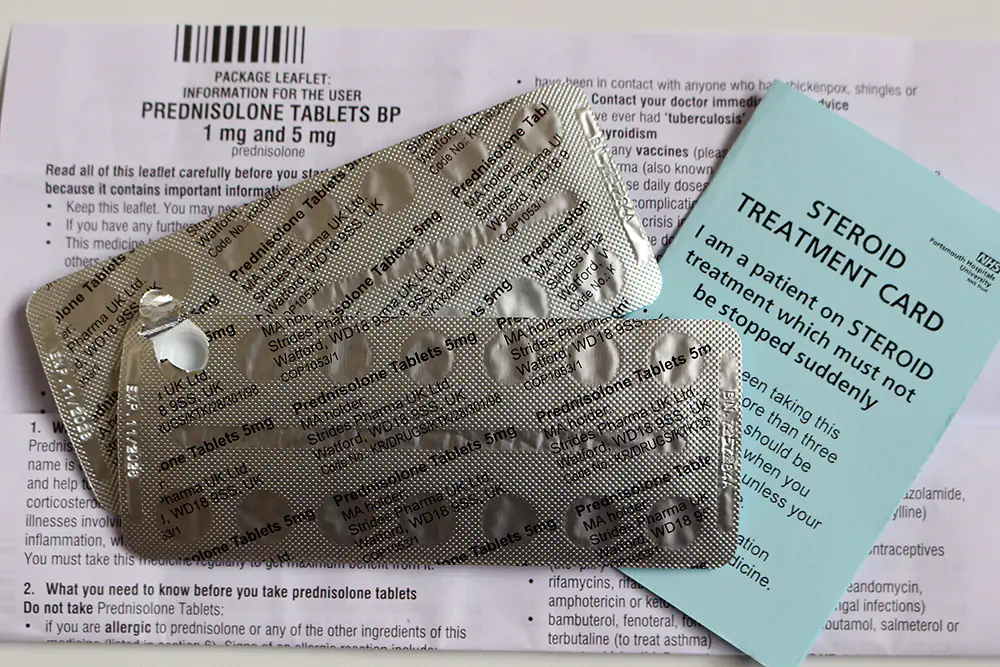
When stopping oral glucocorticoids, which of the following patients would require gradual tapering of steroids? More than one answer may be correct.
CorrectIncorrect - Question 4 of 12
4. Question
Which of the following medicines should be avoided in patients taking direct oral anticoagulants?
CorrectIncorrect - Question 5 of 12
5. Question
Which of the following factors should be considered when prescribing for an unlicensed indication? More than one answer may be correct.
CorrectIncorrect - Question 6 of 12
6. Question
A medication can be considered high risk when its use carries a higher probability of causing severe harm or adverse effects to a patient.
Which of the following are potential contributory factors that lead to a medicine being considered high risk? More than one answer may be correct.
CorrectIncorrect - Question 7 of 12
7. Question
Which of the following best describes a type B adverse event?
CorrectIncorrect - Question 8 of 12
8. Question
When should an antibiotic review first be carried out for patients’ receiving antimicrobial therapy in a hospital setting?
CorrectIncorrect - Question 9 of 12
9. Question
Which of the following are not advantages of solid oral dosage forms over liquid medicines for children? More than one answer may be correct.
CorrectIncorrect - Question 10 of 12
10. Question
For children aged 6–12 years, what is the safety threshold for ethanol blood alcohol concentration proposed by the European Medicines Agency?
CorrectIncorrect - Question 11 of 12
11. Question
True or false: The prevalence of women using herbal or complementary medicines rises with maternal age.
CorrectIncorrect - Question 12 of 12
12. Question
Which of the following medicines would you be likely to consider stopping in a patient who is aged 75 years and has had three falls in the last two years?
CorrectIncorrect
This question is from ‘Case-based learning: sedating medicines, breastfeeding and safe sleeping advice’. Please refer to the original article if you would like to learn more.

kooanan007/Shutterstock.com
Quiz Summary
0 of 12 Questions completed
Questions:
Information
You have already completed the quiz before. Hence you can not start it again.
Quiz is loading...
You must sign in or sign up to start the quiz.
You must first complete the following:
Results
Results
0 of 12 Questions answered correctly
Your time:
Time has elapsed
You have reached 0 of 0 point(s), (0)
Earned Point(s): 0 of 0, (0)
0 Essay(s) Pending (Possible Point(s): 0)
Categories
- Not categorized 0%
- Review
- Answered
- Correct
- Incorrect
- Question 1 of 12
1. Question
True or false: Co-sleeping is safe if a parent has taken amitriptyline
CorrectIncorrect - Question 2 of 12
2. Question
A 60-year-old man is taking tofacitinib to treat his rheumatoid arthritis.
During a routine medicines review, he mentioned that for the past few days he has been feeling lightheaded and has been experiencing some breathlessness. What should he be advised to do?
CorrectIncorrect - Question 3 of 12
3. Question
When stopping oral glucocorticoids, which of the following patients would require gradual tapering of steroids? More than one answer may be correct.
CorrectIncorrect - Question 4 of 12
4. Question
Which of the following medicines should be avoided in patients taking direct oral anticoagulants?
CorrectIncorrect - Question 5 of 12
5. Question
Which of the following factors should be considered when prescribing for an unlicensed indication? More than one answer may be correct.
CorrectIncorrect - Question 6 of 12
6. Question
A medication can be considered high risk when its use carries a higher probability of causing severe harm or adverse effects to a patient.
Which of the following are potential contributory factors that lead to a medicine being considered high risk? More than one answer may be correct.
CorrectIncorrect - Question 7 of 12
7. Question
Which of the following best describes a type B adverse event?
CorrectIncorrect - Question 8 of 12
8. Question
When should an antibiotic review first be carried out for patients’ receiving antimicrobial therapy in a hospital setting?
CorrectIncorrect - Question 9 of 12
9. Question
Which of the following are not advantages of solid oral dosage forms over liquid medicines for children? More than one answer may be correct.
CorrectIncorrect - Question 10 of 12
10. Question
For children aged 6–12 years, what is the safety threshold for ethanol blood alcohol concentration proposed by the European Medicines Agency?
CorrectIncorrect - Question 11 of 12
11. Question
True or false: The prevalence of women using herbal or complementary medicines rises with maternal age.
CorrectIncorrect - Question 12 of 12
12. Question
Which of the following medicines would you be likely to consider stopping in a patient who is aged 75 years and has had three falls in the last two years?
CorrectIncorrect
This question is from ‘JAK inhibitors: risks and safety principles’. Please refer to the original article if you would like to learn more.
Victoria Sharratt / Shutterstock.com
Quiz Summary
0 of 12 Questions completed
Questions:
Information
You have already completed the quiz before. Hence you can not start it again.
Quiz is loading...
You must sign in or sign up to start the quiz.
You must first complete the following:
Results
Results
0 of 12 Questions answered correctly
Your time:
Time has elapsed
You have reached 0 of 0 point(s), (0)
Earned Point(s): 0 of 0, (0)
0 Essay(s) Pending (Possible Point(s): 0)
Categories
- Not categorized 0%
- Review
- Answered
- Correct
- Incorrect
- Question 1 of 12
1. Question
True or false: Co-sleeping is safe if a parent has taken amitriptyline
CorrectIncorrect - Question 2 of 12
2. Question
A 60-year-old man is taking tofacitinib to treat his rheumatoid arthritis.
During a routine medicines review, he mentioned that for the past few days he has been feeling lightheaded and has been experiencing some breathlessness. What should he be advised to do?
CorrectIncorrect - Question 3 of 12
3. Question
When stopping oral glucocorticoids, which of the following patients would require gradual tapering of steroids? More than one answer may be correct.
CorrectIncorrect - Question 4 of 12
4. Question
Which of the following medicines should be avoided in patients taking direct oral anticoagulants?
CorrectIncorrect - Question 5 of 12
5. Question
Which of the following factors should be considered when prescribing for an unlicensed indication? More than one answer may be correct.
CorrectIncorrect - Question 6 of 12
6. Question
A medication can be considered high risk when its use carries a higher probability of causing severe harm or adverse effects to a patient.
Which of the following are potential contributory factors that lead to a medicine being considered high risk? More than one answer may be correct.
CorrectIncorrect - Question 7 of 12
7. Question
Which of the following best describes a type B adverse event?
CorrectIncorrect - Question 8 of 12
8. Question
When should an antibiotic review first be carried out for patients’ receiving antimicrobial therapy in a hospital setting?
CorrectIncorrect - Question 9 of 12
9. Question
Which of the following are not advantages of solid oral dosage forms over liquid medicines for children? More than one answer may be correct.
CorrectIncorrect - Question 10 of 12
10. Question
For children aged 6–12 years, what is the safety threshold for ethanol blood alcohol concentration proposed by the European Medicines Agency?
CorrectIncorrect - Question 11 of 12
11. Question
True or false: The prevalence of women using herbal or complementary medicines rises with maternal age.
CorrectIncorrect - Question 12 of 12
12. Question
Which of the following medicines would you be likely to consider stopping in a patient who is aged 75 years and has had three falls in the last two years?
CorrectIncorrect
This question is from ‘Best practice for patients taking oral glucocorticoids’. Please refer to the original article if you would like to learn more.

Mclean/Aflo Co., Ltd. / Alamy Stock Photo
Quiz Summary
0 of 12 Questions completed
Questions:
Information
You have already completed the quiz before. Hence you can not start it again.
Quiz is loading...
You must sign in or sign up to start the quiz.
You must first complete the following:
Results
Results
0 of 12 Questions answered correctly
Your time:
Time has elapsed
You have reached 0 of 0 point(s), (0)
Earned Point(s): 0 of 0, (0)
0 Essay(s) Pending (Possible Point(s): 0)
Categories
- Not categorized 0%
- Review
- Answered
- Correct
- Incorrect
- Question 1 of 12
1. Question
True or false: Co-sleeping is safe if a parent has taken amitriptyline
CorrectIncorrect - Question 2 of 12
2. Question
A 60-year-old man is taking tofacitinib to treat his rheumatoid arthritis.
During a routine medicines review, he mentioned that for the past few days he has been feeling lightheaded and has been experiencing some breathlessness. What should he be advised to do?
CorrectIncorrect - Question 3 of 12
3. Question
When stopping oral glucocorticoids, which of the following patients would require gradual tapering of steroids? More than one answer may be correct.
CorrectIncorrect - Question 4 of 12
4. Question
Which of the following medicines should be avoided in patients taking direct oral anticoagulants?
CorrectIncorrect - Question 5 of 12
5. Question
Which of the following factors should be considered when prescribing for an unlicensed indication? More than one answer may be correct.
CorrectIncorrect - Question 6 of 12
6. Question
A medication can be considered high risk when its use carries a higher probability of causing severe harm or adverse effects to a patient.
Which of the following are potential contributory factors that lead to a medicine being considered high risk? More than one answer may be correct.
CorrectIncorrect - Question 7 of 12
7. Question
Which of the following best describes a type B adverse event?
CorrectIncorrect - Question 8 of 12
8. Question
When should an antibiotic review first be carried out for patients’ receiving antimicrobial therapy in a hospital setting?
CorrectIncorrect - Question 9 of 12
9. Question
Which of the following are not advantages of solid oral dosage forms over liquid medicines for children? More than one answer may be correct.
CorrectIncorrect - Question 10 of 12
10. Question
For children aged 6–12 years, what is the safety threshold for ethanol blood alcohol concentration proposed by the European Medicines Agency?
CorrectIncorrect - Question 11 of 12
11. Question
True or false: The prevalence of women using herbal or complementary medicines rises with maternal age.
CorrectIncorrect - Question 12 of 12
12. Question
Which of the following medicines would you be likely to consider stopping in a patient who is aged 75 years and has had three falls in the last two years?
CorrectIncorrect
This question is from ‘Supporting patients on new direct oral anticoagulant medicines’. Please refer to the original article if you would like to learn more.
General principles
Wes Mountain
Quiz Summary
0 of 12 Questions completed
Questions:
Information
You have already completed the quiz before. Hence you can not start it again.
Quiz is loading...
You must sign in or sign up to start the quiz.
You must first complete the following:
Results
Results
0 of 12 Questions answered correctly
Your time:
Time has elapsed
You have reached 0 of 0 point(s), (0)
Earned Point(s): 0 of 0, (0)
0 Essay(s) Pending (Possible Point(s): 0)
Categories
- Not categorized 0%
- Review
- Answered
- Correct
- Incorrect
- Question 1 of 12
1. Question
True or false: Co-sleeping is safe if a parent has taken amitriptyline
CorrectIncorrect - Question 2 of 12
2. Question
A 60-year-old man is taking tofacitinib to treat his rheumatoid arthritis.
During a routine medicines review, he mentioned that for the past few days he has been feeling lightheaded and has been experiencing some breathlessness. What should he be advised to do?
CorrectIncorrect - Question 3 of 12
3. Question
When stopping oral glucocorticoids, which of the following patients would require gradual tapering of steroids? More than one answer may be correct.
CorrectIncorrect - Question 4 of 12
4. Question
Which of the following medicines should be avoided in patients taking direct oral anticoagulants?
CorrectIncorrect - Question 5 of 12
5. Question
Which of the following factors should be considered when prescribing for an unlicensed indication? More than one answer may be correct.
CorrectIncorrect - Question 6 of 12
6. Question
A medication can be considered high risk when its use carries a higher probability of causing severe harm or adverse effects to a patient.
Which of the following are potential contributory factors that lead to a medicine being considered high risk? More than one answer may be correct.
CorrectIncorrect - Question 7 of 12
7. Question
Which of the following best describes a type B adverse event?
CorrectIncorrect - Question 8 of 12
8. Question
When should an antibiotic review first be carried out for patients’ receiving antimicrobial therapy in a hospital setting?
CorrectIncorrect - Question 9 of 12
9. Question
Which of the following are not advantages of solid oral dosage forms over liquid medicines for children? More than one answer may be correct.
CorrectIncorrect - Question 10 of 12
10. Question
For children aged 6–12 years, what is the safety threshold for ethanol blood alcohol concentration proposed by the European Medicines Agency?
CorrectIncorrect - Question 11 of 12
11. Question
True or false: The prevalence of women using herbal or complementary medicines rises with maternal age.
CorrectIncorrect - Question 12 of 12
12. Question
Which of the following medicines would you be likely to consider stopping in a patient who is aged 75 years and has had three falls in the last two years?
CorrectIncorrect
This question is from ‘Prescribing unlicensed and off-label medicines’. Please refer to the original article if you would like to learn more.

Shutterstock
Quiz Summary
0 of 12 Questions completed
Questions:
Information
You have already completed the quiz before. Hence you can not start it again.
Quiz is loading...
You must sign in or sign up to start the quiz.
You must first complete the following:
Results
Results
0 of 12 Questions answered correctly
Your time:
Time has elapsed
You have reached 0 of 0 point(s), (0)
Earned Point(s): 0 of 0, (0)
0 Essay(s) Pending (Possible Point(s): 0)
Categories
- Not categorized 0%
- Review
- Answered
- Correct
- Incorrect
- Question 1 of 12
1. Question
True or false: Co-sleeping is safe if a parent has taken amitriptyline
CorrectIncorrect - Question 2 of 12
2. Question
A 60-year-old man is taking tofacitinib to treat his rheumatoid arthritis.
During a routine medicines review, he mentioned that for the past few days he has been feeling lightheaded and has been experiencing some breathlessness. What should he be advised to do?
CorrectIncorrect - Question 3 of 12
3. Question
When stopping oral glucocorticoids, which of the following patients would require gradual tapering of steroids? More than one answer may be correct.
CorrectIncorrect - Question 4 of 12
4. Question
Which of the following medicines should be avoided in patients taking direct oral anticoagulants?
CorrectIncorrect - Question 5 of 12
5. Question
Which of the following factors should be considered when prescribing for an unlicensed indication? More than one answer may be correct.
CorrectIncorrect - Question 6 of 12
6. Question
A medication can be considered high risk when its use carries a higher probability of causing severe harm or adverse effects to a patient.
Which of the following are potential contributory factors that lead to a medicine being considered high risk? More than one answer may be correct.
CorrectIncorrect - Question 7 of 12
7. Question
Which of the following best describes a type B adverse event?
CorrectIncorrect - Question 8 of 12
8. Question
When should an antibiotic review first be carried out for patients’ receiving antimicrobial therapy in a hospital setting?
CorrectIncorrect - Question 9 of 12
9. Question
Which of the following are not advantages of solid oral dosage forms over liquid medicines for children? More than one answer may be correct.
CorrectIncorrect - Question 10 of 12
10. Question
For children aged 6–12 years, what is the safety threshold for ethanol blood alcohol concentration proposed by the European Medicines Agency?
CorrectIncorrect - Question 11 of 12
11. Question
True or false: The prevalence of women using herbal or complementary medicines rises with maternal age.
CorrectIncorrect - Question 12 of 12
12. Question
Which of the following medicines would you be likely to consider stopping in a patient who is aged 75 years and has had three falls in the last two years?
CorrectIncorrect
This question is from ‘High-risk medications: a guide for pharmacy professionals’. Please refer to the original article if you would like to learn more.

Shutterstock.com / yellow card.mhra.gov.uk
Quiz Summary
0 of 12 Questions completed
Questions:
Information
You have already completed the quiz before. Hence you can not start it again.
Quiz is loading...
You must sign in or sign up to start the quiz.
You must first complete the following:
Results
Results
0 of 12 Questions answered correctly
Your time:
Time has elapsed
You have reached 0 of 0 point(s), (0)
Earned Point(s): 0 of 0, (0)
0 Essay(s) Pending (Possible Point(s): 0)
Categories
- Not categorized 0%
- Review
- Answered
- Correct
- Incorrect
- Question 1 of 12
1. Question
True or false: Co-sleeping is safe if a parent has taken amitriptyline
CorrectIncorrect - Question 2 of 12
2. Question
A 60-year-old man is taking tofacitinib to treat his rheumatoid arthritis.
During a routine medicines review, he mentioned that for the past few days he has been feeling lightheaded and has been experiencing some breathlessness. What should he be advised to do?
CorrectIncorrect - Question 3 of 12
3. Question
When stopping oral glucocorticoids, which of the following patients would require gradual tapering of steroids? More than one answer may be correct.
CorrectIncorrect - Question 4 of 12
4. Question
Which of the following medicines should be avoided in patients taking direct oral anticoagulants?
CorrectIncorrect - Question 5 of 12
5. Question
Which of the following factors should be considered when prescribing for an unlicensed indication? More than one answer may be correct.
CorrectIncorrect - Question 6 of 12
6. Question
A medication can be considered high risk when its use carries a higher probability of causing severe harm or adverse effects to a patient.
Which of the following are potential contributory factors that lead to a medicine being considered high risk? More than one answer may be correct.
CorrectIncorrect - Question 7 of 12
7. Question
Which of the following best describes a type B adverse event?
CorrectIncorrect - Question 8 of 12
8. Question
When should an antibiotic review first be carried out for patients’ receiving antimicrobial therapy in a hospital setting?
CorrectIncorrect - Question 9 of 12
9. Question
Which of the following are not advantages of solid oral dosage forms over liquid medicines for children? More than one answer may be correct.
CorrectIncorrect - Question 10 of 12
10. Question
For children aged 6–12 years, what is the safety threshold for ethanol blood alcohol concentration proposed by the European Medicines Agency?
CorrectIncorrect - Question 11 of 12
11. Question
True or false: The prevalence of women using herbal or complementary medicines rises with maternal age.
CorrectIncorrect - Question 12 of 12
12. Question
Which of the following medicines would you be likely to consider stopping in a patient who is aged 75 years and has had three falls in the last two years?
CorrectIncorrect
This question is from ‘Recognising adverse events and using the Yellow Card system’. Please refer to the original article if you would like to learn more.

Shutterstock.com/The Pharmaceutical Journal
Quiz Summary
0 of 12 Questions completed
Questions:
Information
You have already completed the quiz before. Hence you can not start it again.
Quiz is loading...
You must sign in or sign up to start the quiz.
You must first complete the following:
Results
Results
0 of 12 Questions answered correctly
Your time:
Time has elapsed
You have reached 0 of 0 point(s), (0)
Earned Point(s): 0 of 0, (0)
0 Essay(s) Pending (Possible Point(s): 0)
Categories
- Not categorized 0%
- Review
- Answered
- Correct
- Incorrect
- Question 1 of 12
1. Question
True or false: Co-sleeping is safe if a parent has taken amitriptyline
CorrectIncorrect - Question 2 of 12
2. Question
A 60-year-old man is taking tofacitinib to treat his rheumatoid arthritis.
During a routine medicines review, he mentioned that for the past few days he has been feeling lightheaded and has been experiencing some breathlessness. What should he be advised to do?
CorrectIncorrect - Question 3 of 12
3. Question
When stopping oral glucocorticoids, which of the following patients would require gradual tapering of steroids? More than one answer may be correct.
CorrectIncorrect - Question 4 of 12
4. Question
Which of the following medicines should be avoided in patients taking direct oral anticoagulants?
CorrectIncorrect - Question 5 of 12
5. Question
Which of the following factors should be considered when prescribing for an unlicensed indication? More than one answer may be correct.
CorrectIncorrect - Question 6 of 12
6. Question
A medication can be considered high risk when its use carries a higher probability of causing severe harm or adverse effects to a patient.
Which of the following are potential contributory factors that lead to a medicine being considered high risk? More than one answer may be correct.
CorrectIncorrect - Question 7 of 12
7. Question
Which of the following best describes a type B adverse event?
CorrectIncorrect - Question 8 of 12
8. Question
When should an antibiotic review first be carried out for patients’ receiving antimicrobial therapy in a hospital setting?
CorrectIncorrect - Question 9 of 12
9. Question
Which of the following are not advantages of solid oral dosage forms over liquid medicines for children? More than one answer may be correct.
CorrectIncorrect - Question 10 of 12
10. Question
For children aged 6–12 years, what is the safety threshold for ethanol blood alcohol concentration proposed by the European Medicines Agency?
CorrectIncorrect - Question 11 of 12
11. Question
True or false: The prevalence of women using herbal or complementary medicines rises with maternal age.
CorrectIncorrect - Question 12 of 12
12. Question
Which of the following medicines would you be likely to consider stopping in a patient who is aged 75 years and has had three falls in the last two years?
CorrectIncorrect
This question is from ‘How pharmacists can contribute to effective antimicrobial reviews’. Please refer to the original article if you would like to learn more.
Medicines use in specific patient groups

Yaoinlove/ Shutterstock.com
Quiz Summary
0 of 12 Questions completed
Questions:
Information
You have already completed the quiz before. Hence you can not start it again.
Quiz is loading...
You must sign in or sign up to start the quiz.
You must first complete the following:
Results
Results
0 of 12 Questions answered correctly
Your time:
Time has elapsed
You have reached 0 of 0 point(s), (0)
Earned Point(s): 0 of 0, (0)
0 Essay(s) Pending (Possible Point(s): 0)
Categories
- Not categorized 0%
- Review
- Answered
- Correct
- Incorrect
- Question 1 of 12
1. Question
True or false: Co-sleeping is safe if a parent has taken amitriptyline
CorrectIncorrect - Question 2 of 12
2. Question
A 60-year-old man is taking tofacitinib to treat his rheumatoid arthritis.
During a routine medicines review, he mentioned that for the past few days he has been feeling lightheaded and has been experiencing some breathlessness. What should he be advised to do?
CorrectIncorrect - Question 3 of 12
3. Question
When stopping oral glucocorticoids, which of the following patients would require gradual tapering of steroids? More than one answer may be correct.
CorrectIncorrect - Question 4 of 12
4. Question
Which of the following medicines should be avoided in patients taking direct oral anticoagulants?
CorrectIncorrect - Question 5 of 12
5. Question
Which of the following factors should be considered when prescribing for an unlicensed indication? More than one answer may be correct.
CorrectIncorrect - Question 6 of 12
6. Question
A medication can be considered high risk when its use carries a higher probability of causing severe harm or adverse effects to a patient.
Which of the following are potential contributory factors that lead to a medicine being considered high risk? More than one answer may be correct.
CorrectIncorrect - Question 7 of 12
7. Question
Which of the following best describes a type B adverse event?
CorrectIncorrect - Question 8 of 12
8. Question
When should an antibiotic review first be carried out for patients’ receiving antimicrobial therapy in a hospital setting?
CorrectIncorrect - Question 9 of 12
9. Question
Which of the following are not advantages of solid oral dosage forms over liquid medicines for children? More than one answer may be correct.
CorrectIncorrect - Question 10 of 12
10. Question
For children aged 6–12 years, what is the safety threshold for ethanol blood alcohol concentration proposed by the European Medicines Agency?
CorrectIncorrect - Question 11 of 12
11. Question
True or false: The prevalence of women using herbal or complementary medicines rises with maternal age.
CorrectIncorrect - Question 12 of 12
12. Question
Which of the following medicines would you be likely to consider stopping in a patient who is aged 75 years and has had three falls in the last two years?
CorrectIncorrect
This question is from ‘Case-based learning: ensuring safety of oral medicines for children’. Please refer to the original article if you would like to learn more.

Gustoimages / Science Photo Library
Quiz Summary
0 of 12 Questions completed
Questions:
Information
You have already completed the quiz before. Hence you can not start it again.
Quiz is loading...
You must sign in or sign up to start the quiz.
You must first complete the following:
Results
Results
0 of 12 Questions answered correctly
Your time:
Time has elapsed
You have reached 0 of 0 point(s), (0)
Earned Point(s): 0 of 0, (0)
0 Essay(s) Pending (Possible Point(s): 0)
Categories
- Not categorized 0%
- Review
- Answered
- Correct
- Incorrect
- Question 1 of 12
1. Question
True or false: Co-sleeping is safe if a parent has taken amitriptyline
CorrectIncorrect - Question 2 of 12
2. Question
A 60-year-old man is taking tofacitinib to treat his rheumatoid arthritis.
During a routine medicines review, he mentioned that for the past few days he has been feeling lightheaded and has been experiencing some breathlessness. What should he be advised to do?
CorrectIncorrect - Question 3 of 12
3. Question
When stopping oral glucocorticoids, which of the following patients would require gradual tapering of steroids? More than one answer may be correct.
CorrectIncorrect - Question 4 of 12
4. Question
Which of the following medicines should be avoided in patients taking direct oral anticoagulants?
CorrectIncorrect - Question 5 of 12
5. Question
Which of the following factors should be considered when prescribing for an unlicensed indication? More than one answer may be correct.
CorrectIncorrect - Question 6 of 12
6. Question
A medication can be considered high risk when its use carries a higher probability of causing severe harm or adverse effects to a patient.
Which of the following are potential contributory factors that lead to a medicine being considered high risk? More than one answer may be correct.
CorrectIncorrect - Question 7 of 12
7. Question
Which of the following best describes a type B adverse event?
CorrectIncorrect - Question 8 of 12
8. Question
When should an antibiotic review first be carried out for patients’ receiving antimicrobial therapy in a hospital setting?
CorrectIncorrect - Question 9 of 12
9. Question
Which of the following are not advantages of solid oral dosage forms over liquid medicines for children? More than one answer may be correct.
CorrectIncorrect - Question 10 of 12
10. Question
For children aged 6–12 years, what is the safety threshold for ethanol blood alcohol concentration proposed by the European Medicines Agency?
CorrectIncorrect - Question 11 of 12
11. Question
True or false: The prevalence of women using herbal or complementary medicines rises with maternal age.
CorrectIncorrect - Question 12 of 12
12. Question
Which of the following medicines would you be likely to consider stopping in a patient who is aged 75 years and has had three falls in the last two years?
CorrectIncorrect
This question is from ‘How to identify and manage ‘problem’ excipients in medicines for children’. Please refer to the original article if you would like to learn more.

Shutterstock.com
Quiz Summary
0 of 12 Questions completed
Questions:
Information
You have already completed the quiz before. Hence you can not start it again.
Quiz is loading...
You must sign in or sign up to start the quiz.
You must first complete the following:
Results
Results
0 of 12 Questions answered correctly
Your time:
Time has elapsed
You have reached 0 of 0 point(s), (0)
Earned Point(s): 0 of 0, (0)
0 Essay(s) Pending (Possible Point(s): 0)
Categories
- Not categorized 0%
- Review
- Answered
- Correct
- Incorrect
- Question 1 of 12
1. Question
True or false: Co-sleeping is safe if a parent has taken amitriptyline
CorrectIncorrect - Question 2 of 12
2. Question
A 60-year-old man is taking tofacitinib to treat his rheumatoid arthritis.
During a routine medicines review, he mentioned that for the past few days he has been feeling lightheaded and has been experiencing some breathlessness. What should he be advised to do?
CorrectIncorrect - Question 3 of 12
3. Question
When stopping oral glucocorticoids, which of the following patients would require gradual tapering of steroids? More than one answer may be correct.
CorrectIncorrect - Question 4 of 12
4. Question
Which of the following medicines should be avoided in patients taking direct oral anticoagulants?
CorrectIncorrect - Question 5 of 12
5. Question
Which of the following factors should be considered when prescribing for an unlicensed indication? More than one answer may be correct.
CorrectIncorrect - Question 6 of 12
6. Question
A medication can be considered high risk when its use carries a higher probability of causing severe harm or adverse effects to a patient.
Which of the following are potential contributory factors that lead to a medicine being considered high risk? More than one answer may be correct.
CorrectIncorrect - Question 7 of 12
7. Question
Which of the following best describes a type B adverse event?
CorrectIncorrect - Question 8 of 12
8. Question
When should an antibiotic review first be carried out for patients’ receiving antimicrobial therapy in a hospital setting?
CorrectIncorrect - Question 9 of 12
9. Question
Which of the following are not advantages of solid oral dosage forms over liquid medicines for children? More than one answer may be correct.
CorrectIncorrect - Question 10 of 12
10. Question
For children aged 6–12 years, what is the safety threshold for ethanol blood alcohol concentration proposed by the European Medicines Agency?
CorrectIncorrect - Question 11 of 12
11. Question
True or false: The prevalence of women using herbal or complementary medicines rises with maternal age.
CorrectIncorrect - Question 12 of 12
12. Question
Which of the following medicines would you be likely to consider stopping in a patient who is aged 75 years and has had three falls in the last two years?
CorrectIncorrect
This question is from ‘Herbal medicines in pregnancy’. Please refer to the original article if you would like to learn more.

FamVeld / Shutterstock.com
Quiz Summary
0 of 12 Questions completed
Questions:
Information
You have already completed the quiz before. Hence you can not start it again.
Quiz is loading...
You must sign in or sign up to start the quiz.
You must first complete the following:
Results
Results
0 of 12 Questions answered correctly
Your time:
Time has elapsed
You have reached 0 of 0 point(s), (0)
Earned Point(s): 0 of 0, (0)
0 Essay(s) Pending (Possible Point(s): 0)
Categories
- Not categorized 0%
- Review
- Answered
- Correct
- Incorrect
- Question 1 of 12
1. Question
True or false: Co-sleeping is safe if a parent has taken amitriptyline
CorrectIncorrect - Question 2 of 12
2. Question
A 60-year-old man is taking tofacitinib to treat his rheumatoid arthritis.
During a routine medicines review, he mentioned that for the past few days he has been feeling lightheaded and has been experiencing some breathlessness. What should he be advised to do?
CorrectIncorrect - Question 3 of 12
3. Question
When stopping oral glucocorticoids, which of the following patients would require gradual tapering of steroids? More than one answer may be correct.
CorrectIncorrect - Question 4 of 12
4. Question
Which of the following medicines should be avoided in patients taking direct oral anticoagulants?
CorrectIncorrect - Question 5 of 12
5. Question
Which of the following factors should be considered when prescribing for an unlicensed indication? More than one answer may be correct.
CorrectIncorrect - Question 6 of 12
6. Question
A medication can be considered high risk when its use carries a higher probability of causing severe harm or adverse effects to a patient.
Which of the following are potential contributory factors that lead to a medicine being considered high risk? More than one answer may be correct.
CorrectIncorrect - Question 7 of 12
7. Question
Which of the following best describes a type B adverse event?
CorrectIncorrect - Question 8 of 12
8. Question
When should an antibiotic review first be carried out for patients’ receiving antimicrobial therapy in a hospital setting?
CorrectIncorrect - Question 9 of 12
9. Question
Which of the following are not advantages of solid oral dosage forms over liquid medicines for children? More than one answer may be correct.
CorrectIncorrect - Question 10 of 12
10. Question
For children aged 6–12 years, what is the safety threshold for ethanol blood alcohol concentration proposed by the European Medicines Agency?
CorrectIncorrect - Question 11 of 12
11. Question
True or false: The prevalence of women using herbal or complementary medicines rises with maternal age.
CorrectIncorrect - Question 12 of 12
12. Question
Which of the following medicines would you be likely to consider stopping in a patient who is aged 75 years and has had three falls in the last two years?
CorrectIncorrect
This question is from ‘Case-based learning: frailty’. Please refer to the original article if you would like to learn more.
Quiz Summary
0 of 12 Questions completed
Questions:
Information
You have already completed the quiz before. Hence you can not start it again.
Quiz is loading...
You must sign in or sign up to start the quiz.
You must first complete the following:
Results
Results
0 of 12 Questions answered correctly
Your time:
Time has elapsed
You have reached 0 of 0 point(s), (0)
Earned Point(s): 0 of 0, (0)
0 Essay(s) Pending (Possible Point(s): 0)
Categories
- Not categorized 0%
- Review
- Answered
- Correct
- Incorrect
- Question 1 of 12
1. Question
True or false: Co-sleeping is safe if a parent has taken amitriptyline
CorrectIncorrect - Question 2 of 12
2. Question
A 60-year-old man is taking tofacitinib to treat his rheumatoid arthritis.
During a routine medicines review, he mentioned that for the past few days he has been feeling lightheaded and has been experiencing some breathlessness. What should he be advised to do?
CorrectIncorrect - Question 3 of 12
3. Question
When stopping oral glucocorticoids, which of the following patients would require gradual tapering of steroids? More than one answer may be correct.
CorrectIncorrect - Question 4 of 12
4. Question
Which of the following medicines should be avoided in patients taking direct oral anticoagulants?
CorrectIncorrect - Question 5 of 12
5. Question
Which of the following factors should be considered when prescribing for an unlicensed indication? More than one answer may be correct.
CorrectIncorrect - Question 6 of 12
6. Question
A medication can be considered high risk when its use carries a higher probability of causing severe harm or adverse effects to a patient.
Which of the following are potential contributory factors that lead to a medicine being considered high risk? More than one answer may be correct.
CorrectIncorrect - Question 7 of 12
7. Question
Which of the following best describes a type B adverse event?
CorrectIncorrect - Question 8 of 12
8. Question
When should an antibiotic review first be carried out for patients’ receiving antimicrobial therapy in a hospital setting?
CorrectIncorrect - Question 9 of 12
9. Question
Which of the following are not advantages of solid oral dosage forms over liquid medicines for children? More than one answer may be correct.
CorrectIncorrect - Question 10 of 12
10. Question
For children aged 6–12 years, what is the safety threshold for ethanol blood alcohol concentration proposed by the European Medicines Agency?
CorrectIncorrect - Question 11 of 12
11. Question
True or false: The prevalence of women using herbal or complementary medicines rises with maternal age.
CorrectIncorrect - Question 12 of 12
12. Question
Which of the following medicines would you be likely to consider stopping in a patient who is aged 75 years and has had three falls in the last two years?
CorrectIncorrect
- Citation
- The Pharmaceutical Journal, PJ August 2026, Vol 317, No 8012;317(8012)::DOI:10.1211/PJ.2026.1.422981