
Zamrznuti tonovi / Shutterstock.com
After reading this article, you should be able to:
- Describe management of perimenopausal and postmenopausal patients;
- Discuss the risks and benefits of hormone replacement therapy (HRT);
- Use shared decision-making to support patients considering HRT or alternative management options;
- Include lifestyle interventions as part of holistic management planning;
- Understand what monitoring is required and make appropriate referrals.
Introduction
Natural menopause occurs at an average age of 50–51 years; however, this transitional or climacteric phase can happen anytime between the ages of 45 and 55 years1. Menopause in the Greek language references the stopping of menstruation — this being a natural end of the reproductive phase for women1. Before menstruation stops, women may present with erratic cycles, often accompanied by the classic symptoms of hot flushes and night sweats, with a possible domino effect causing sleep issues. Women may have body aches and pains. With time, women may present with genitourinary syndrome symptoms, including vaginal atrophy and urinary tract infections (UTIs), as well as complaint of loss of libido and sexual desire1,2.
Menopause symptoms can have a significant impact on women’s quality of life, affecting interpersonal relationships, social engagement and workplace confidence and performance1,2.
HRT is used to help relieve menopause symptoms. It also provides physiological replacement for the systemic fluctuating and falling levels of female hormones, oestrogen and progesterone, during menopause transition.
HRT should only be prescribed after a risk-benefit evaluation — which is individualised for the patient — has been undertaken. The consultation should also include sensitive and empathetic discussion of her concerns, if any, regarding HRT use.
National Institute for Health and Care Excellence (NICE) guidance, published in 2024, on ‘Menopause: identification and management’ presents updated evidence-based benefits and risks associated with HRT1. Any patient presenting for menopause management will benefit from a structured medication review, to include evaluation of HRT benefits for symptomatic control and osteoporosis versus risks, such as breast cancer, strokes and thrombosis3. Patients should also be advised about other additional risk factors based on their medical history, including poorly controlled hypertension or diabetes, or high cholesterol1,2,4.
Using a patient-centred, shared decision-making process supports delivery of individualised advice and helps women in making informed decisions about HRT. There is no fixed limit on how long HRT should be used. Once settled, an annual HRT risk–benefit evaluation is advised to help with decisions such as how long to stay on HRT and which regimen1,2.
Examples of different HRT regimens are outlined in the Box below.
Box: HRT prescribing regimens general principles
- Monthly bleed sequential combined HRT regimens are licensed for women in their perimenopause phase. HRT regimens can also be prescribed to women who opt to have monthly bleeds even though they are postmenopausal1,2,5;
- Continuous combined no-bleed HRT regimens are licensed for use in the postmenopausal phase. In this case, the patient should have been naturally bleed-free for a year or more before starting on continuous combined HRT. It can take up to six months to settle and be bleed-free once started. Women should be advised to keep a bleed diary. If not settled by six months, or there is heavy continuous bleeding within the six months, then the patient should be assessed for investigations, to identify any pelvic pathology and exclude malignancy risk1,2,5,6;
- Unopposed oestrogen is licensed for use in women with surgical menopause, with a total abdominal hysterectomy — with or without conservation of both ovaries. If a woman has had a subtotal hysterectomy, with conservation of her cervix, then she would be advised to use sequential combined HRT for three months and switch to unopposed oestrogen if she does not get a bleed over the three months. If she does get a bleed, then she would be advised to continue a sequential combined HRT regimen7;
- Vaginal oestrogen treatment provides local symptom relief and can be prescribed with or without systemic HRT for menopausal genitourinary symptoms, which include vulvovaginal dryness, pain with sex, vulvovaginal discomfort and irritation, as well as discomfort or pain when passing urine8,9. Vaginal oestrogen can help reduce recurrent urinary tract infections in postmenopausal women10.
For women with a body mass index (BMI) of over 30, or where the medical history highlights some risks for thrombosis, if the decision is to use HRT, then transdermal estradiol would be the safer option1. Progesterone or progestogen should be prescribed as well if the patient has an intact uterus2,7. Primary care practices receive a copy of the Monthly Index of Medical Specialities (MIMs), which has a table of HRT regimens updated monthly. This table lists all the HRT options available in the UK and is a useful resource when looking for alternative HRT regimen options5.
Women with strong family history of breast cancer may need referral for genetic counselling to help them decide whether they can consider HRT for menopause symptom control. Women may have other reasons for not wanting to take HRT. Non-hormonal prescribed options that have an evidence base for menopause symptom control can be advised as alternatives to HRT1,11,12. The recently licensed NK3 antagonists are drugs that block neuro-kinin-3 receptors and reduce frequency and severity of hot flushes. NK3 antagonists also are a non-hormonal alternative option for patients, which is currently being considered for use on the NHS13,14. Cognitive behavioural therapy is an evidence-based non-pharmacological method for menopause symptom control1. Talking therapy services are available in many areas in the UK, accepting both referral from GPs and self-referral from patients.
There is no one-size-fits-all approach to menopause and HRT counselling. This article presents three cases* to demonstrate how patient-centred care and shared decisioning-making can be used to support women make informed choices about their menopause care.
Case study 1: Advising women on HRT shortages
A 51-year-old Caucasian patient started HRT at a private clinic three years ago. She presents to her GP surgery and asks to be reviewed on the NHS, as she has struggled with private care costs and shortages of her prescribed medication. She is reviewed by the practice pharmacist, who takes a full medical history and list of all her medicines including those bought over the counter3.
There are many reasons why patients may wish to switch from private to NHS services. Listen to the audio clip to find out more.
The patient is on a sequential combined HRT regimen, estradiol 50mcg patches, which are currently unavailable, combined with progesterone 100mgm, two capsules taken at bedtime, from day 15 to day 26 of the cycle15. She was told by her private doctor that she was on a body identical HRT regimen16. Body identical HRT regimens provide hormones with the same molecular structure as those naturally produced by the human body.
Her compliance with the monthly-bleed HRT regimen is good. She has also settled with a four-day light bleed monthly pattern. The patient says that she had irregular bleeds and struggled with mastalgia (i.e. breast pain) for the first three to four months when she started HRT1,17,18.
Her community pharmacist has suggested switching to a different estradiol preparation due to supply issues with the product she is currently taking. She is wondering if she should change to estradiol gel pump instead, as she watched the documentary by Davina McCall, whose regimen is estradiol gel with progesterone.
When asked about her lifestyle, she says she works a desk-based sedentary job in HR admin, walks her dog daily and smokes five cigarettes per day, which she is considering stopping. She also drinks alcohol during the weekends, when out socialising, and has some abdominal weight gain that she finds difficult to shed. Her blood pressure in clinic today is satisfactory at 125/80, with a BMI of 25.
Discussion
This 51-year-old patient is on a sequential combined HRT regimen, which she started three years ago when she was in her perimenopause phase1,2. The consultation should include assessment of full medical history, including family history, lifestyle factors, all medicines being taken and with discussion of HRT risks and benefits. It will be important to gain an understanding of what her thoughts and views are, including around transferring from private to NHS care, as these will play a part in the shared decision-making process on whether to continue HRT or not and which regimen. The NHS follows national and local guidelines to ensure treatments are safe and evidence based. Some private treatments fall outside these pathways and the patient will need support to agree to an adapted management plan.
Thromboembolism risk factors include high BMI and a past or family history of thrombosis. With a BMI of under 30 and with no past or family history and good lifestyle interventions in place, this patient can be advised that she can consider either oral or transdermal HRT regimens1,2,19. She can choose an option that suits her lifestyle. Many patients opt for oral medication, especially if they are on other medication and taking another tablet fits in with their daily routine, which is easier for them to remember.
Women may discuss treatment options with family and friends, undertake their own research or focus on social media or influencers. The ‘Davina effect’ has been a source of empowerment for many women, helping to increase awareness of menopause and the support that women need. However, menopause conversations need to be handled sensitively, explaining that what may suit one woman may not be the same for another.
Listen to the audio clip to find out more about the Davina effect and its impact on women seeking advice for menopause management.
For additional information, listen to The PJ Pod episode ‘Coping with the ‘Davina effect’ on HRT‘.
Social media as an information resource needs to be discussed, as these are linked with propagating misinformation. Listen to the audio clip to find out more:
Patients should be directed to trusted sources of menopause information, such as the Women’s Health Concern website or the Selfcare Forum, which provide information in simple, understandable language. They can also be reassured that they can ask for further clarification after reading the patient information leaflets available from these websites.
Some patients have a view that the NHS only provides cheaper options on prescription and presenting treatment options using an evidence base may be a way to approach this issue.
Listen to the audio clip to find out more:
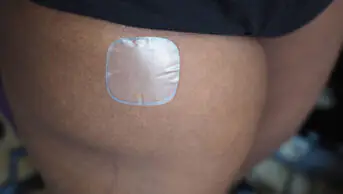
If this patient decides to continue on HRT, using transdermal estradiol with cyclical progesterone, she can be prescribed either estradiol 50mcg patches with one changed twice weekly, or estradiol gel two pump applications daily and use her progesterone dose cyclically every month. These options are body identical16.
The holistic management plan agreed with the patient should include lifestyle interventions, as these can help mitigate some of the risks for breast cancer, strokes and thrombosis. Combined HRT increases breast cancer risk over five years; however, the increase is smaller than risks from obesity or alcohol20. NICE has produced a menopause discussion aid, with graphical presentations to help demonstrate increase in risk, which can be useful when counselling patients4. An example of which is shown in Figure, demonstrating the risk of breast cancer in women taking combined HRT. These risks increase with age, family history, poor lifestyle and HRT. The risk levels may be higher or lower depending on the combination of oestrogen and progestogen or progesterone used within the HRT regimen.
Figure: Rates of breast cancer in women between the ages of 50 and 69 years
The patient has asked for an NHS review, as private care costs were unsustainable. For prescription changes, she should be advised about the availability of the prepayment HRT prescription certificate that covers all HRT prescriptions dispensed over a one-year period, currently for the cost of £19.8021.
Case study 2: Engaging with women accessing related services
When taking a medical history, the clinical pharmacist asks her 48-year-old Asian patient what she is using for contraception, as her estradiol with dydrogesterone sequential combined HRT regimen does not offer contraceptive cover22. The patient explains that she used to have recurrent UTIs and, when she started HRT, she was also prescribed vaginal oestrogen replacement therapy (ERT) that helped with her complaint of vaginal atrophy and UTIs.
She has stopped using her vaginal ERT, because she forgets. She also has dyspareunia with loss of libido, tends to avoid intimacy and asks if she should really be worried about falling pregnant. She is a vegetarian but takes eggs as part of her diet, does not smoke or take alcohol and practices meditation. Her BMI is 20, while her blood pressure in clinic is 120/70. She also has a history of vitamin D insufficiency and is on vitamin D supplements.
Some patients may be uncomfortable discussing intimacy; however, there are strategies that can facilitate these conversations. Listen to the audio clip to find out more.
Discussion
This patient consultation should incorporate all the principles of shared decision-making, with discussion to ensure that the patient understands how to use her medicine for optimal benefit. Patients with complaint of genitourinary symptoms can be advised to use vaginal ERT, with or without systemic HRT8,9. Vaginal oestrogen products help with localised symptom relief, including vulvovaginal dryness, UTIs and any complaint of pain with intimacy. Vaginal oestrogen is used daily for two or three weeks, depending on the product prescribed and then continued twice weekly, which can be used on a long-term basis. Patients should report any new bleed incidents with long-term vaginal oestrogen. There are two vaginal oestrogen options that are available for women aged over 50 years to purchase, over the counter, in community pharmacies23.
As she is already well established on a sequential combined HRT regimen, with acceptable regular monthly bleeds, she can continue on this regimen with vaginal oestrogen. First-line prescribed vaginal ERT options include estradiol vaginal tablets or estriol vaginal cream5. With lubrication and improved vaginal health, the patient may feel comfortable and engage in intimacy.
There may be additional considerations when discussing contraception needs with a patient experiencing low libido, listen to the audio clip to find out more.
HRT regimens provide physiological replacement of female hormones. They do not contain the higher pharmacological hormone levels needed for contraception. Patients may think that because they are menopausal that they cannot conceive. They should be advised that if they were aged under 50 years and naturally bleed-free for 2 years, or aged over 50 years and naturally bleed-free for one year before starting on HRT, then they do not need additional contraception cover24. However, if a patient presents on HRT and cannot recall how long they were bleed-free before starting on HRT, then they are advised of the need for additional contraception cover to the age of 55 years.
This patient needs contraception cover with her sequential combined HRT regimen1,24. This can be addressed by use of barrier methods, such as condoms or diaphragms, or she can be prescribed a progestogen-only pill, as well as her monthly bleed HRT regimen for contraception. Another HRT regimen choice for this patient is switching to a Mirena (Bayer) Intra Uterine System (IUS) with oral or transdermal oestrogen, for endometrial protection with in-built contraception cover25. The patient will need to be referred to a local NHS-contracted provider for the Mirena IUS insertion.
Once settled on HRT with vaginal ERT, the patient may be reviewed for testosterone replacement at her next review appointment if she still has a complaint of loss of libido26. Referral for psychosexual counselling should be considered if there are any partnership issues before testosterone is advised.
Many women transitioning through menopause may need referral to related services. Examples include referral for urogynaecology review for complaint of overactive bladder symptoms affecting her quality of life. The patient can be advised to do pelvic floor exercises and practice bladder re-training, if appropriate. Vaginal ERT can also help treat women with complaint of recurrent UTIs10. Many areas in the UK have access to menopause specialist services who will accept referral for complex patient cases.
In this patient case, when evaluating her risks and benefits for HRT and discussing the oestrogen benefit for osteoporosis, she reports sustaining a wrist fracture after a fall in snowy and icy conditions two years ago, when she was aged 46 years. Her BMI is low at 20 and she has a vegetarian diet. She will benefit from an evaluation for risk of sustaining a fragility fracture, using the FRAX fracture risk assessment tool, with referral for specialist osteoporosis services input if at high risk for further fragility fractures27.
Case study 3: Counselling women from minority ethnic backgrounds
A 50-year-old Somali patient has been referred to a specialist menopause clinic with history of last menstrual period around one and half years ago, hot flushes — which she described as feeling hot all the time to her GP — and expressing a wish to conceive again. She has five children but is keen on having more children. Her GP has treated her for vitamin D deficiency and she is on supplementation. She wears a hijab; her BMI is 24; and her blood pressure in clinic is raised at 148/88. Her GP has requested review for menopause management and says she does not have good English proficiency but can understand if the discussion is at a slow pace. She has come in with her 15-year-old daughter and 8-year-old son and wants the children in the consultation with her so she can keep an eye on them. During the consultation, she often asks her daughter to help with translation.
Many ethnic minority patients attend with family members. Discussion of menopause and sensitive issues, such as intimacy and complaint of dyspareunia, can be difficult if it’s their son or daughter supporting the conversation with translation. Listen to the audio clips to find out more.
Discussion
For ethnic minority patients, various factors need to be considered for an effective menopause consultation, where the aim is to agree a holistic management plan, with or without HRT. The patient should have the final decision; however, for cultures where ‘doctors’ are highly respected, they will often ask the ‘doctor’ or healthcare professional to make the decision.
This patient has been referred in as she consulted with her GP to discuss having stopped menstruation and wanting to resume, as in her mind that meant she was fertile and could have more children. This patient needs advice provided in a culturally sensitive way during the menopause consultation. She needs to understand that the menopause phase is a natural end of the reproductive phase. The patient is now in the postmenopausal phase and the chances of conceiving are very low. She declines vaginal examination but says she is feeling dry down below, with no smelly discharge when asked a few times. The patient is clear she wants treatment to start having menstrual cycles again.
After discussion of the menopause phase, as well as the risks and benefits of HRT, using a Somali interpreter via language helpline, she expresses a concern for breast cancer risk4 but decides to take sequential combined HRT, as she understands that this regimen will help her resume her menstrual cycles. She asks for confirmation two to three times that the HRT regimen is not going to reduce her chances of falling pregnant. The patient needs careful counselling on the correct sequence for taking of her HRT tablets and that it can take up to three to four months to settle. She needs to be advised to have her three yearly mammograms when invited for the NHS screening programme and to undertake self-breast examinations in between as her monitoring protocol for breast cancer risk. Breast cancer risk increases with age in women independent of whether they are on HRT or not4,17,28 (see Figure).
Research published in 2025 highlights that women living in more deprived areas and from ethnic minority backgrounds often face problems with reduced access to HRT, which may be owing to poor awareness of menopause, poorer health outcomes and they may have more barriers receiving care compared with those in affluent areas29. Women from these communities report lack of access to clear culturally relevant information about menopause and treatment options30. Prescription rates are significantly lower in deprived areas, with a recent UK dataset reporting that some 24% of women in affluent areas received HRT compared to only 11% in more deprived regions29. Women from lower socio-economic and ethnic minority backgrounds often report negative consultations, saying that they feel they are being dismissed or offered antidepressants instead of HRT30. These women also often face stigma or misinformation about menopause from their own communities, which can discourage them from seeking care30.
Women from these communities may be less likely to seek support themselves, listen to the audio clip for more information.
If language barriers are a concern, patients can be provided with extended appointments. Translation services can be used and are available using a language telephone helpline; however, these services can also present challenges. Listen to the audio clip to find out more.
Often, patients’ understanding of the risks is magnified owing to cultural opinion. Many patients resort to having reviews in their country of origin and their management in the UK based on best practice guidance must be managed sensitively31. With time and multidisciplinary team support, and education and training, the GP practice-based clinical pharmacist is ideally placed to support delivery of menopause care for all patients.
*Cases are inspired by scenarios that a pharmacist may encounter in practice.
Best practice
- Patients should be supported with shared decision-making, to enable an informed decision based on their individualised risk–benefit evaluation;
- There are no arbitrary limits to how long patients can stay on HRT, with annual risk–benefit evaluations helping decision on how long to continue HRT;
- The holistic management plan agreed with patients considering HRT should include lifestyle interventions, as these help mitigate risks associated with HRT;
- Women from minority ethnic backgrounds face additional challenges when accessing menopause care and may have different support requirements when considering menopause management.
- 1.Menopause: identification and management. National Institute for Health and Care Excellence. 2024. https://www.nice.org.uk/guidance/ng23
- 2.HRT – Guide. British Menopause Society. 2020. 04-BMS-TfC-HRT-Guide-NOV2022-A.pdf
- 3.Structured medication reviews and medicines optimisation. NHS England . 2020. https://www.england.nhs.uk/primary-care/pharmacy/smr/
- 4.HRT and the likelihood of some medical conditions: A discussion aid for healthcare professionals and patients. National Institute for Health and Care Excellence. 2024. https://www.nice.org.uk/guidance/ng23/resources/incidence-of-medical-conditions-with-and-without-hrt-a-discussion-aid-pdf-13553199901
- 5.Hormone replacement therapy. Monthly Index of Medical Specialities. https://www.mims.co.uk/hormone-replacement-therapy-hrt/womens-health/article/1415738
- 6.Manley K, Hillard T, Clark J, et al. Management of unscheduled bleeding on HRT: A joint guideline on behalf of the British Menopause Society, Royal College Obstetricians and Gynaecologists, British Gynaecological Cancer Society, British Society for Gynaecological Endoscopy, Faculty of Sexual and Reproductive Health, Royal College of General Practitioners and Getting it Right First Time. Post Reprod Health. 2024;30(2):95-116. doi:10.1177/20533691241254413
- 7.Hamoda H. British Menopause Society tools for clinicians: Progestogens and endometrial protection. Post Reprod Health. 2021;28(1):40-46. doi:10.1177/20533691211058030
- 8.Incontinence – urinary, in women. National Institute for Health and Care Excellence. 2025. https://cks.nice.org.uk/topics/incontinence-urinary-in-women/management/managing-urinary-incontinence/
- 9.Consensus statement: Genitourinary Syndrome of the Menopause. British Menopause Society. 2025. https://thebms.org.uk/wp-content/uploads/2025/11/09-NEW-BMS-ConsensusStatement-Genitourinary-Syndrome-of-Menopause-GSM-NOV2025-B.pdf
- 10.Tan-Kim J, Shah NM, Do D, Menefee SA. Efficacy of vaginal estrogen for recurrent urinary tract infection prevention in hypoestrogenic women. American Journal of Obstetrics and Gynecology. 2023;229(2):143.e1-143.e9. doi:10.1016/j.ajog.2023.05.002
- 11.Non hormonal based treatments for menopausal symptoms. British Menopause Society. 2025. https://thebms.org.uk/wp-content/uploads/2025/11/04-BMS-ConsensusStatement-Non-hormonal-based-treatments-for-menopausal-symptoms-NOV2025-C.pdf
- 12.Tanna N, Kadoglou N, Fusi L. Prescribing for Women with Breast Cancer in Their Survivorship Phase for Menopausal Symptoms. Eur J Breast Health. 2020;16(2):155-157. doi:10.5152/ejbh.2020.5339
- 13.Fezolinetant: Summary of Product Characteristics. EMC. 2025. https://www.medicines.org.uk/emc/product/15361/smpc#gref
- 14.Elinzanetant. European Medicines Agency. 2025. https://www.ema.europa.eu/en/medicines/human/EPAR/lynkuet
- 15.Utrogestan: summary of product characteristics . EMC. 2025. https://www.medicines.org.uk/emc/product/352/smpc
- 16.Bio-identical HRT. British Menopause Society. 2024. 01-BMS-ConsensusStatement-Bioidentical-HRT-MARCH2024-A.pdf
- 17.Clinical Knowledge Summaries: Menopause. National Institute for Health and Care Excellence. 2025. https://cks.nice.org.uk/topics/menopause/
- 18.Menopause. NHS. 2022. https://www.nhs.uk/conditions/menopause/treatment/
- 19.Use of hormone replacement therapy and risk of venous thromboembolism: nested case-control studies using the QResearch and CPRD databases. BMJ. Published online January 15, 2019:l162. doi:10.1136/bmj.l162
- 20.Womens Health Concern Infographic. British Menopause Society. 2023. https://sl.bing.net/fZiqRGY3eKq
- 21.HRT prescription pre-payment certificate. Gov.uk. https://www.gov.uk/get-a-ppc/hrt-ppc
- 22.Femoston 1/10 mg Film-coated Tablets: Summary of product characteristics . EMC. https://www.medicines.org.uk/emc/product/5523/smpc#gref
- 23.How and when to use vaginal oestrogen. NHS. 2023. https://www.nhs.uk/medicines/hormone-replacement-therapy-hrt/vaginal-oestrogen/how-and-when-to-use-vaginal-oestrogen/
- 24.FSRH guidelines Contraception for Women aged over 40 years. Faculty of Sexual and Reproductive Health. 2025. https://www.cosrh.org/Common/Uploaded%20files/documents/fsrh-guideline-contraception-for-women-aged-over-40-years.pdf
- 25.Mirena 52mg Intrauterine Delivery System Summary of Product Characteristics. Medicines.ie. https://www.medicines.ie/medicines/mirena-52mg-intrauterine-delivery-system-32902/spc
- 26.Testosterone replacement in menopause: British Menopause Society Tool for clinicians. British Menopause Society. 2022. https://thebms.org.uk/wp-content/uploads/2022/12/08-BMS-TfC-Testosterone-replacement-in-menopause-DEC2022-A.pdf
- 27.Kanis JA, Johnell O, Oden A, Johansson H, McCloskey E. FRAXTM and the assessment of fracture probability in men and women from the UK. Osteoporos Int. 2008;19(4):385-397. doi:10.1007/s00198-007-0543-5
- 28.Lewis P. Risk of breast cancer with HRT depends on therapy type and duration. BMJ. 2019. https://www.bmj.com/content/376/bmj.o485/rr-3#:~:text=Rapid%20Response:-,Risk%20of%20breast%20cancer%20with%20HRT%20depends%20on%20therapy%20type,carries%20a%20very%20low%20risk.
- 29.Hirst J, Hillman S. Menopause care is neglected and inequitable. BMJ. 2025;390:r2038. doi:10.1136/bmj.r2038
- 30.Eccles A, Keating S, Mann C, et al. Accessing equitable menopause care in the contemporary NHS: a qualitative study of women’s experiences. Br J Gen Pract. 2025;75(761):e816-e823. doi:10.3399/bjgp.2024.0781
- 31.Mathijsen A, Mathijsen FP. Diasporic medical tourism: a scoping review of quantitative and qualitative evidence. Global Health. 2020;16(1). doi:10.1186/s12992-020-00550-x