Shutterstock.com
At The Pharmaceutical Journal, we have been looking back at the past year — from 2025 in numbers, to our top research picks, favourite features and most-read learning articles.
Why not test yourself with our end-of-year quiz, reflect on how the pharmacy sector has grown in 2025, or see if you agree with our predictions for 2026?
We hope you got a chance to slow down and take stock of the past year and look ahead to the new one — but know that many were working throughout the festive period as cold weather pressures increase and new year’s day drug deaths spike.
Read on to see how you can support patients and yourself and what you can expect in January 2026 and beyond.
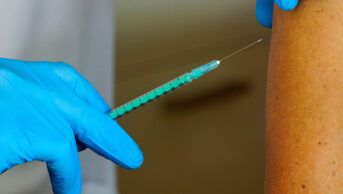
Flu vaccinations 500,000 higher
On 31 December 2025, NHS England data revealed that almost 18.5 million people had been vaccinated against flu — 500,000 more than the same week in 2024.
Health and social care secretary Wes Streeting said: “This year we planned earlier than ever for winter, and that preparation is paying off… more patients are getting the care they need, when they need it.”
Meanwhile, Kim Marsh, viral respiratory pathogens lead at Public Health Scotland, said on 24 December 2025 that declining flu cases in Scotland are “reassuring”, but patients should still take steps to protect themselves and others.
While flu cases and hospital admissions in England are beginning to stabilise, hospitals still remain extremely busy, with around 95% of adult beds filled and 94,118 patients in hospital each day.
On top of this, cold weather alerts were issued across England on 31 December 2025 that are likely to impact the entire health service.
In a statement made on 31 December 2025, Meghana Pandit, national medical director at NHS England, urged eligible patients to get their vaccinations: “While there are signs of improvement and the NHS is in calmer waters, pressures on hospitals remain incredibly high and we’re not out of danger yet with temperatures set to drop in the coming days,” she said.
“If you haven’t had your flu jab yet and are eligible, please come forward — it’s not too late.”
Further reading
Weight-loss drug use expected to double in new year
According to a YouGov poll commissioned by the National Pharmacy Association, published on 2 January 2026, around 3.3 million UK adults are likely to use weight-loss injections in 2026. This is more than double the estimated 1.5 million using the jabs monthly in 2025.
Amid new years’ weight-loss resolutions, the Medicines and Healthcare products Regulatory Agency (MHRA) has warned patients about the risks of buying weight-loss medication through social media or from unregulated websites.
In Wales, figures published on 29 December 2025 show that a national fitness scheme for people aged 60 years and older has delivered more than 10,750 sessions since 2021, with improved mental and physical fitness as part of the Welsh government’s ‘Healthy weight: healthy Wales’ strategy, designed to address high levels of overweight and obesity in Wales.
Meanwhile, nearly 1 million people in England have accessed the NHS’s ‘Healthier you’ programme, according to an announcement made on 30 December 2025.
Further reading
Tackling drug overdoses
Public Health Wales data, published on 17 December 2025, revealed that opioids continue to drive the majority of drug misuse deaths in Wales, at 69% of the record 288 drug misuse deaths recorded in 2024 — the majority of which (84%) were caused by accidental poisoning.
Office for National Statistics figures have also revealed that deaths linked to nitazenes were four times higher across England and Wales in 2024 than in the previous year.
In a consultation launched on 29 December 2025, the UK government proposed expanding the supply of naloxone through publicly accessible emergency locked boxes around the UK, similar to defibrillator storage. It proposed installation in hostels, day centres and homeless outreach services; as well as at border control and forensic labs.
While opioid-related deaths in the UK tend to peak in spring, UKHSA-funded research has suggested that deaths linked to non-opioid drugs experience a spike around New Year’s Day, likely owing to socialising or a result of suicides.
A campaign by mental health charity Mind, launched in November, highlighted how worries can “snowball” around the festive period, and how asking for support can help.